
Pipeline Repair & Maintenance
Radius Subterra delivers specialist pipeline repair and maintenance services to protect, restore and extend critical pipeline assets.
We provide planned and reactive engineered repair solutions across multiple materials, diameters, operating environments, and industries to maintain system integrity, manage defects and minimise operational disruption.
Radius Subterra provides specialist pipeline repair and maintenance services across gas, water, energy and industrial sectors, supporting asset integrity, safety and long-term network performance.
We support pipeline repair and maintenance services across water, gas, biogas, wastewater, fire protection, hydroelectric, geothermal and industrial pipeline systems. Our teams work across diverse operating conditions, asset types and regulatory frameworks, supporting asset owners in maintaining safe, reliable and compliant pipeline systems throughout their operational life.
Our engineered repair capabilities include leak repair, joint repair, defect remediation and pipeline encapsulation, providing effective solutions for damaged, deteriorating or compromised assets. Repairs are designed to suit specific pipeline materials, diameters and operating conditions, enabling defects to be addressed without unnecessary replacement and supporting continued operation where appropriate.
We provide corrosion protection and asset preservation services to extend pipeline life, including cathodic protection installation and maintenance, as well as shot blasting, coating and wrapping of exposed or disturbed pipelines. These activities protect metallic assets, reduce long-term degradation and support asset life extension across buried and above-ground pipework.
Radius Subterra also maintains associated pipeline infrastructure, including pressure control and reduction assets, valves and ancillary equipment. We support planned shutdowns and deliver controlled maintenance activities in line with client procedures, operational requirements and industry standards. These combined activities help asset owners manage operational risk, improve network resilience and extend the lifecycle of critical pipeline systems.
Pipeline condition assessment forms a key part of effective maintenance planning. Our teams carry out inspection and investigation works to assess asset condition, identify defects and support informed repair or maintenance decisions, with findings documented and reported to provide clear asset condition visibility and recommended actions.
Leak detection forms a key part of pipeline repair and maintenance strategies across gas, water and industrial networks. Using non-destructive techniques such as acoustic correlation, tracer-gas investigation, pressure analysis and internal inspection, leak locations can be accurately identified prior to excavation. This supports targeted repair works, reduces operational risk and minimises unnecessary ground disturbance and reinstatement costs.
We are highly experienced in supporting urgent repair and maintenance scenarios, working alongside asset owners to stabilise situations and implement safe, practical solutions when unplanned issues arise. All activities are fully planned, risk assessed and delivered by trained and competent personnel, combining technical expertise with practical delivery to maintain safe, resilient and efficient pipeline infrastructure.
Key Benefits
Multi-sector pipeline expertise
We deliver pipeline repair and maintenance across water, gas, biogas, wastewater, fire protection, hydroelectric, geothermal, nuclear, petrol and oil infrastructure, applying consistent engineering standards and best practices across diverse operating environments and regulatory frameworks.
Engineered repairs for asset longevity
Our engineered approach to defect remediation, encapsulation, corrosion protection and condition-led maintenance helps asset owners manage deterioration, reduce operational risk and extend pipeline life without unnecessary replacement, shutdowns, or disruption.
Reliable, planned delivery
All repair and maintenance works are carefully planned, risk assessed and delivered by trained, competent teams, ensuring safe, compliant execution aligned with client programmes, regulatory requirements and operational constraints across live and legacy pipeline systems.
Pipeline Repair & Maintenance technologies
These methods form a core part of Radius Subterra’s pipeline repair and maintenance strategy, supporting long-term asset performance and specialist pipeline integrity management.
Encapsulations
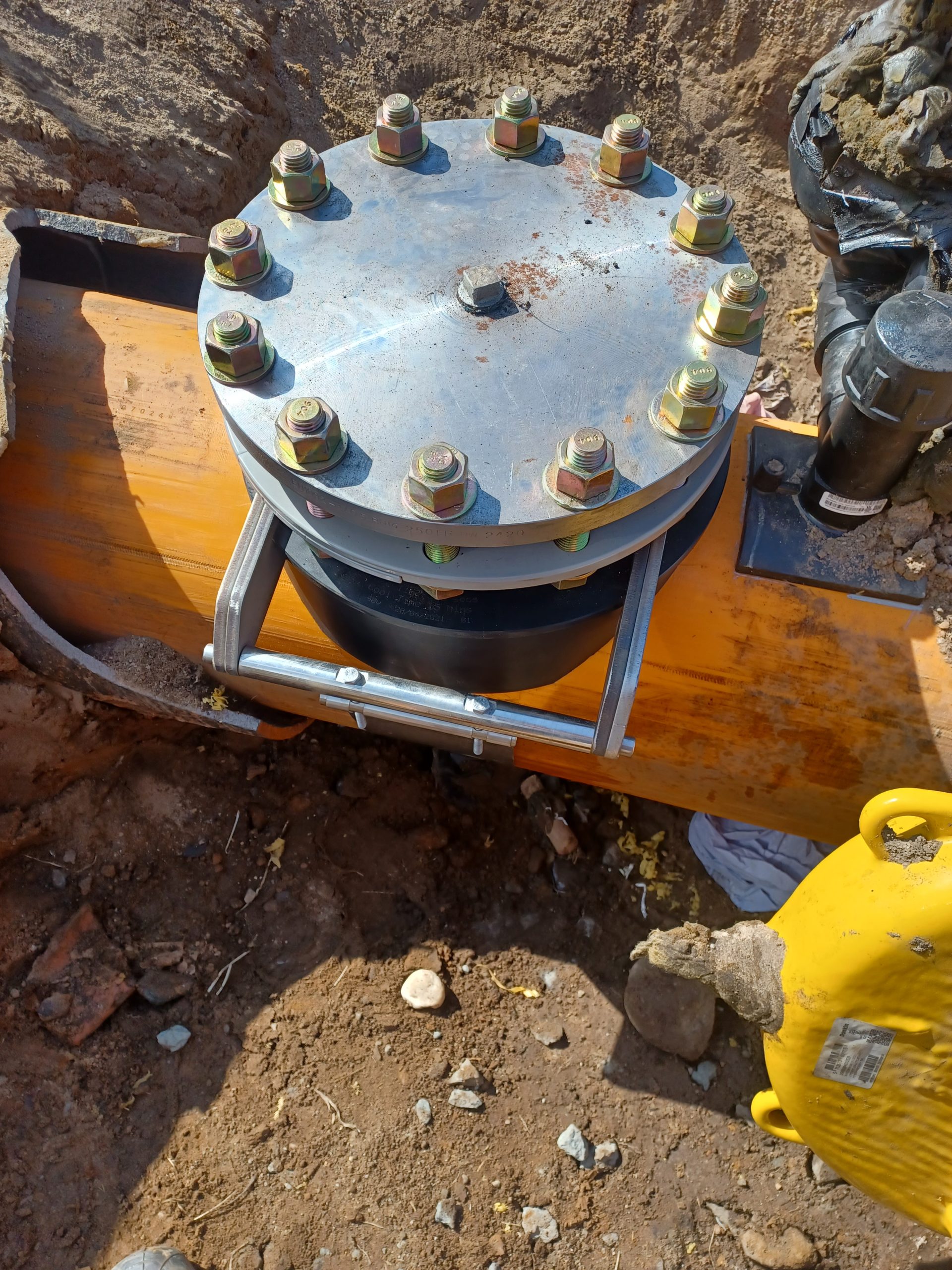
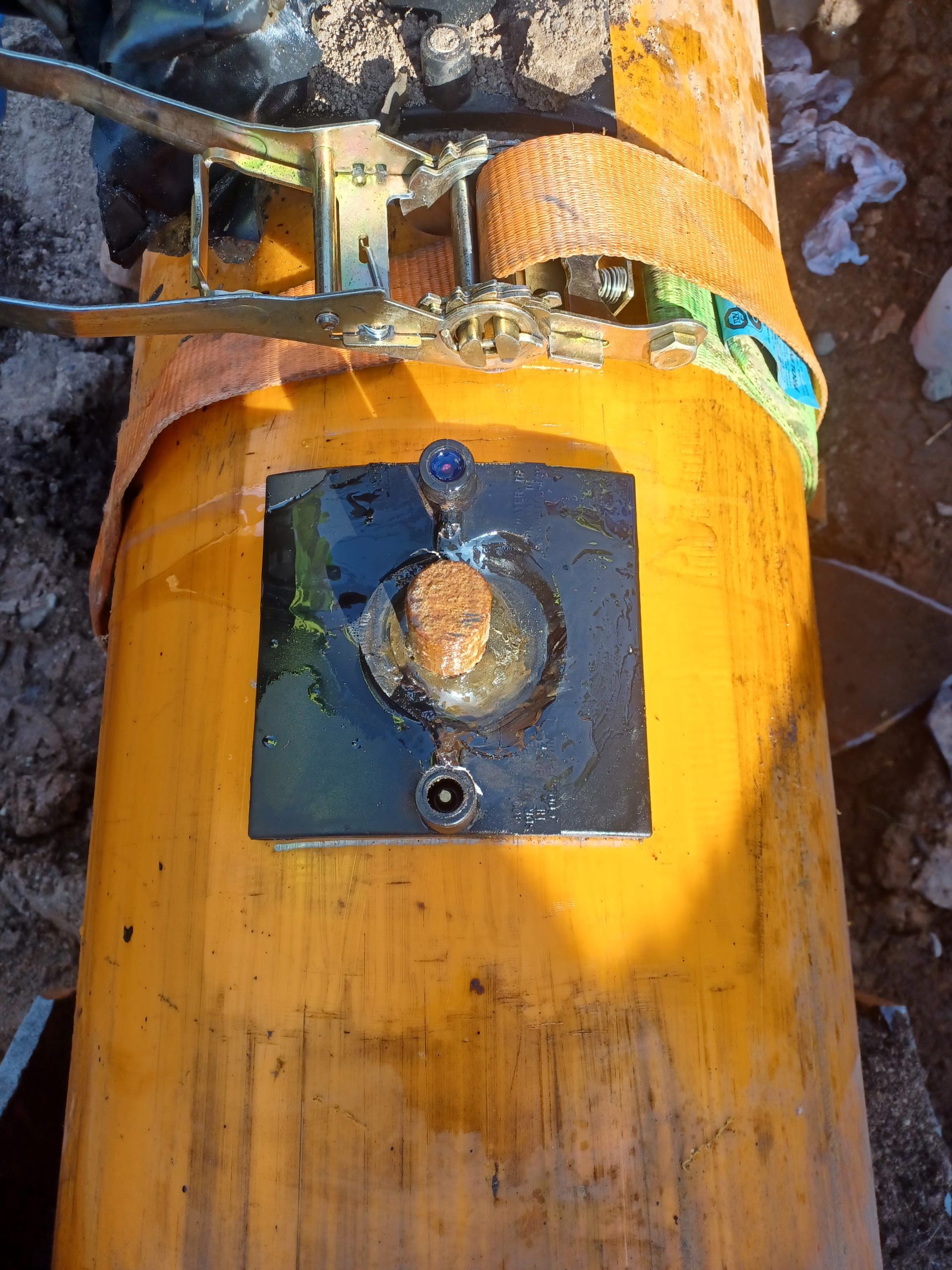
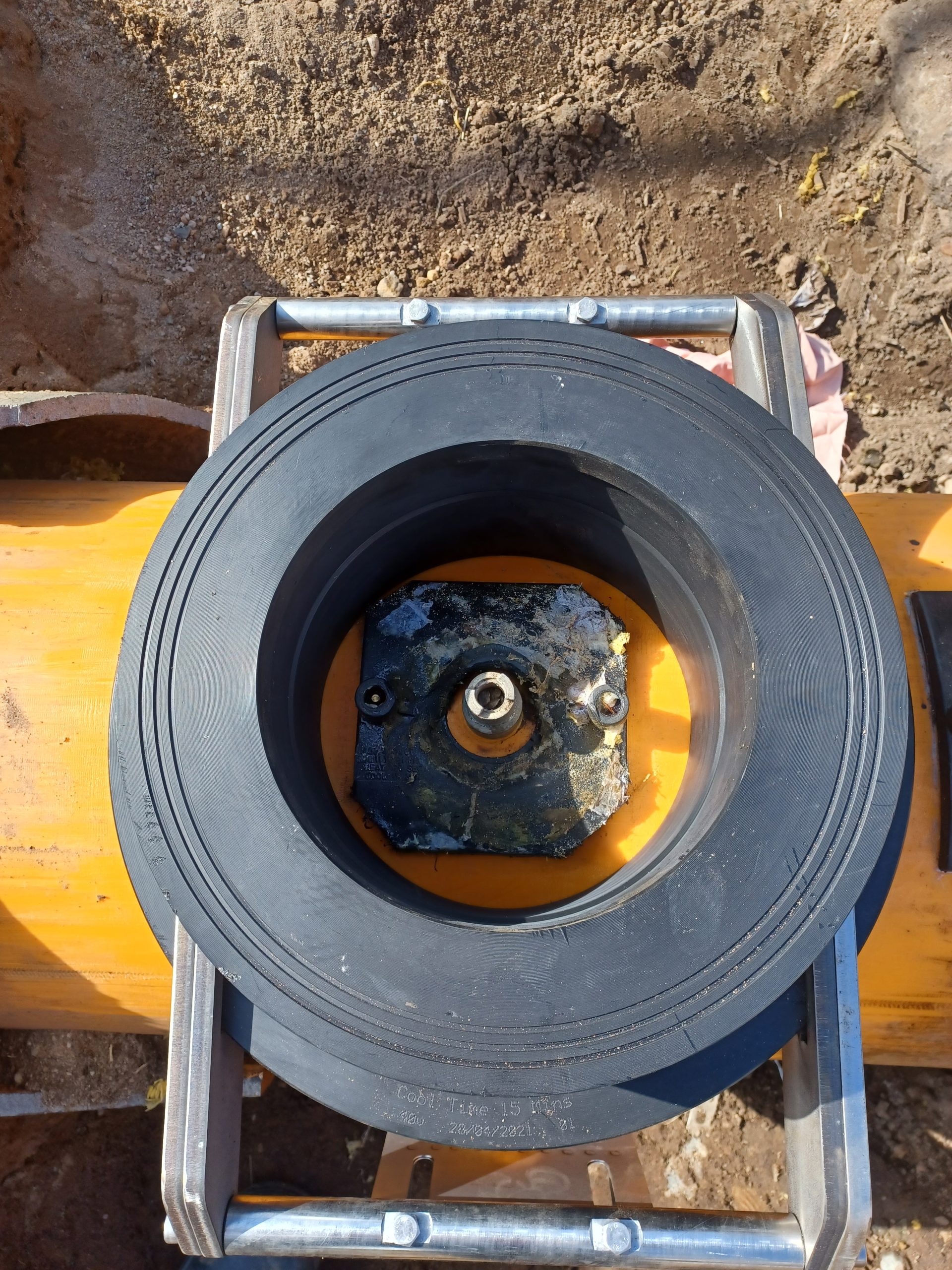
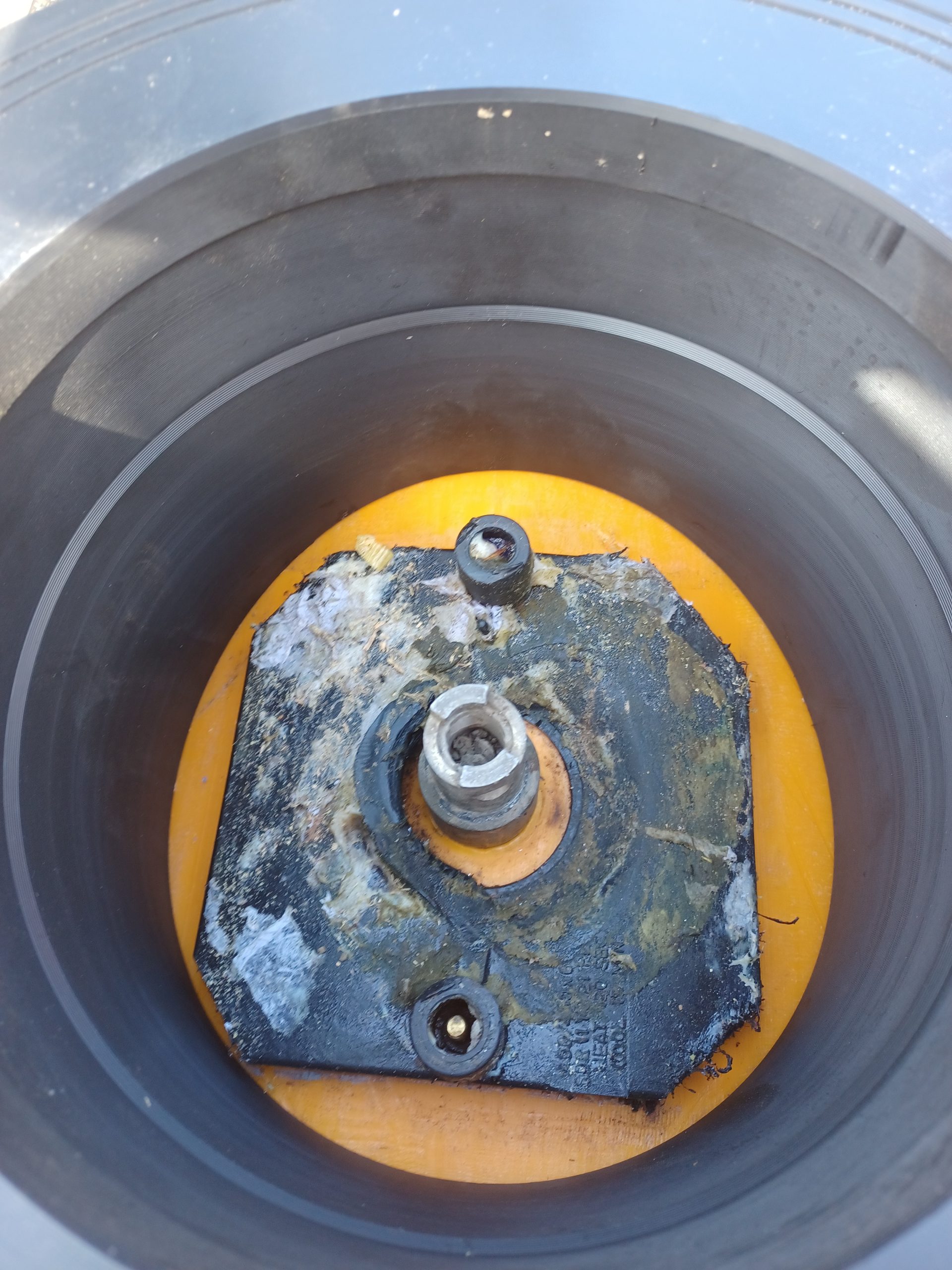
Encapsulation is a practical, engineered solution for containing pipeline defects and preventing leakage while retaining network operation, avoiding service interruption and minimising disruption to end users. Radius Subterra applies encapsulation techniques across gas, water, biogas, wastewater, oil and industrial pipeline systems, providing durable localised repairs without the need for full pipe replacement or shutdown.
For polyethylene (PE) mains, we offer PE branch saddle encapsulations to remediate leaking or damaged tapping tees, as well as PE repair saddles for localised defects. These fittings are selected and installed to suit the pipe diameter, material and defect characteristics, creating a secure external containment that restores integrity under live conditions.
On metallic pipelines, we deliver bespoke mechanical repair clamps designed to match the pipe’s geometry and defect characteristics. Engineered repair collars and clamps are fabricated to provide a robust, sealed enclosure around the defect, helping to stop leaks and reinstate structural soundness with minimal excavation and reinstatement work.
Encapsulation solutions are deployed using controlled, site-assessed methods that prioritise safety, integrity and compliance. These methods from a critical component of our wider pipeline defect remediation offering. Fittings can be rapidly mobilised to support urgent repairs and integrated into wider maintenance programmes. This ensures encapsulation works are reliable, repeatable and aligned with inspection and reporting requirements.
Leak repair
Leak repair involves a range of engineered techniques used to safely contain, control and remedy leaks on live pipeline systems while maintaining network operation wherever possible. Radius Subterra delivers leak repair solutions across gas, water, biogas, wastewater, oil and industrial pipeline networks, supporting both planned interventions and urgent response requirements.
Our approach combines multiple specialist disciplines depending on the defect type, pipeline material and operating conditions. Solutions may include bespoke mechanical repairs, temporary or permanent fabrications, pipeline encapsulation, and localised containment. Leak repairs often integrate with our flowstopping and under‑pressure connection techniques to enable safe, controlled access to the live system.
Leak repair works may include isolation via flowstopping techniques to create defined isolation zones for repairs, cut-outs or component replacement. Where maintaining supply is critical, temporary bypass systems can be deployed to keep services operational while permanent repairs are completed. Specialist pipe cutting techniques may be used where damaged sections require controlled removal.
All activities are delivered using structured, engineered procedures that ensure consistency, compliance and integrity across all networks. All leak repair works are planned, risk assessed and delivered by trained teams using approved equipment and procedures. Clear reporting is provided on completion, supporting asset records, regulatory requirements and future maintenance planning.

Cathodic protection installation
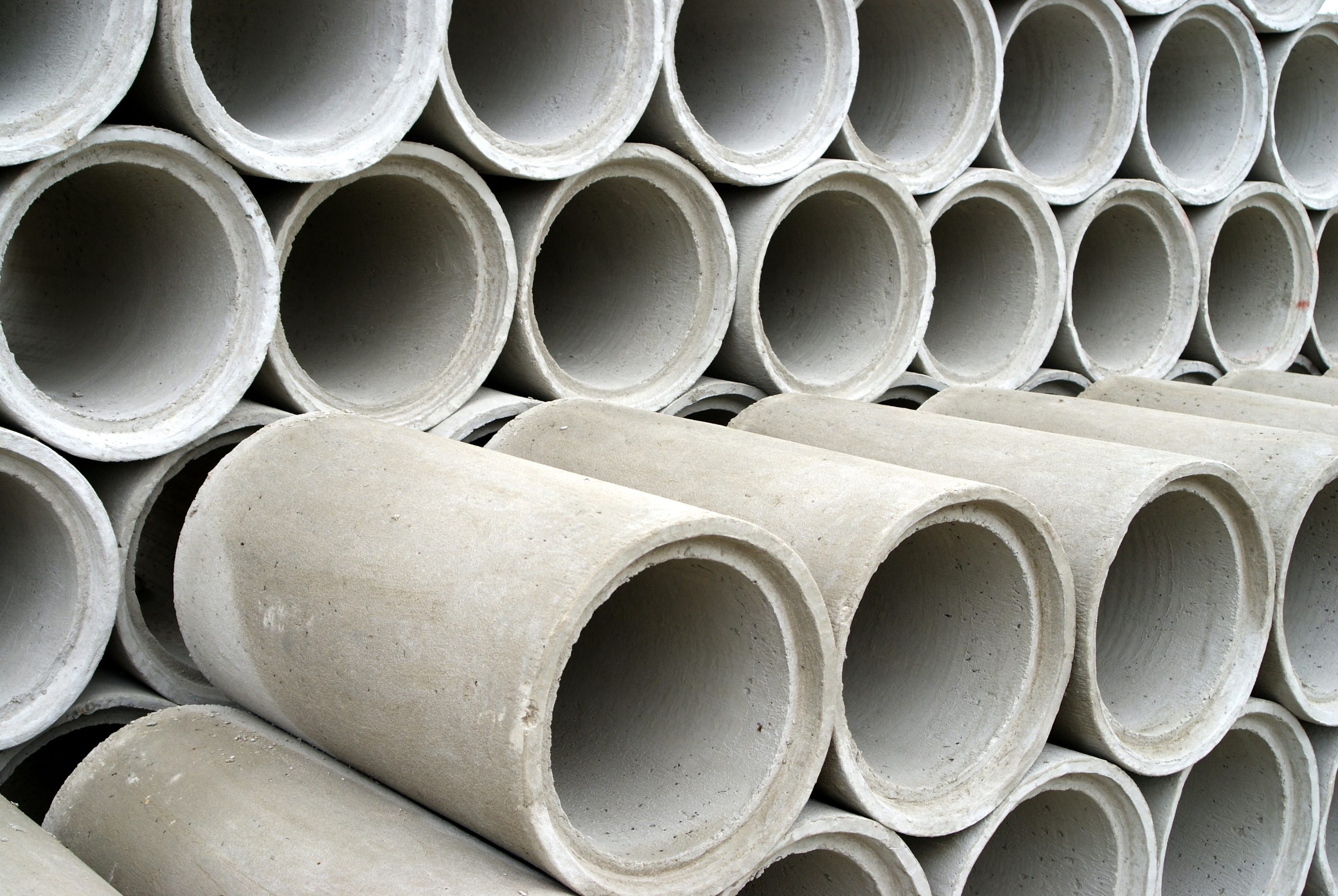
Cathodic protection (CP) is a recognised corrosion control technique used to protect buried or submerged metallic pipelines and associated assets. Radius Subterra installs CP systems as part of wider maintenance, modification and integrity management systems across multiple sectors.
Activities typically include anode placement, cabling, bonding to existing pipework and coordination with wider site works to ensure correct installation and protection of the asset.
Cathodic protection systems are used to control electrochemical corrosion, particularly where pipelines remain in long-term service. They are often introduced or enhanced as part of planned maintenance, integrity improvement works or asset life extension programmes.
All CP works are delivered in accordance with applicable standards, network requirements and client specifications. Installations are planned around site conditions, pipeline configuration and operational constraints, and coordinated with other repair activities where required.
CP installation supports long-term pipeline integrity and corrosion mitigation across gas, water, wastewater, energy and industrial networks. Radius Subterra ensures each CP installation is documented, tested and verified, providing asset owners with full traceability and assurance of system performance.
Pipeline shot blasting, coating & wrapping
Shot blasting, coating and wrapping are well-established asset protection techniques used to restore external corrosion protection on exposed metallic pipelines. Radius Subterra delivers these works as part of planned maintenance, repair and integrity programmes across all pipeline systems.
Shot blasting removes corrosion products, degraded coatings and surface contamination, producing a clean surface profile suitable for protective coating systems. Preparation is carried out to required standards, client specifications and asset manufacturer requirements.
Following preparation, protective systems are applied based on operating conditions, material type and asset requirements. Systems may include primer- and build-coats with a protective outer layer designed to resist moisture ingress, corrosion and mechanical damage. Coating and wrapping help maintain external pipeline integrity, resist mechanical damage and reduce long-term corrosion risk.
These protective activities form an important part of long-term pipeline integrity management, helping to reduce corrosion-related failures and maintain asset performance over extended service periods. All activities are planned, risk assessed and delivered using approved materials and methods. Completion documentation, including photographic evidence, can be supplied to support asset records, regulatory compliance and future maintenance planning.
Maintenance of pressure reduction stations (PRS)
Pressure reduction stations (PRS) play a critical role in gas networks by controlling pressure between transmission, distribution and downstream systems. Radius Subterra provides specialist PRS maintenance as part of broader pipeline repair and maintenance programmes, ensuring stations continue to operate safely and efficiently.
Our services include planned and reactive maintenance activities to ensure PRS equipment continues to operate safely, efficiently and in line with network requirements. Works include inspecting, servicing and maintaining of valves, regulators, pipework and associated systems. These activities support safe pressure management and operational continuity.
PRS maintenance often aligns with other pipeline works, such as repairs, modifications or network upgrades, allowing activities to be coordinated efficiently and safely. Where required, Radius Subterra supports controlled shutdowns, isolations and reinstatement activities to facilitate maintenance without unnecessary disruption to the wider network.
PRS maintenance works are fully planned, risk assessed and delivered, with site-specific procedures developed to manage operational constraints and safety requirements. Activities are delivered by trained and competent personnel experienced in working within live gas environments.
On project completion, works are documented clearly, supporting asset records, compliance obligations and ongoing maintenance planning. Radius Subterra’s structured approach helps asset owners maintain reliable PRS performance, manage system risk and extend asset life as part of an integrated network maintenance strategy.
Shut downs
Planned shutdowns provide controlled access to pipeline systems and associated assets where live working is not appropriate or permitted. Radius Subterra manages shutdown planning and execution across gas, water, biogas, wastewater, and industrial pipeline networks, working in close coordination with asset owners and operators.
Shutdown activities include planning, coordinating and executing temporary network outages for repairs, maintenance, modifications or asset replacement works. We sequence activities carefully to minimise customer and operational impact, selecting isolation points that suit network configuration, site constraints and programme requirements.
Shutdowns often align with wider pipeline repair, maintenance or modification works, including valve operations, cut-outs, tie-ins and reinstatement activities. Where required, Radius Subterra prepares systems for isolation, manages controlled depressurisation, and oversees reinstatement to ensure assets return safely to service once works are complete.
All shutdown activities are fully planned and risk assessed, with site-specific procedures developed to manage operational constraints, network pressures and safety considerations. Our trained and competent teams carry out shutdowns using approved equipment and proven methods suitable for live operational environments.
On completion, we provide detailed shutdown records to support compliance, asset documentation and future maintenance planning. Radius Subterra’s structured and collaborative approach ensures shutdowns are delivered safely, efficiently and with minimal disruption to customers and network operations.
Pipe inspection
Pipe inspection provides essential insight into the condition and integrity of pipeline assets, helping to identify potential issues such as corrosion, deformation, leaks and other defects before they escalate into failures. Radius Subterra delivers pipeline inspection services across gas, water, biogas, wastewater, oil and industrial pipeline systems, supporting maintenance planning, risk management and operational decision-making.
Inspection activities assess structural condition, detect emerging threats, and gather evidence to inform repair, maintenance or rehabilitation strategies. Methods may include visual condition assessment, dimensional and alignment checks, and the use of specialist tools or non-destructive methods where deeper evaluation is required. We document and analyse all findings to provide clear, actionable information that supports proactive asset care and long-term reliability.
Pipe inspection forms a vital part of asset management programmes by enabling early defect detection and helping asset owners prioritise maintenance or replacement works. Inspection results also support regulatory compliance and long-term planning by providing transparent record of asset condition.
All inspections are carried out by trained and competent personnel familiar with network owner requirements, operational constraints, and industry standards. Radius Subterra produces structured inspection reports with clear recommendations where appropriate, providing a reliable basis for future maintenance, rehabilitation, and integrity improvement decisions.
CCTV
CCTV pipeline surveys provide detailed internal visual assessment of pipeline condition, supporting asset management, maintenance planning and targeted repair strategies. Using specialist inspection equipment, survey teams identify internal defects such as corrosion, deformation, joint displacement, ingress, blockages and other forms of deterioration without the need for intrusive excavation or pipe removal.
Radius Subterra delivers CCTV surveys across a wide range of pipeline materials, diameters and sectors, including gas, water, wastewater, biogas, industrial and oil systems. Surveys are commonly used to investigate areas of concern following repeat failures, leakage history or operational issues, and to support planned maintenance, repair or replacement programmes. Inspection findings help asset owners make informed decisions on intervention type, timing and scope.
Where required, CCTV surveys can be coordinated with controlled access arrangements such as flowstopping, shutdowns, or isolation activities to allow safe inspection of live or operational pipelines. We select survey access points to suit pipeline configuration, site constraints and operational requirements, ensuring safe and efficient deployment.
Survey footage is recorded, reviewed and assessed by experienced personnel, with findings documented in clear inspection reports. These reports support asset condition assessment, risk evaluation and long-term maintenance planning. By integrating CCTV pipeline surveys with wider repair and maintenance services, Radius Subterra helps asset owners build a clear understanding of pipeline condition and prioritise interventions where they deliver the greatest benefit.
Pigging/Swabbing
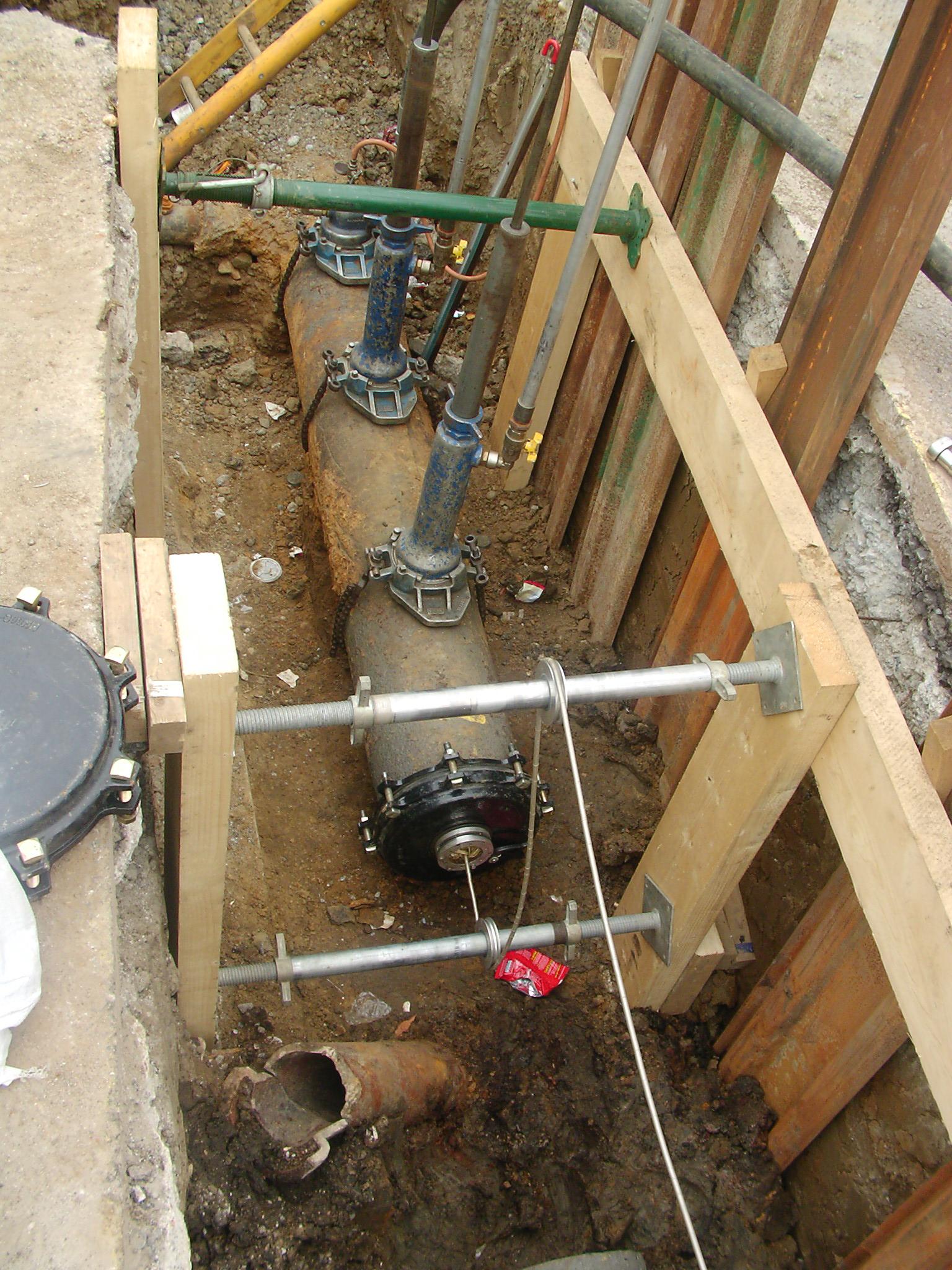
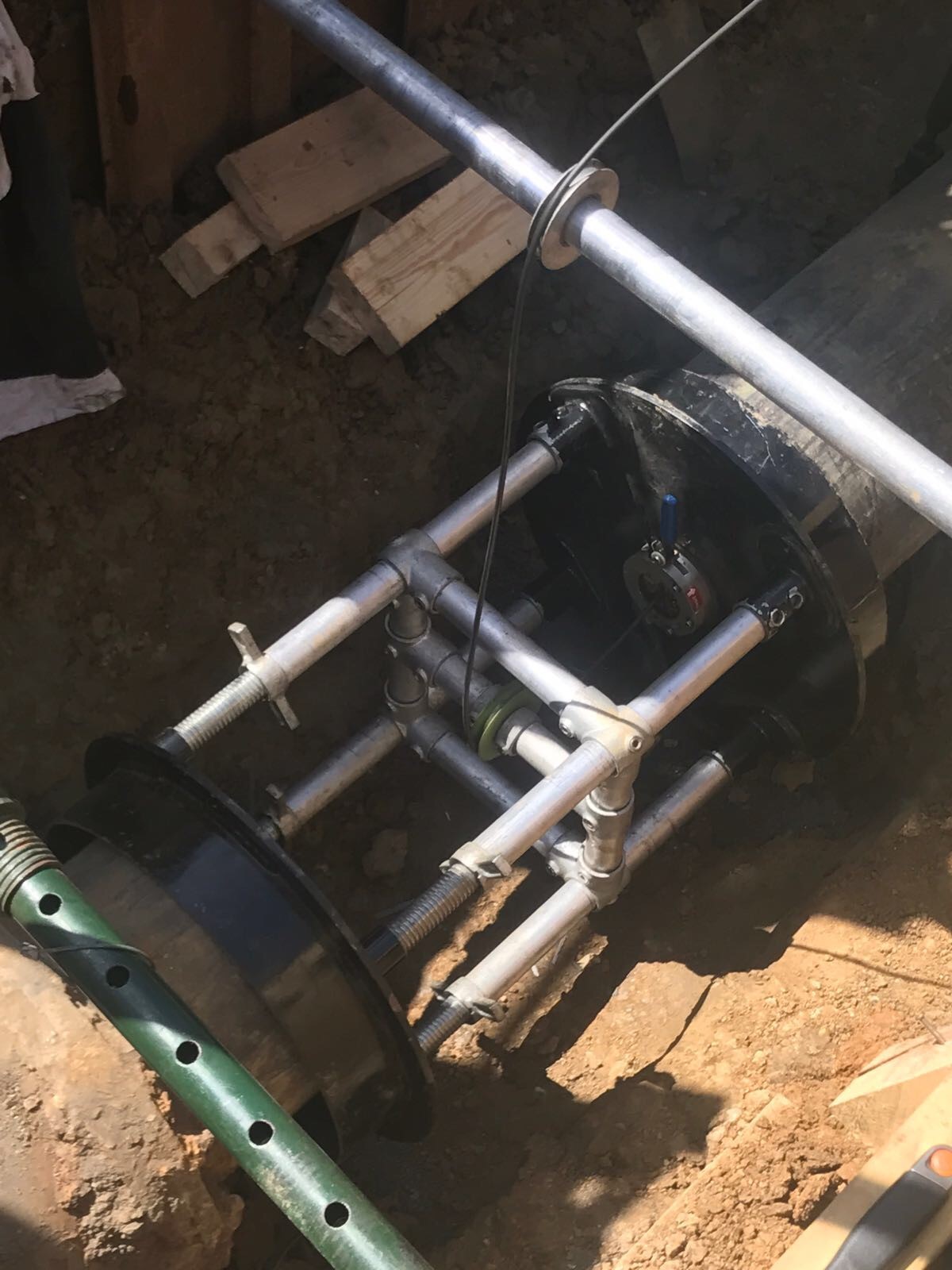
Pigging and swabbing provide established pipeline maintenance techniques used to clean, condition and maintain pipelines without excavation or full replacement. These methods involve passing a purpose-designed device (pig or swab) through the pipeline using product flow or applied pressure to remove debris, sediment, liquids and accumulated build-up from the internal bore.
Across gas and oil pipelines, pigging is routinely used to clear liquids, corrosion products and debris, and to prepare pipelines for inspection, repair or recommissioning. Within water networks, pigging and swabbing are recognised techniques for improving hydraulic performance by removing biofilm, scale and sediment from distribution mains, supporting water quality and asset longevity. Similar approaches are widely applied across industrial process pipelines, where maintaining internal cleanliness is critical to system performance and reliability.
Pigging and swabbing can also be applied to wastewater, force mains and biogas systems where pipelines are designed to accommodate pigging operations. In these applications, the techniques support cleaning, flow restoration and preparation for inspection, repair or rehabilitation works.
Radius Subterra delivers pigging and swabbing activities as part of wider pipeline maintenance and repair programmes. Where required, operations can be coordinated with controlled shutdowns, flowstopping or under-pressure access arrangements to enable safe launch and recovery of pigs or swabs. Each operation is planned, risk assessed and carried out with consideration to pipeline condition, operating parameters and network requirements, ensuring controlled execution and effective outcomes across diverse pipeline systems.
Joint failure investigation
Joint failure investigation provides a structured engineering process to determine the cause, extent and implications of joint deterioration or leakage on operational pipeline assets. Failures may occur across polyethylene (PE), steel, ductile iron, cast iron and composite systems due to installation defects, material degradation, pressure cycling, ground movement or external damage. Radius Subterra delivers joint failure investigations to help asset owners understand failure mechanisms and select the most appropriate remedial actions.
Investigations begin with detailed site assessments, review of asset records and evaluation of operating conditions. Where required, teams expose the pipeline in a controlled manner to allow visual inspection of joint alignment, fusion or sealing integrity, pipe condition and surrounding ground effects. We assess each joint using consistent engineering criteria to ensure accurate and repeatable diagnosis.
Where deeper analysis is required, additional testing techniques may be employed. These may include peel testing or destructive examination of polyethylene (PE) joints, sectioning of components, dimensional verification, hardness testing or non-destructive techniques, such as radiography, ultrasonic testing or coating inspection. These methods allow engineers to confirm root cause, assess residual risk and recommend long-term solutions, particularly on metallic pipelines or complex assemblies.
Joint failure investigations are often initiated following repeat leakage, abnormal operating behaviour or as part of planned asset condition assessment programmes. Radius Subterra produces structured reports detailing findings and recommended actions, supporting asset owner decision making, regulatory compliance and future maintenance or rehabilitation planning. Investigations can also be coordinated with controlled shutdowns, flowstopping or under-pressure access to ensure safe inspection of live or operational pipelines.
Leak detection
Leak detection is a critical component of effective pipeline repair and maintenance, enabling accurate fault location before excavation or intervention works begin. Radius Subterra supports leak detection activities across gas, water, biogas and industrial pipeline assets, helping minimise disruption, product loss, operational risk, and unnecessary ground disturbance.
Industry-recognised leak detection methods are non-destructive and selected based on pipeline material, diameter, pressure, and the media conveyed. Techniques used across water and gas networks include acoustic monitoring and correlation, tracer gas detection, pressure and flow analysis and internal inspection technologies where access permits. These approaches narrow down leak locations prior to repair, improving efficiency and reducing excavation footprint.
Acoustic leak detection is widely used on pressurised water and gas pipelines. Escaping fluid or gas generates characteristic noise that travels along the pipe wall and surrounding ground. Correlators compare acoustic signals detected at two points on a pipeline to calculate the likely leak position. This method works on metallic and plastic pipelines, subject to pressure and background noise conditions.
Tracer gas detection is used where acoustic methods are less effective, particularly on plastic or low-pressure systems. A safe tracer gas mixture is introduced into the isolated pipeline and sensitive surface detectors identify gas escaping above the leak. This technique applies across water and gas investigations, depending on system conditions and safety controls.
Pressure and flow monitoring also identifies anomalies linked to leakage, particularly on long pipeline sections or transmission assets.
CCTV and internal inspection systems support leak verification and condition assessment where access is available, identifying cracks, joint displacement, corrosion or defects.
Leak detection activities are supported by structured reporting, providing methodology records, survey findings and location data to assist with repair planning, client assurance, and asset documentation.
Joint repair
Joint repair solutions from Radius Subterra restore the integrity of gas, water, biogas and industrial pipelines through targeted interventions that avoid full pipeline replacement. Joint leakage commonly occurs at socket, spigot, flanged or coupling connections, and our approach is tailored to the pipe material, joint configuration and operating conditions of the asset.
We deliver mechanical joint repairs using encapsulation collars, joint leak clamps and split repair sleeves, selected to suit the geometry and pressure rating of the host pipeline. These fittings are installed externally around the joint and use elastomeric sealing systems and controlled bolt loading to create a pressure-retaining repair in line with network requirements.
Where appropriate, Radius Subterra also delivers sealant-assisted repair techniques. This includes the controlled use of specialist joint sealants and anaerobic compounds designed to penetrate voids or annular leak paths, either prior to or in conjunction with mechanical clamping systems. These methods are used across gas and water networks, particularly where leakage originates from degraded joint interfaces rather than full pipe-wall failure.
For polyethylene assets, joint repair may involve the controlled removal of a defective joint and the installation of new electrofusion or butt-fusion components, supported by re-rounding and alignment equipment to ensure correct joint formation.
We support joint repair works from assessment through to installation and completion documentation, integrating leak investigation, exposure, repair selection and reporting into a structured maintenance solution aligned with UK utility network standards and client assurance requirements.
Our other solutions
Explore other Radius Subterra solutions designed to enhance safety, efficiency and long‑term performance.
Under Pressure Connections
Pre-Insulated Pipework
Pressure Testing
Pipework Installation & Mainlaying
Pipe Cutting
Manufacture & Fabrication
Engineering and Project Management
Pipe Lining
Flowstopping
Case Studies
Discover how Radius Subterra delivers safe, innovative and technically assured solutions across the UK’s most challenging pipeline environments.

Faced with severe leaks in a critical 1500mm trunk main, Radius Subterra provided an innovative pipeline rehabilitation solution using their close-fit PE liner system. This approach restored the pipeline’s integrity

Discover how Radius Subterra’s precision engineering revitalises a historic London waterway with cutting-edge pipeline solutions, installing a bespoke branch saddle onto a live water main in Finsbury Park. This job

Radius Subterra partnered with Anglian Water to solve leak issues in a hard-to-reach 10” water pipeline in East Anglia. Using their innovative Rolldown & Slipline method, Subterra maximised pipe bore
Case Studies
Discover the prowess of Radius Subterra through our latest case studies.
Witness how we excel in tackling intricate pipeline challenges with innovative solutions and state-of-the-art technology. Stay tuned for more videos showcasing our commitment to engineering excellence.
Faced with severe leaks in a critical 1500mm trunk main, Radius Subterra provided an innovative pipeline rehabilitation solution using their close-fit PE liner system. This approach restored the pipeline’s integrity
Discover how Radius Subterra’s precision engineering revitalises a historic London waterway with cutting-edge pipeline solutions, installing a bespoke branch saddle onto a live water main in Finsbury Park. This job
Radius Subterra partnered with Anglian Water to solve leak issues in a hard-to-reach 10” water pipeline in East Anglia. Using their innovative Rolldown & Slipline method, Subterra maximised pipe bore
In February an accidental incident occurred that resulted in a 10” gas main being damaged, and a hole being drilled into the main. The incident was near to the main


What our client’s say about us

Why choose Radius Subterra?
Trusted expertise, engineered solutions and a service approach shaped around your challenges.
For decades we’ve supported utility networks in the UK and beyond with safe, reliable and efficient pipeline services. Our teams combine technical knowledge, industry-leading equipment and a problem-solving mindset to deliver high-quality outcomes with minimal disruption. Whether planned works or complex operational challenges, we provide proven capability and dependable support.
Decades of expertise
With deep roots across the wider Radius Group and extensive experience in live gas, water, biogas and pipeline rehabilitation operations, our teams bring exceptional hands-on knowledge to every project. We understand the pressures faced by network operators and contractors and deliver work that is safe, compliant and technically robust from start to finish.
Committed to quality and safety
Safety underpins every service we deliver. Our work follows industry standards, rigorous internal procedures and environmental best practice. From accredited techniques to specialist equipment, we ensure consistent quality while reducing risk, waste and unnecessary disruption across gas, water and biogas networks.
Minimising disruption
Our specialist techniques, including under-pressure connections, flowstopping and trenchless rehabilitation, allow essential works to continue while maintaining customer service, protecting highways and minimising community impact. Reduced excavation and streamlined operations, support faster reinstatement and lower overall disruption.
Innovation and customisation
From bespoke branch saddles to tailored fittings for non-standard assets, innovation is central to our approach. We engineer solutions to suit each site, material and operating condition, enabling safer, faster and more cost-effective outcomes across complex project environments.
Safety and sustainability
We champion safe working and long-term sustainability. Our methods reduce carbon, excavation material, traffic disruption and reinstatement, while modern equipment and ongoing training create a safer environment for teams and the public. Every project is designed and delivered with environmental responsibility and operational resilience in mind.
Contact us
Ready to progress your next pipeline project?
Radius Subterra’s specialist engineering teams are here to support you with safe, efficient and technically assured solutions across every stage of the asset lifecycle.
Get in touch by phone or email to discuss your requirements and speak directly with our experts.
Alternatively, complete the form below with the relevant information.