
Pipework Installation & Mainlaying
Radius Subterra installs polyethylene (PE) and metallic pipelines across gas, water, biogas and industrial networks using approved jointing techniques.
We deliver new pipelines, diversions and network modifications safely, efficiently and in line with industry standards.
Pipework installation and mainlaying form a core part of Radius Subterra delivery capability, providing the safe, controlled construction of new pipelines, diversions and network modifications across multiple sectors. As part of the Radius Group, pipework is central to our heritage, combining manufacturing expertise with experienced onsite delivery to construct dependable infrastructure across gas, water, biogas, industrial and specialist networks.
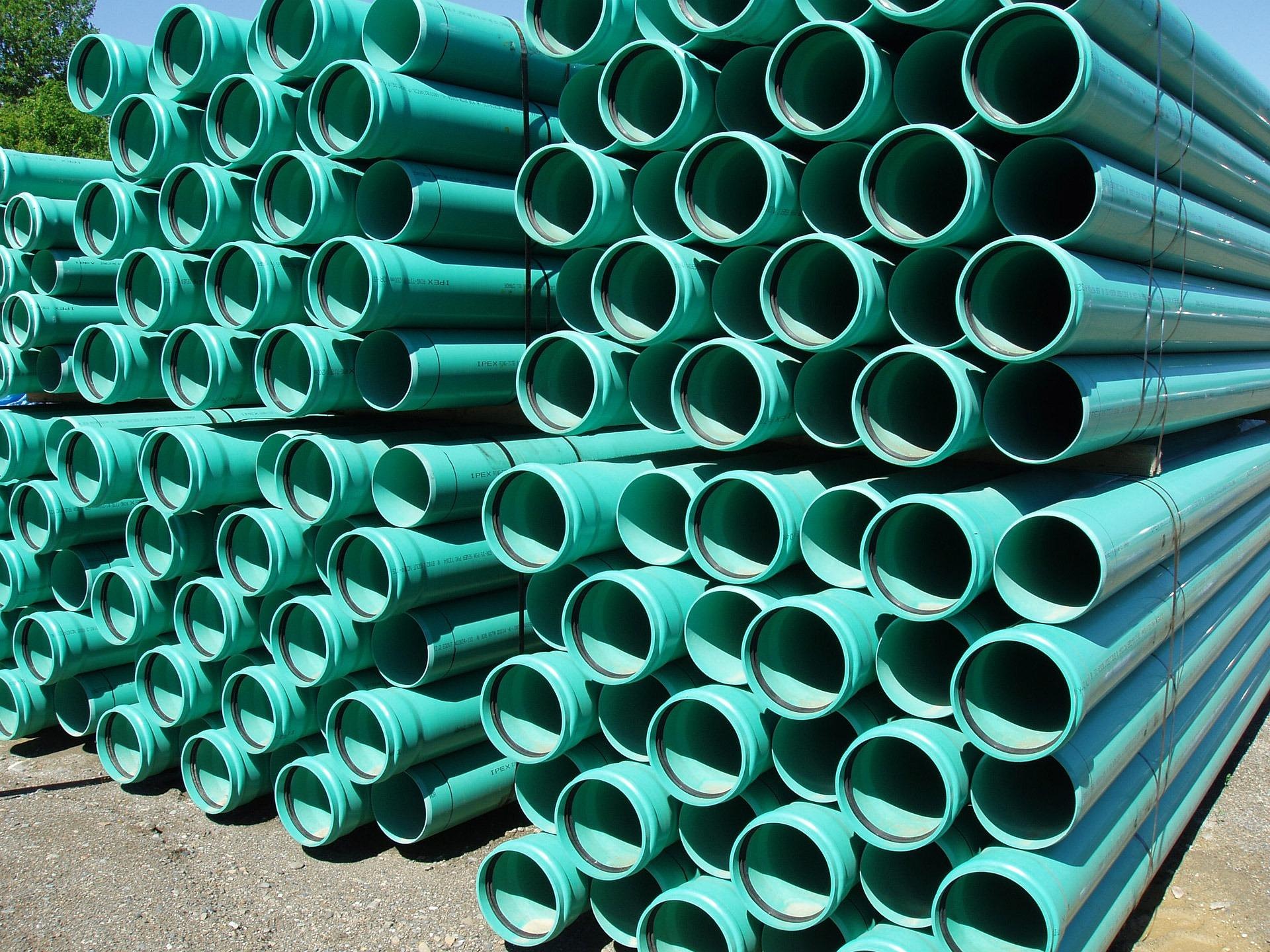
Our teams install polyethylene (PE) and metallic pipework using approved jointing and construction techniques, including butt fusion, electrofusion, welded steel systems and mechanical jointing. Installations are delivered using construction methods suited to site conditions, access constraints and programme requirements, ensuring each pipeline is built safely, efficiently and in line with applicable standards and network specifications. This approach supports consistent joint integrity and reliable long-term asset performance.
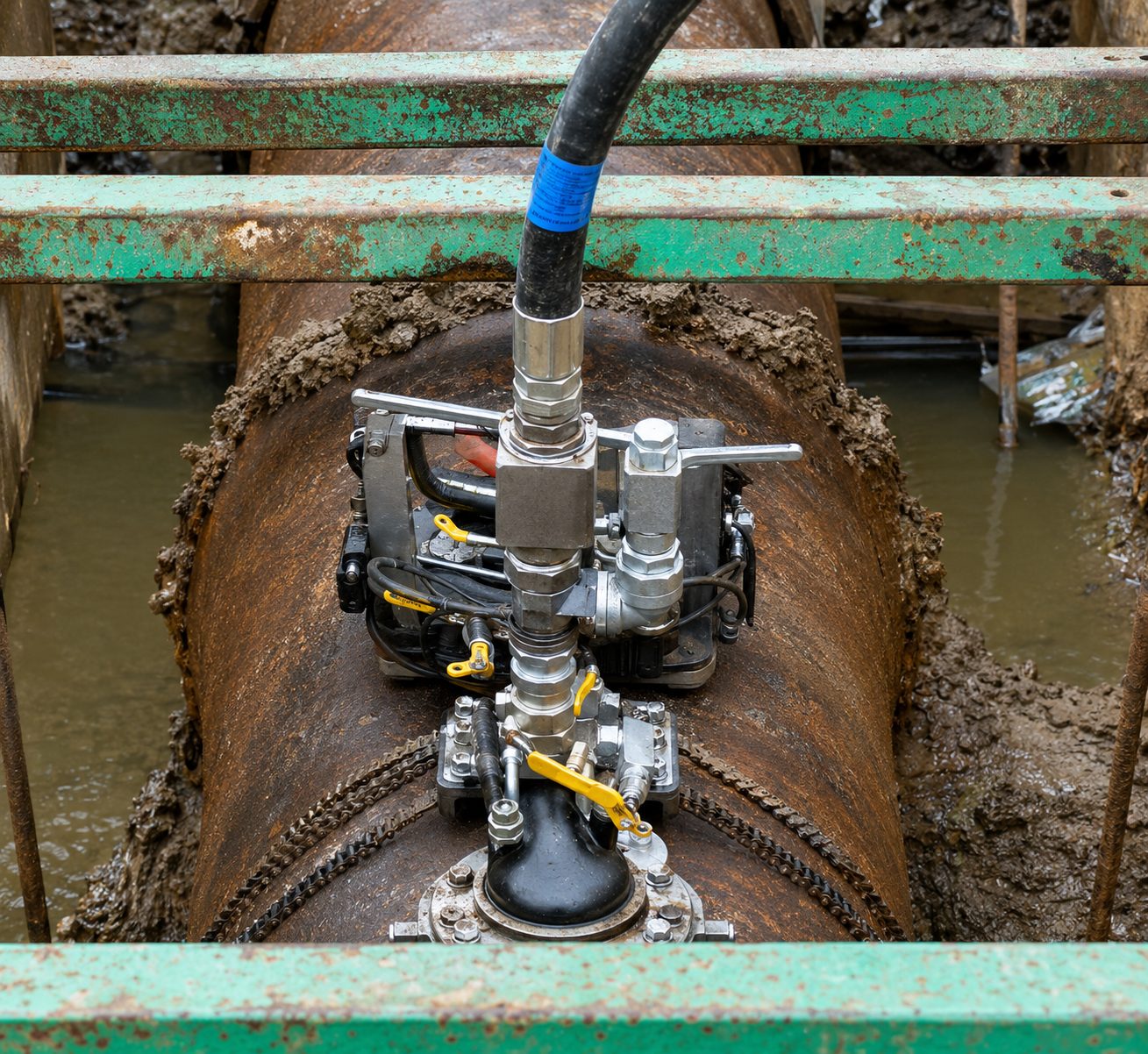
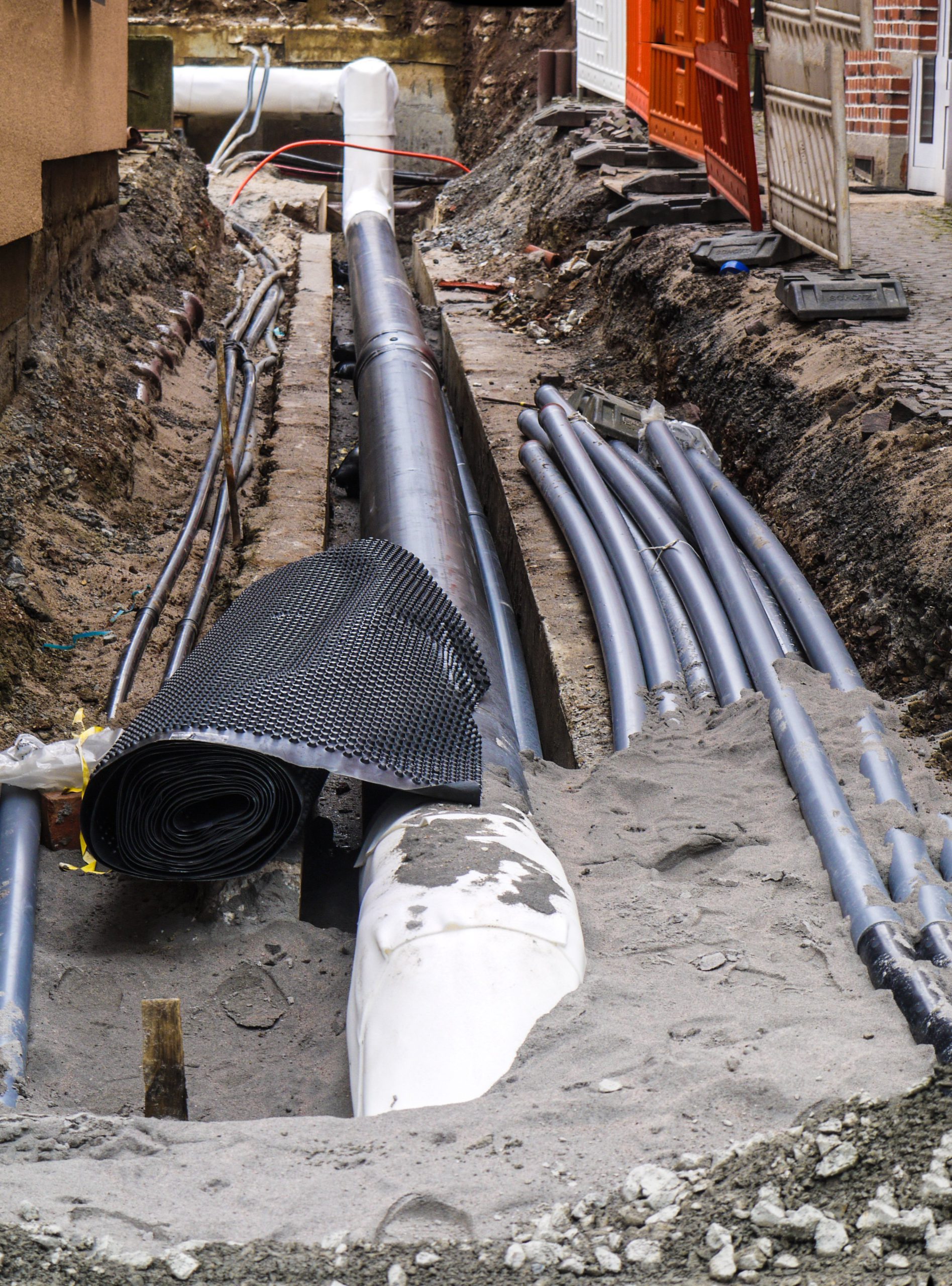
Radius Subterra regularly delivers pipeline diversions, bypass pipework and network modifications to support asset upgrades, renewals and operational changes. Temporary and permanent bypass systems maintain service continuity while works are underway. Where required, pipeline construction is coordinated with under pressure connections and flowstopping activities to complete final tie-ins while minimising disruption to network operation.
Our scope extends beyond physical installation to include commissioning, purging and decommissioning activities, ensuring pipelines are safely introduced into service or taken out of operation in a controlled manner. For gas networks, drawdown techniques can be incorporated to recover gas from isolated sections, reducing gas loss, environmental impact and operational cost.
All works are delivered by trained and competent technicians under approved procedures, with full coordination of construction sequencing, jointing control and quality checks. On completion, comprehensive reporting captures installation details, materials, jointing records and acceptance data. This structured process ensures traceability, compliance and long-term confidence in the installed pipeline across all industries we support.
Key Benefits
Manufacturer-backed expertise
As part of the Radius Group, which includes Radius Systems, our installation teams bring deep material knowledge, proven standards and an end-to-end understanding of pipeline construction and performance.
Integrated live network capability
We integrate installation works with in-house flowstopping and under-pressure connection techniques, enabling safe tie-ins, controlled isolations and seamless live network integration without service interruption.
Engineering-led delivery across multiple sectors
Experienced engineers and technicians plan and deliver compliant, safe installations across gas, water, biogas and industrial networks, ensuring repeatable outcomes in varied operating environments.
Pipework Installation & Mainlaying technologies
Engineered pipework installation techniques for polyethylene (PE) and metallic pipelines, supporting safe construction and modification across diverse industries, environments and operating conditions.
Butt fusion and electrofusion
Butt fusion and electrofusion are established polyethylene (PE) jointing methods used to form permanent, pressure-rated connections within PE pipeline systems. Both processes rely on controlled heat fusion to create a homogenous bond between components, producing joints with strength comparable to, or exceeding, that of the parent pipe when installed correctly. These techniques are widely adopted across all pipeline industries for long-term, high-integrity construction.
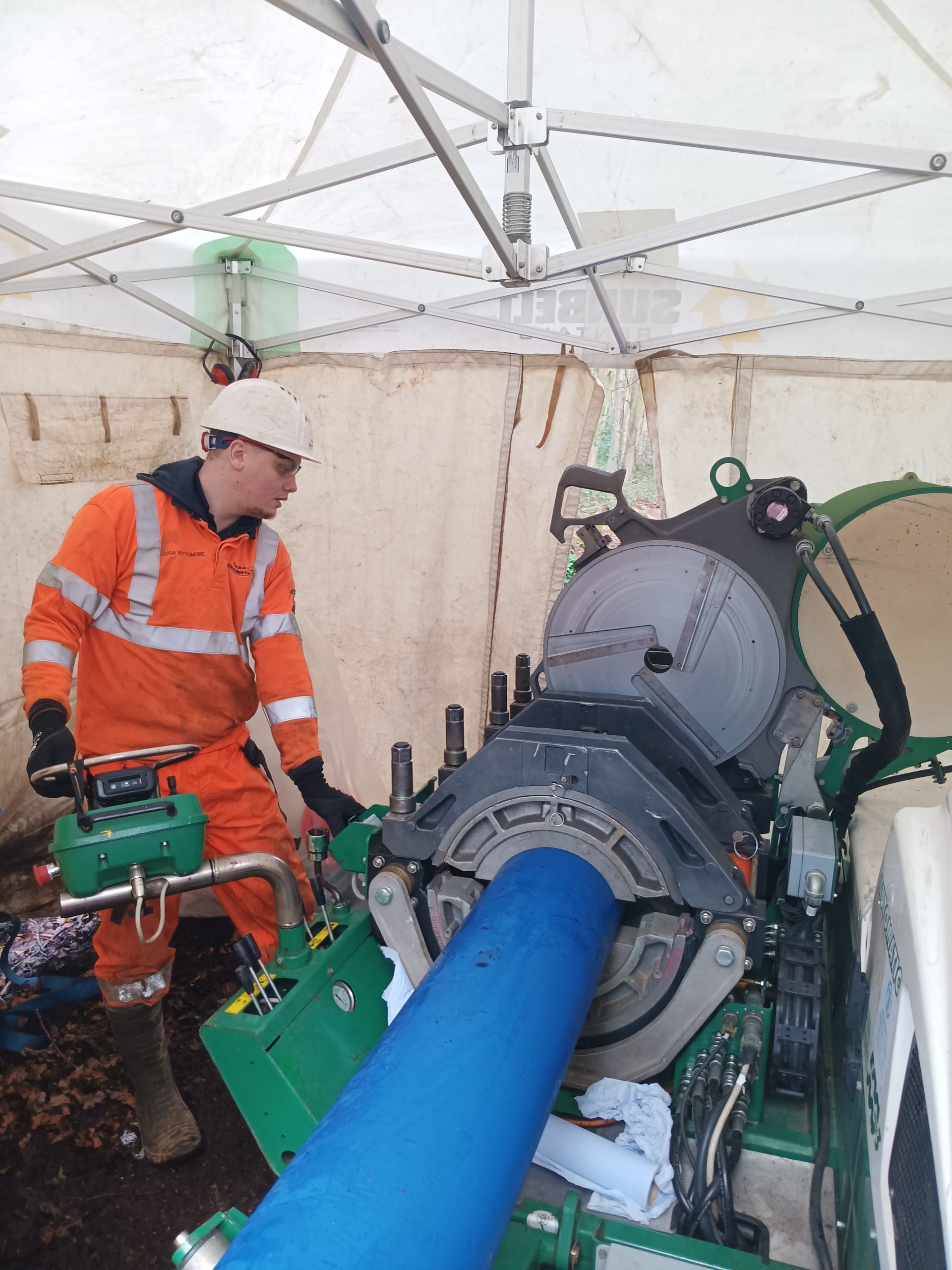
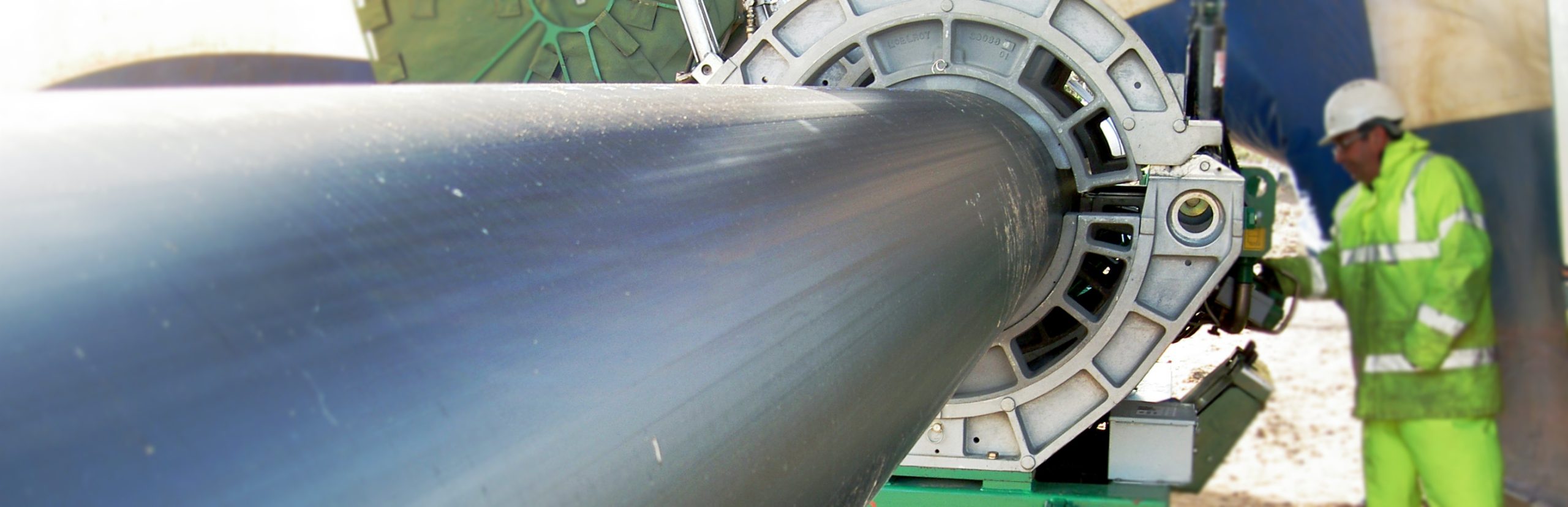
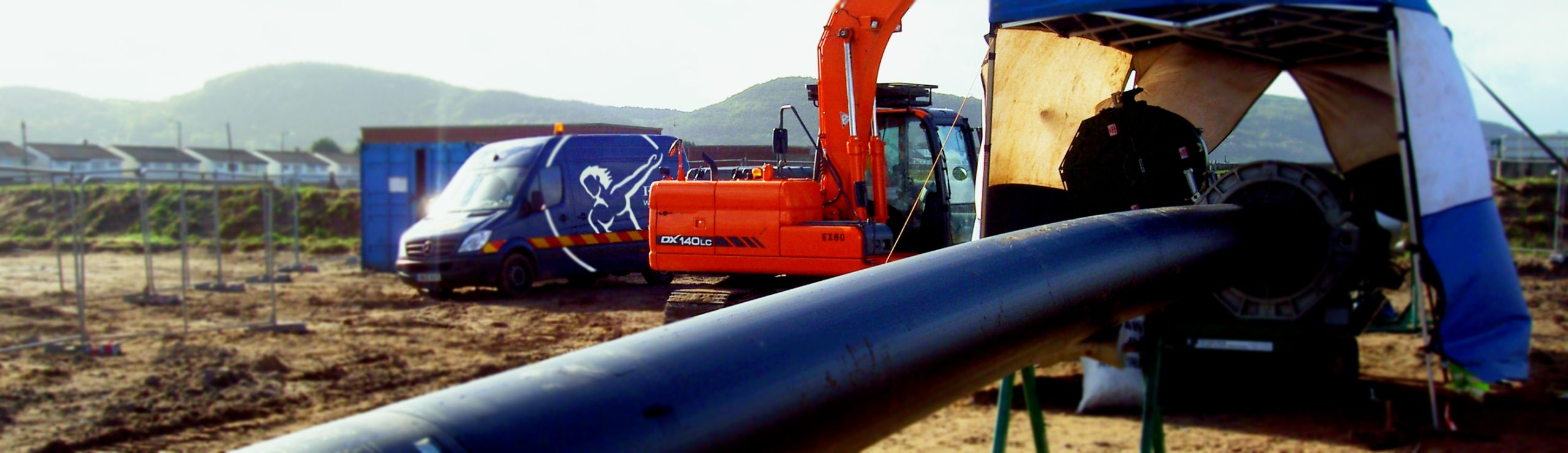
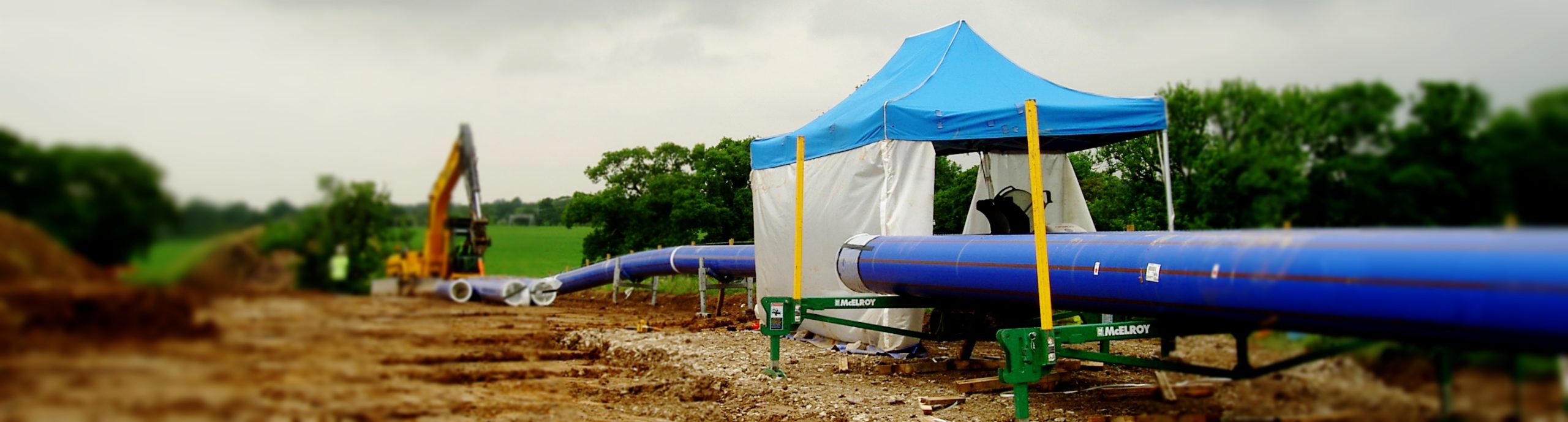
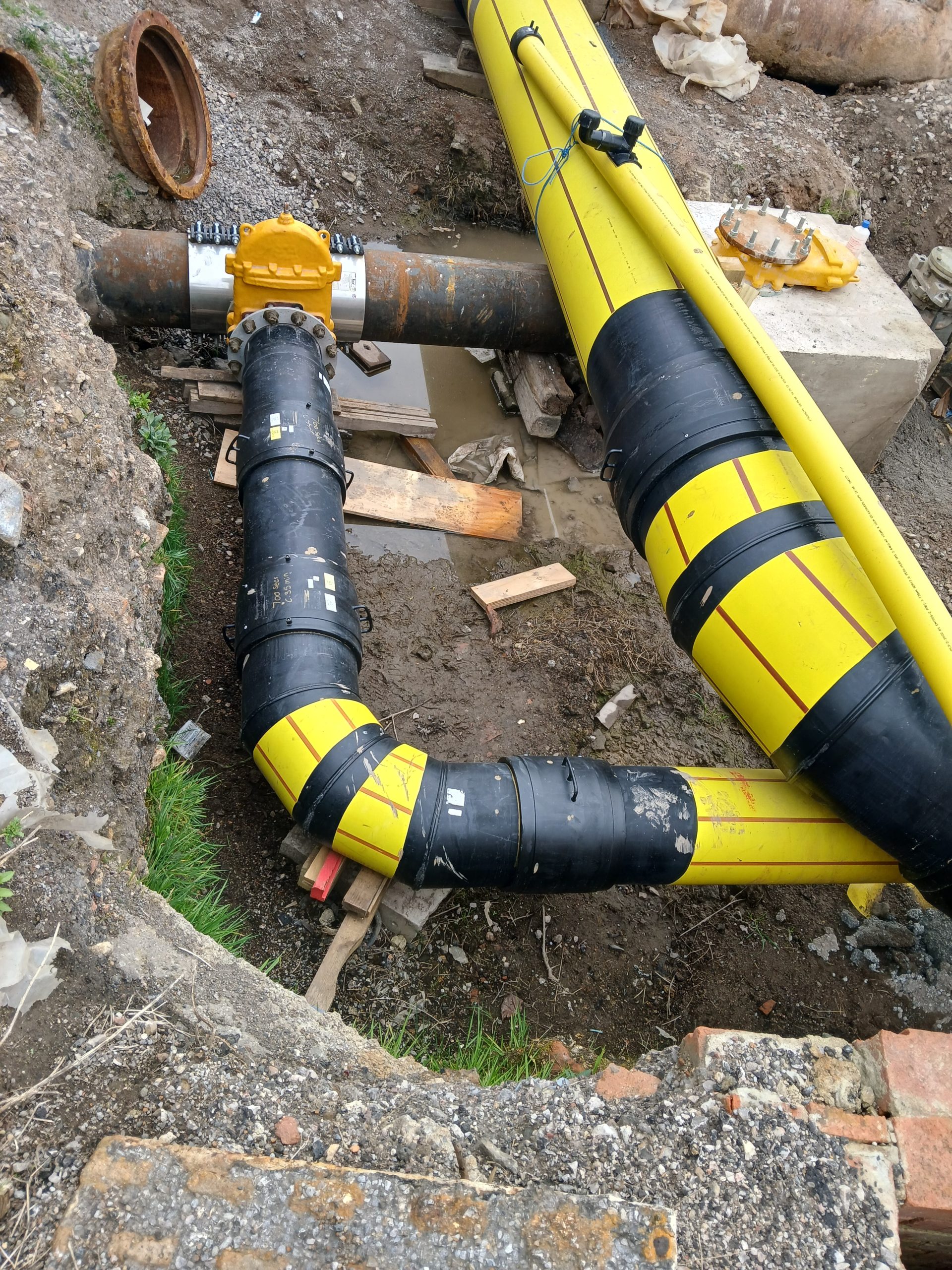
Butt fusion is commonly used for mainlaying, pipeline extensions and diversions. Pipe ends are prepared, aligned and heated against a temperature-controlled plate before being brought together under controlled fusion pressure and allowed to cool. The resulting joint forms a continuous fusion weld, creating a fully integrated pipeline well suited to long pipeline runs, larger diameters and projects where joint integrity is critical.
Electrofusion is typically applied where site constraints, geometry or construction sequencing require greater flexibility. Using fittings with integral heating elements, electrofusion enables reliable jointing for smaller diameter pipelines, smaller projects, and repair works across a range of diameters, particularly in confined spaces and tie-in locations where butt fusion equipment may be impractical.
Radius Subterra undertakes pipework installation and mainlaying projects of varied scales, delivering an end-to-end solution from construction planning through to final connection. Our teams apply both butt fusion and electrofusion as appropriate, using approved procedures, trained technicians and controlled jointing processes. Installation data and fusion records are captured as part of completion reporting, providing traceability and confidence in the long-term performance of the installed pipeline.
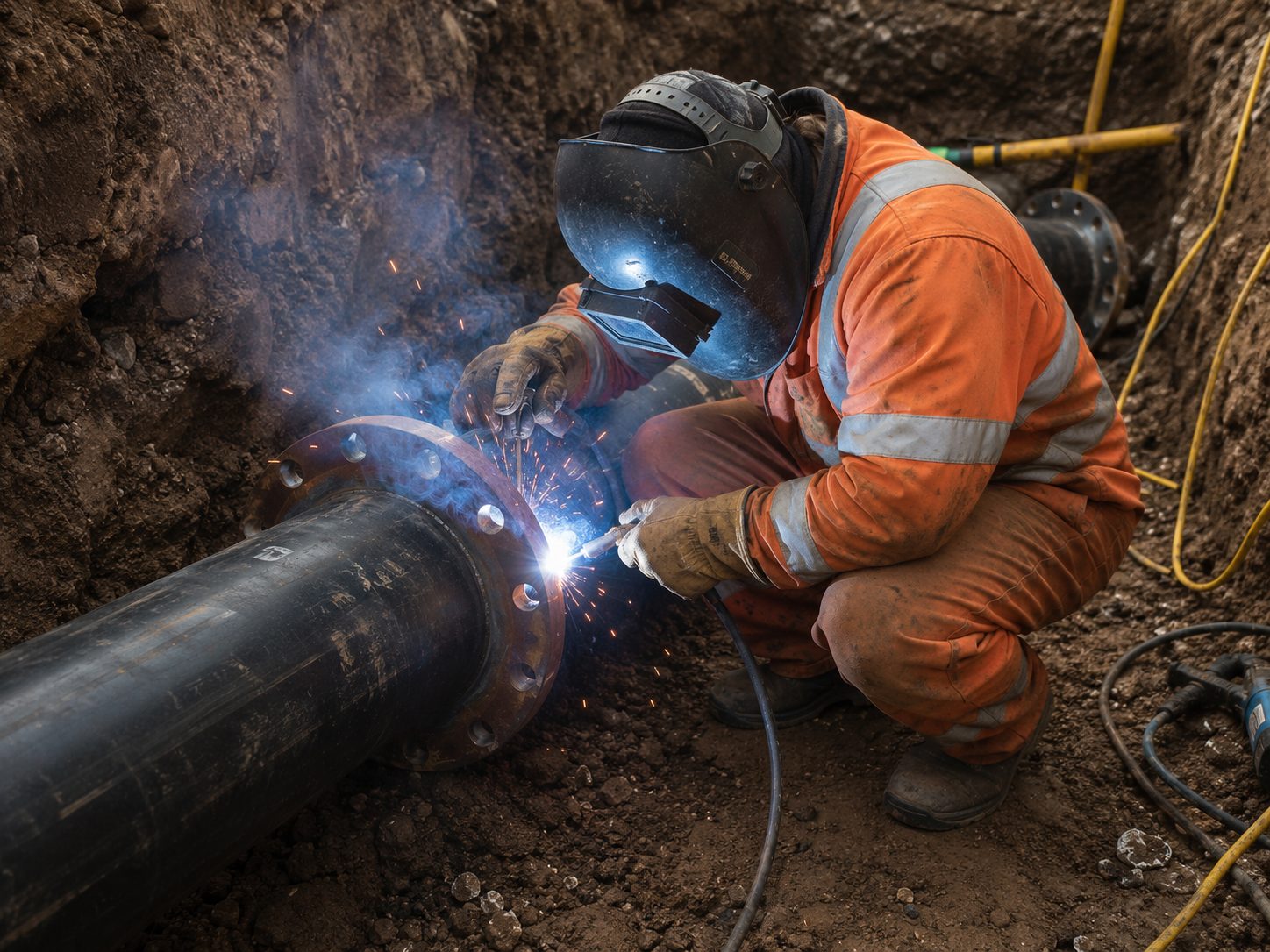
Metallic pipework installation and welding
Metallic pipework installation continues to play an important role across a range of pipeline applications where system requirements, regulatory constraints or interface conditions dictate the use of steel or ductile iron rather than polyethylene (PE). Radius Subterra delivers the installation and welding of metallic pipelines where metallic materials are specified due to operating pressure classes, temperature exposure, fire performance requirements, mechanical loading, or interfaces with plant, valves or specialist equipment.
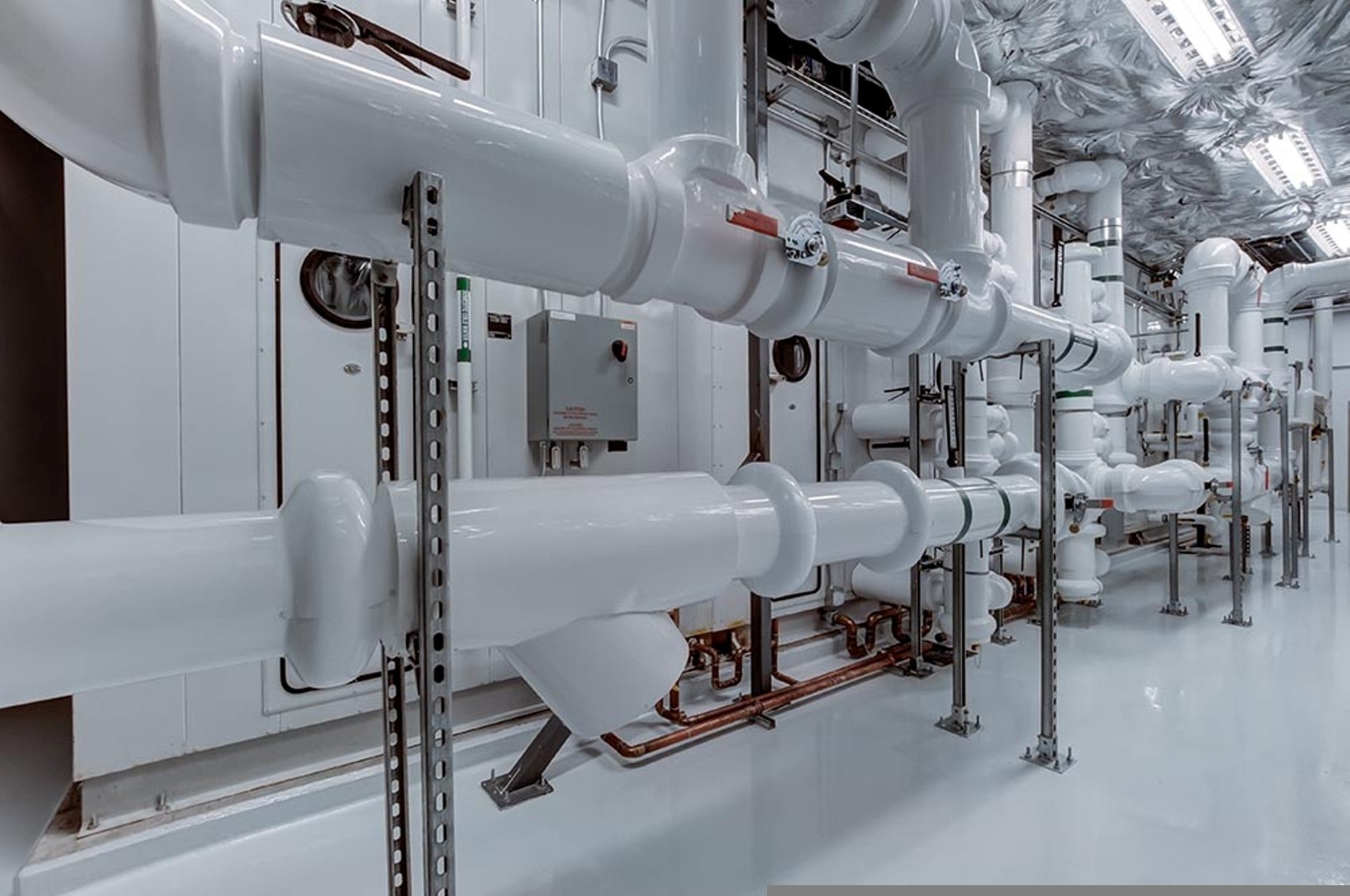
Our teams install new metallic mains, diversions and network modifications for industrial, utility and energy-related infrastructure. Typical applications include fire mains, tank infill and transfer pipelines, above-ground pipework, plant connections, valve stations, pressure control installations and legacy network alterations requiring metallic systems. Metallic pipework is also used for hydrocarbons, process fluids, steam, chemicals and other conveyed media requiring specific material compatibility or regulatory standards.
Works are supported by coded welding capability, controlled fabrication, inspection and testing, and appropriate coating or corrosion protection systems. Installation methods are selected to suit site conditions, access constraints and operational requirements, ensuring accurate alignment, structural integrity and long-term performance.
Where required, metallic pipework installation is coordinated with under pressure connections, flowstopping activities and final tie-ins to live networks, allowing construction to progress while maintaining operational continuity. All works are delivered by experienced teams with structured planning, quality control and completion reporting, providing a safe, compliant and engineered installation solution across complex operating environments.
Pipeline diversions, bypass pipework and network modifications
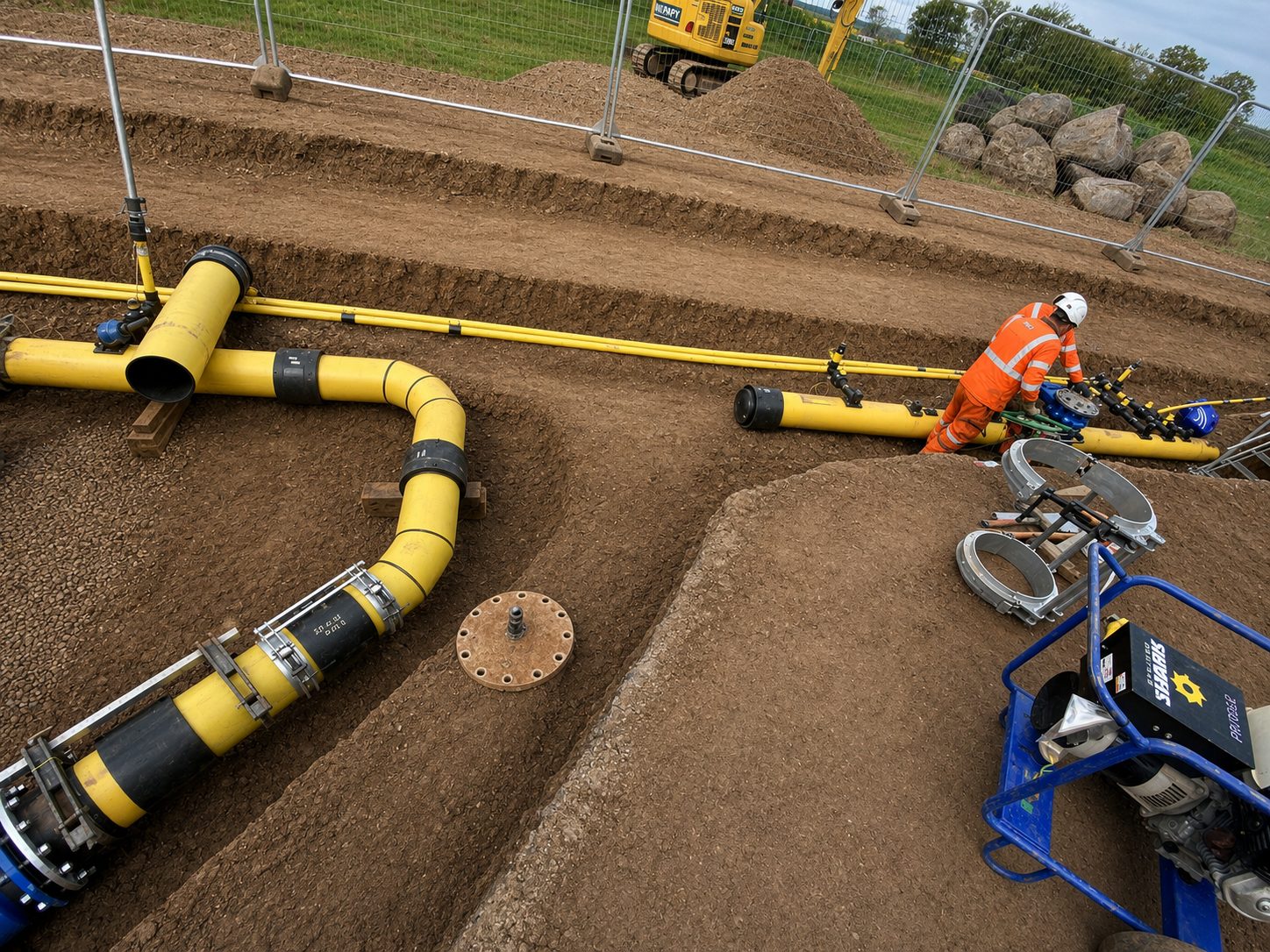
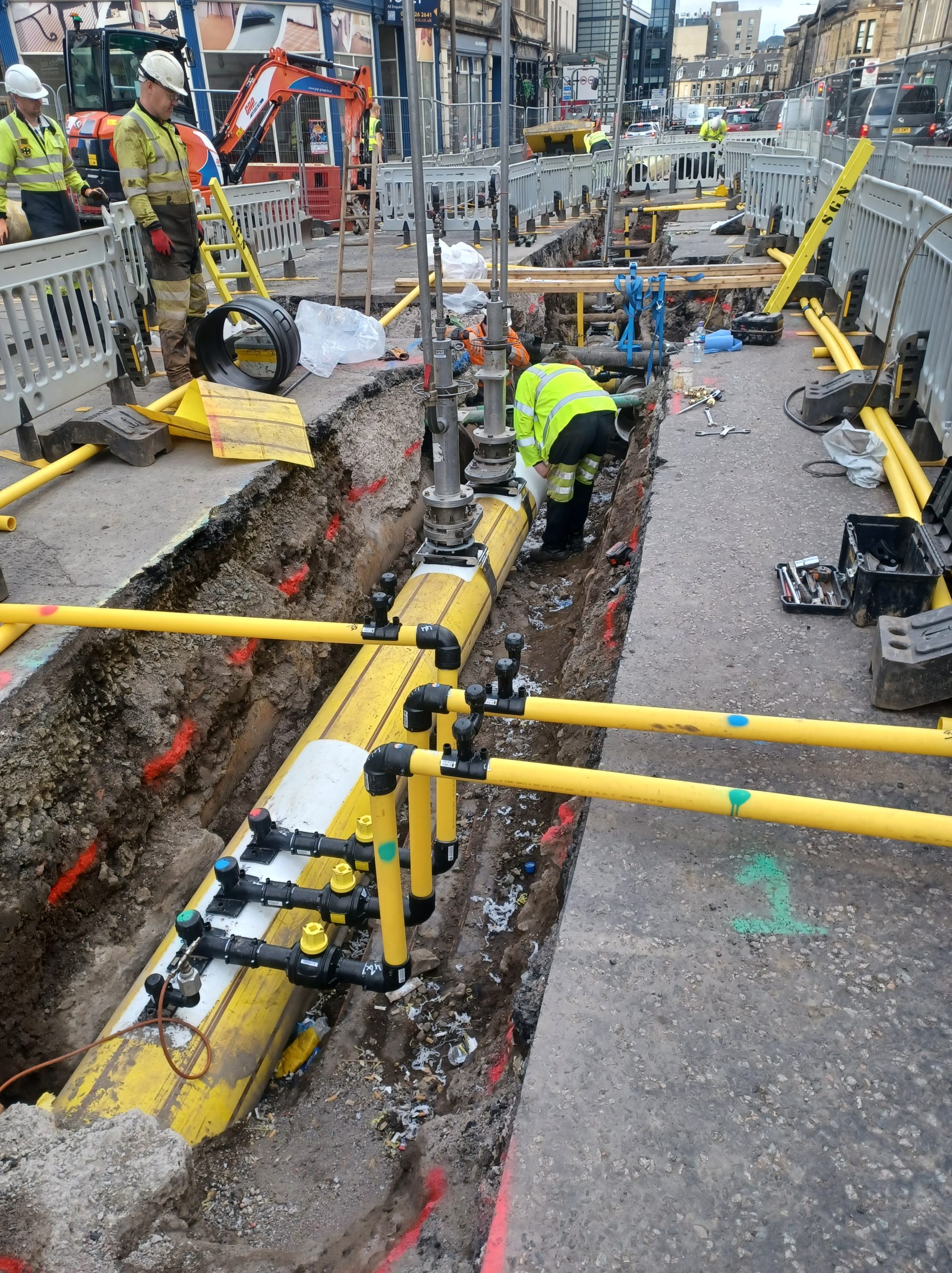
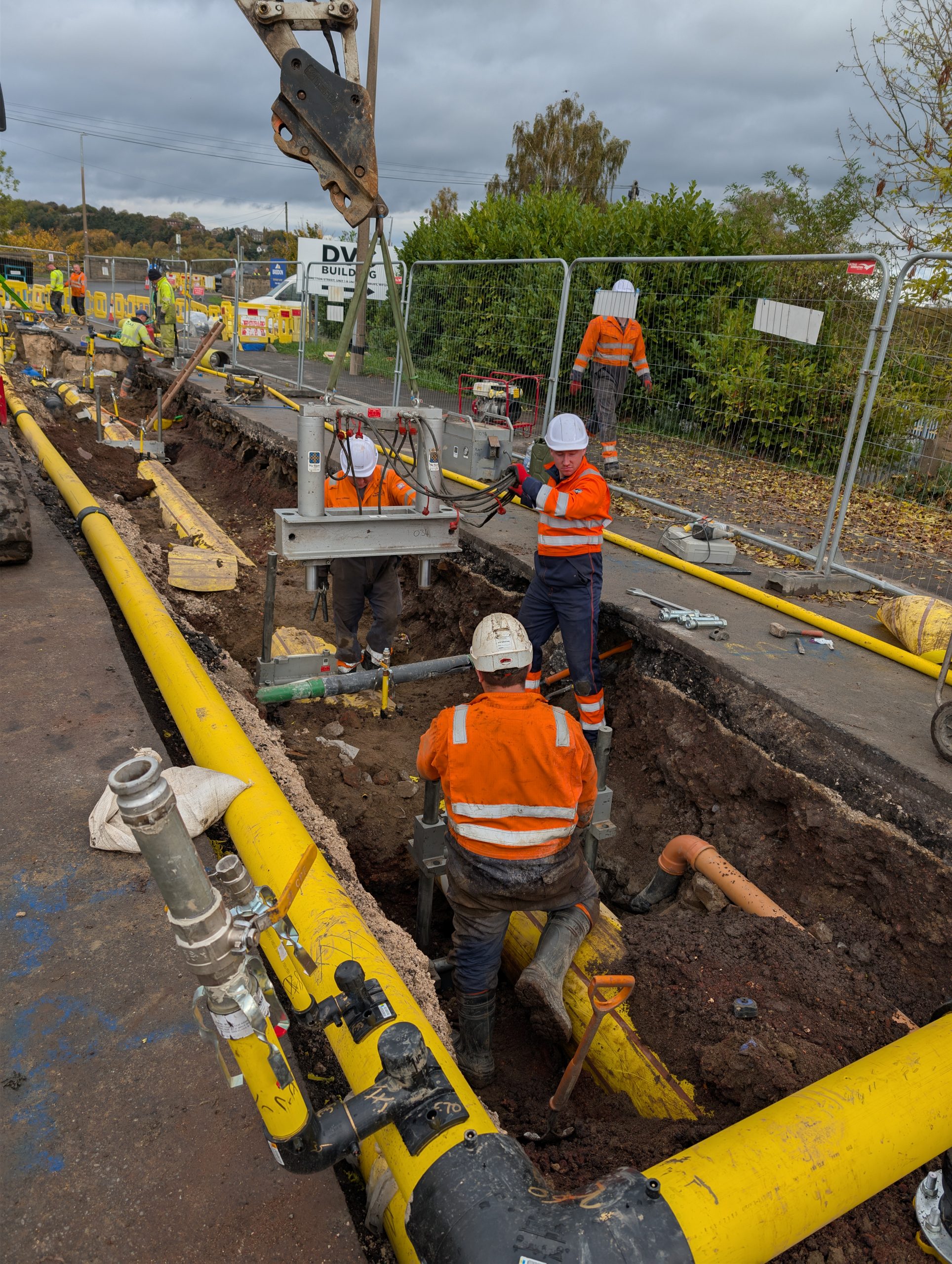
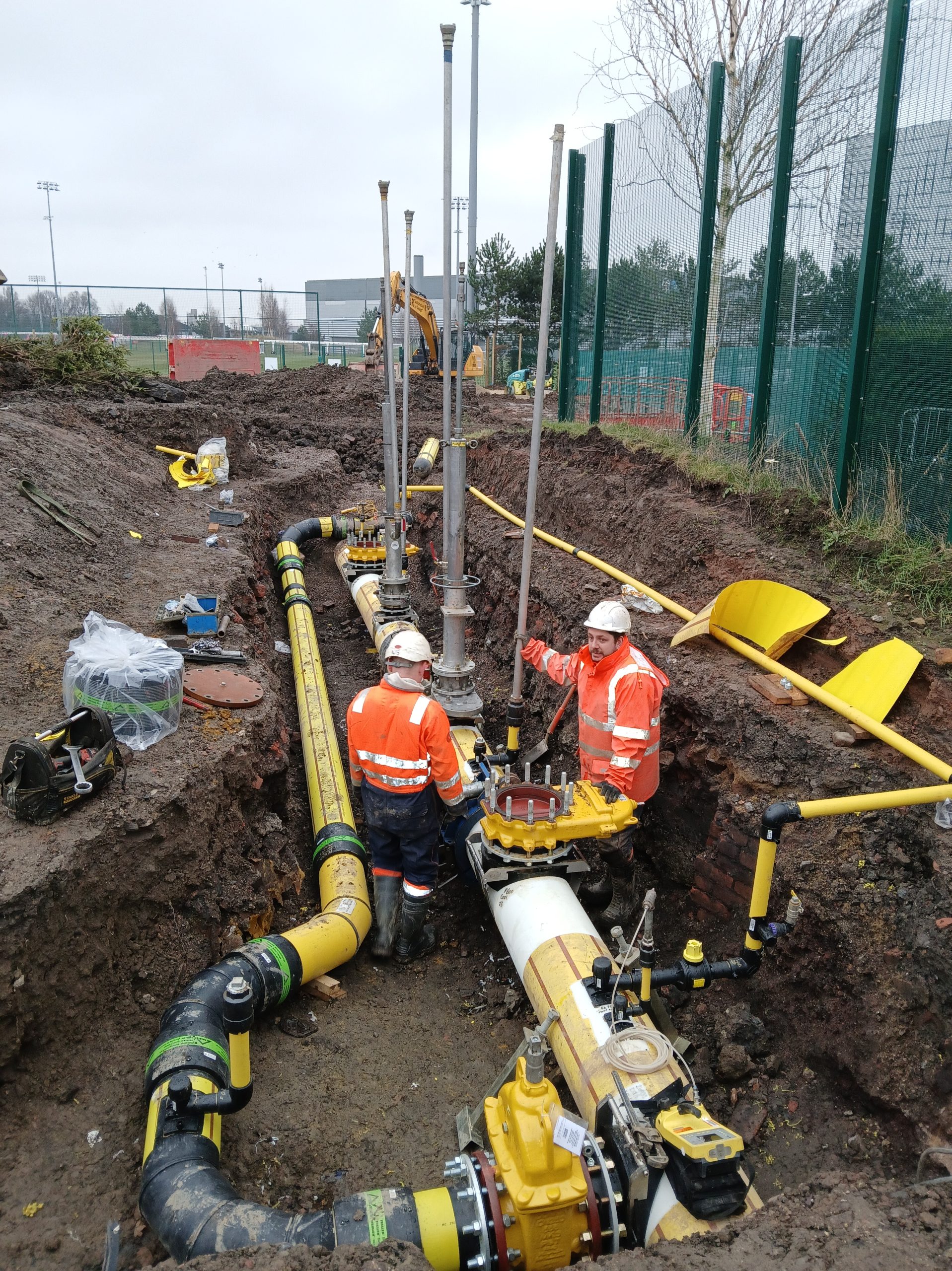
Pipeline diversions, bypass pipework and network modifications are delivered to enable asset replacement, capacity upgrades, third-party works and infrastructure changes while maintaining control of existing pipeline systems. Radius Subterra provides engineered solutions across polyethylene (PE) and metallic pipelines, supporting a wide range of industries, environments and operating conditions.
Diversions are installed to permanently re-route pipelines around obstructions, developments or constraints, while bypass pipework is used to temporarily maintain continuity of service during repair, replacement or modification works. Bypass systems can be configured for short-term or long-term use and are designed to accommodate required flows, pressures and operational constraints.
Network modifications may include alterations to pipeline alignment, installation of new pipe sections, valves or fittings, and integration of new assets into existing systems. Where required, diversion and bypass installations are fully coordinated with under pressure connections and flowstopping techniques to enable controlled tie-ins and transitions between live and offline pipework. This approach maintains operational continuity while ensuring safe sequencing of construction activities.
All diversion, bypass and modification works are engineered and planned in advance, with jointing, welding, testing and commissioning processes selected to suit the pipeline material and application. Installations are completed in accordance with applicable standards and client requirements, with full completion reporting issued to support safe operation, compliance and long-term network performance. This structured process ensures traceability and confidence in the modified pipeline assets.
Commissioning, purging and decommissioning
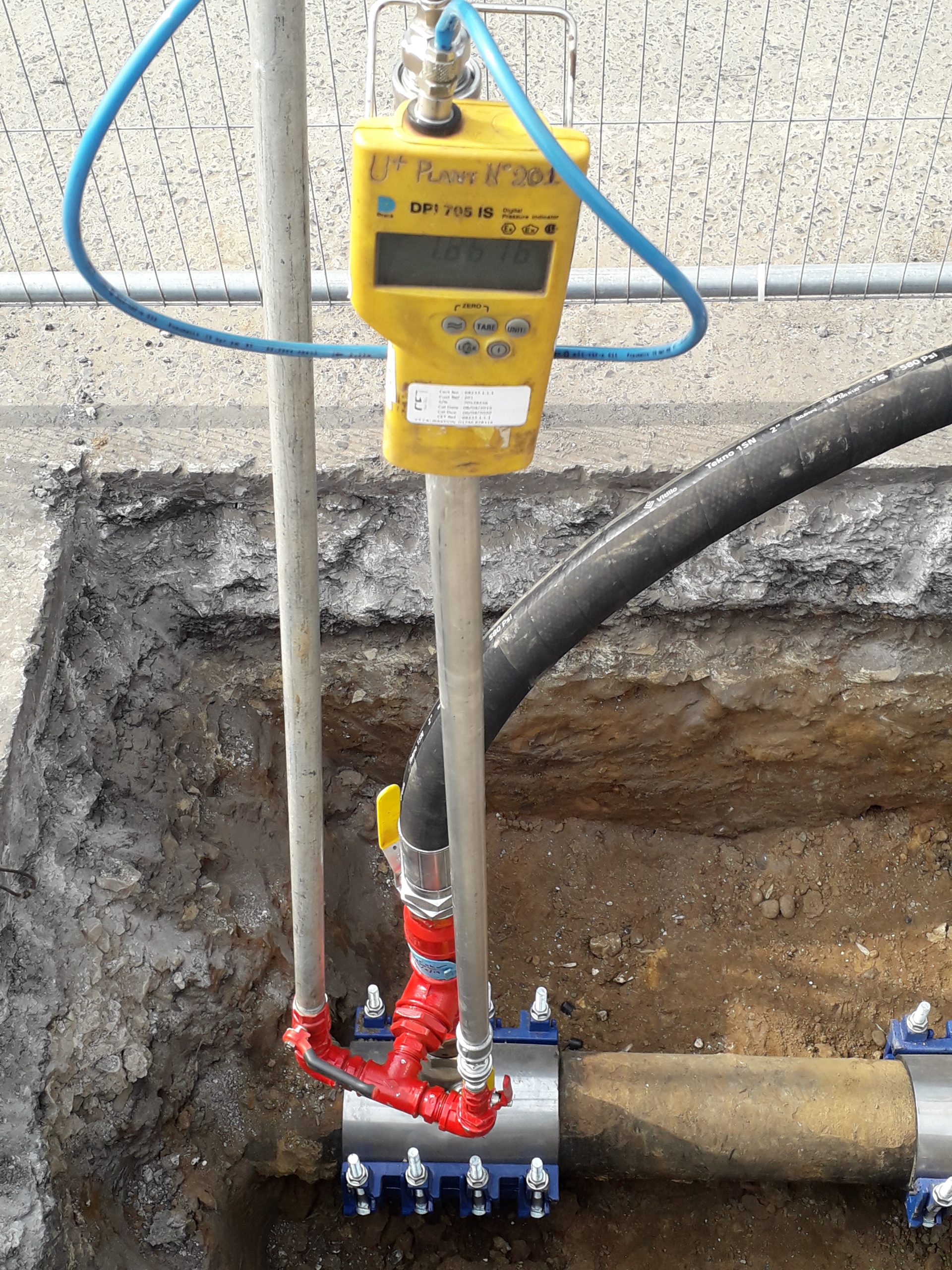
Commissioning, purging and decommissioning activities are critical stages in the safe introduction, modification or retirement of pipeline assets. Radius Subterra delivers controlled procedures across polyethylene (PE) and metallic pipelines to support new installations, network modifications, diversions and asset removal works. Commissioning prepares new or modified pipelines for operational service, including controlled filling, purging of air or inert gases, pressure testing coordination and final verification checks to confirm system integrity prior to handover.
Purging operations are completed to safely displace air, gas or process media within pipelines during commissioning, maintenance or modification activities. Techniques are selected to suit pipeline material, diameter and operating conditions, ensuring controlled gas movement and safe transition between states while maintaining network safety.
Decommissioning works support the permanent or temporary removal of pipeline sections from service. Activities may include isolation, purging, cutting, removal or capping of redundant assets, often coordinated with flowstopping, under pressure connections or diversions. These works are executed in a controlled manner to maintain safety, environmental protection and regulatory compliance.
Each activity is underpinned by documented procedures, dynamic risk assessment and competent delivery teams. Full records provided on completion to support asset management and future network planning, ensuring safe, compliant and reliable pipeline operation throughout each lifecycle stage.
Drawdown (Gas recovery)
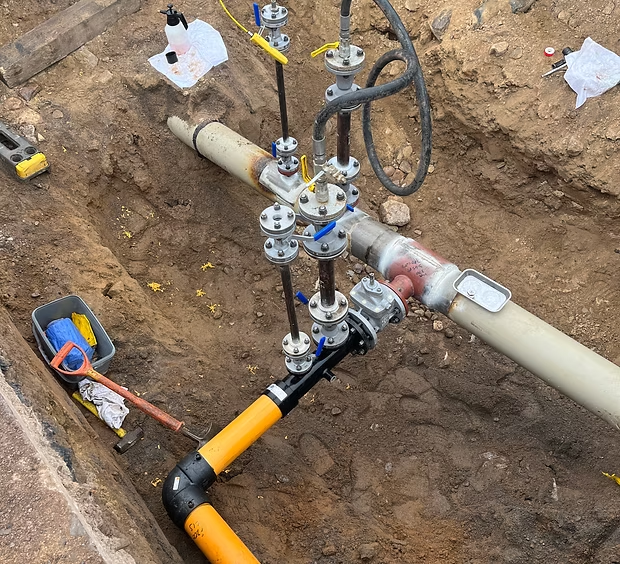
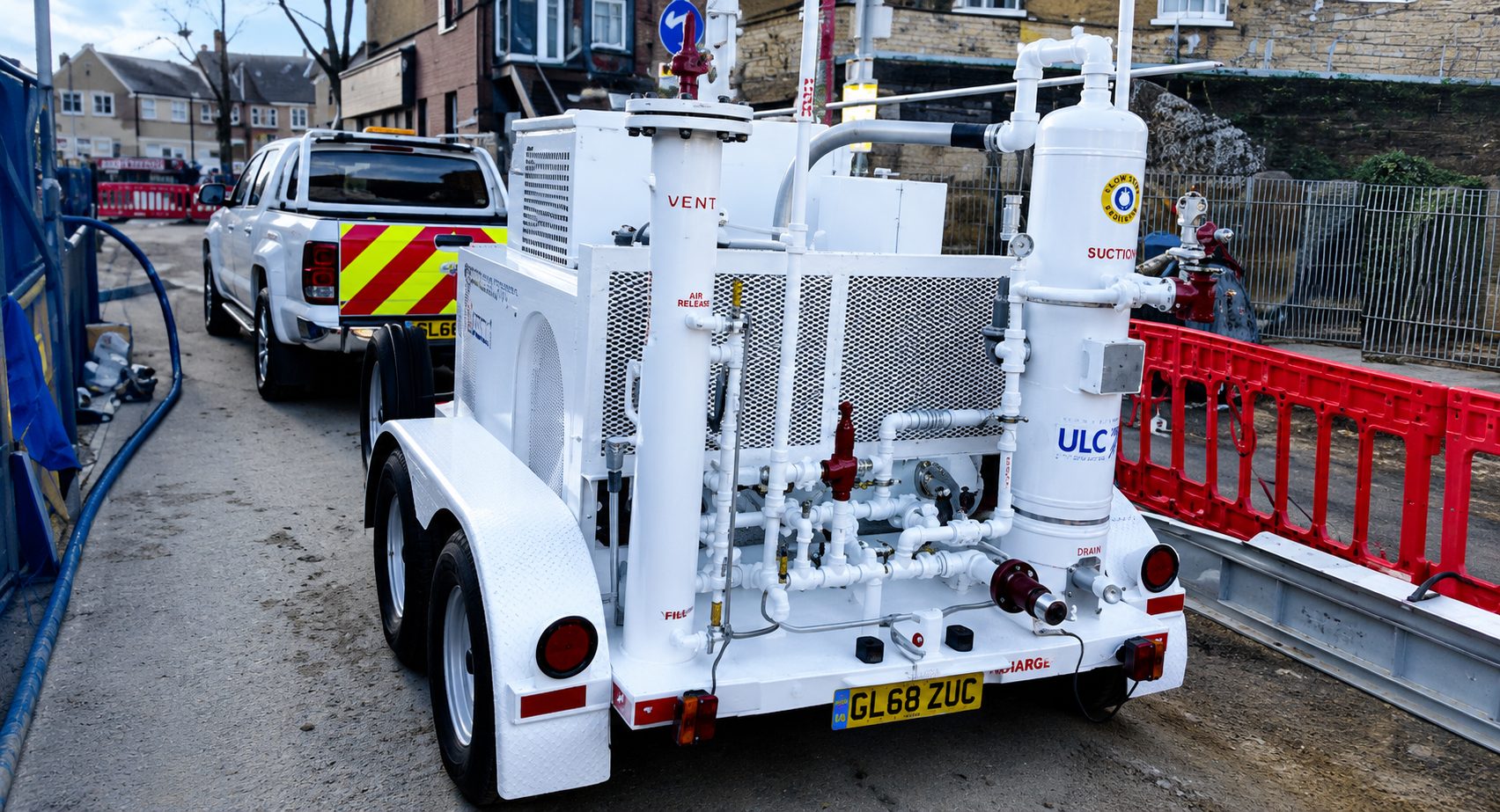
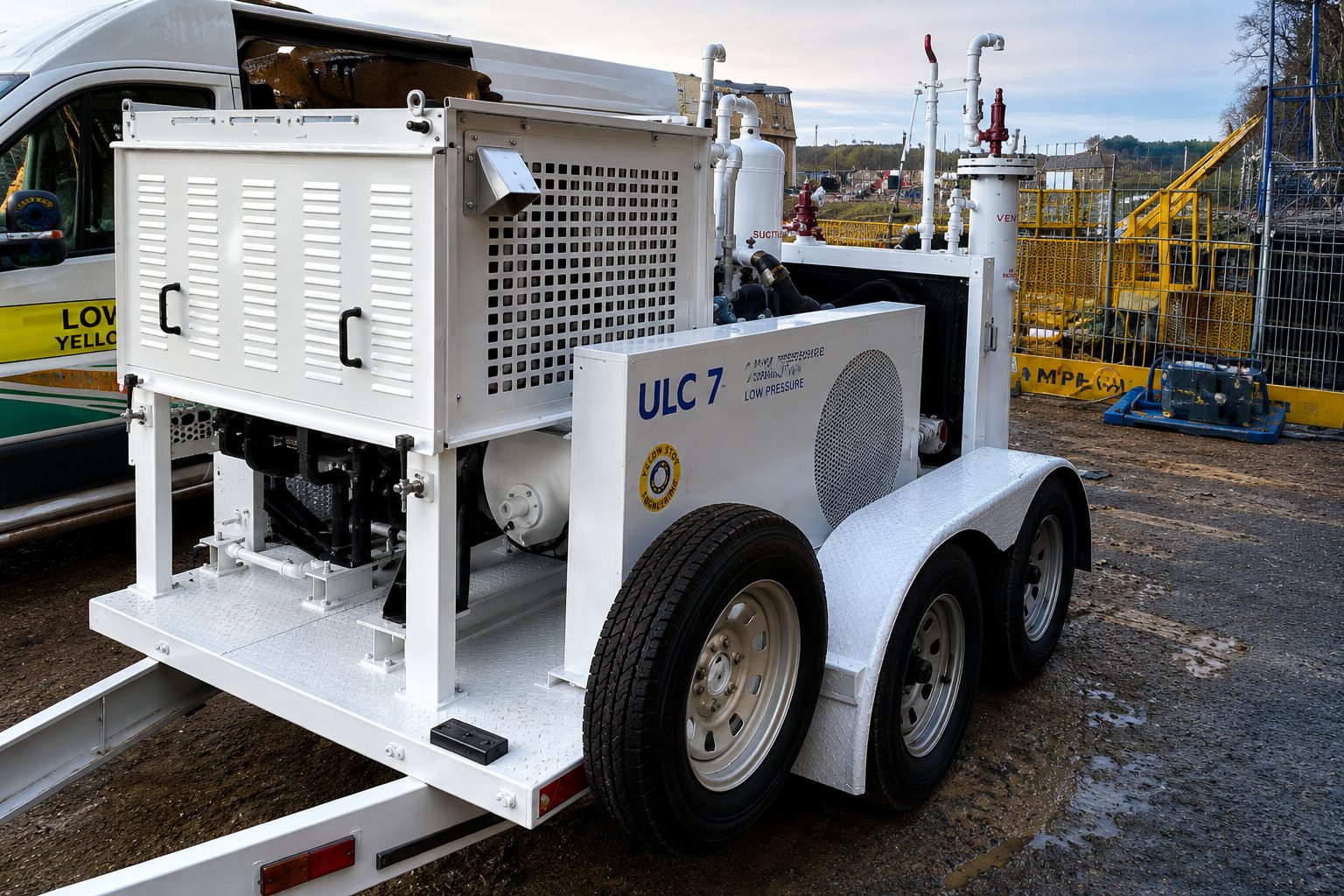
Drawdown is an emerging gas network technique used to remove gas from an isolated section of pipeline and reintroduce it back into the live network beyond the isolation point, rather than venting to atmosphere. The method is typically deployed during decommissioning, diversions, cut-outs and major modifications, where sections of main would traditionally be depressurised by controlled venting.
By recovering gas that would otherwise be released, drawdown delivers significant operational and financial benefits. The reduction in vented gas can result in substantial cost savings for network owners through retention of valuable gas within the system, while also reducing the time and resources associated with extended venting activities. In parallel, drawdown offers a major environmental advantage by significantly lowering methane emissions, directly supporting decarbonisation targets and sustainable performance commitments.
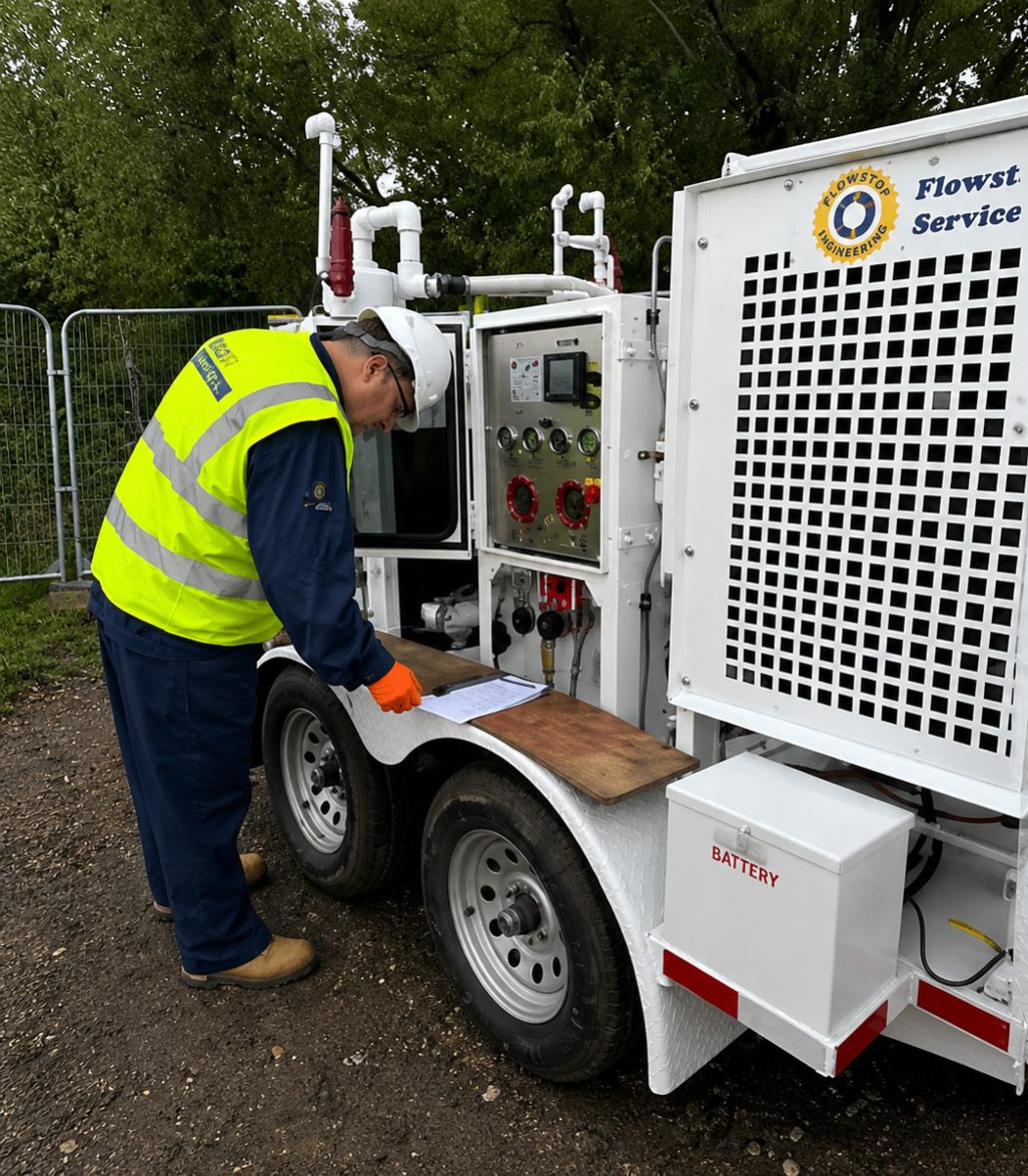
Radius Subterra supports drawdown operations as part of wider live pipeline and isolation activities, working alongside approved equipment and specialist partners. Drawdown is integrated with flowstopping and isolation techniques, allowing gas recovery to be carried out once the pipeline section has been safely isolated and controlled.
All drawdown activities are planned in advance and delivered in accordance with applicable network procedures, risk assessments and operational constraints. Monitoring and reporting are undertaken throughout the process to demonstrate safe gas recovery, regulatory compliance and measurable reductions in both gas loss and emissions. As adoption increases across UK gas networks, drawdown is becoming an increasingly important tool for delivering lower-cost, lower-emission pipeline modification and decommissioning works.
Chlorination and dechlorination
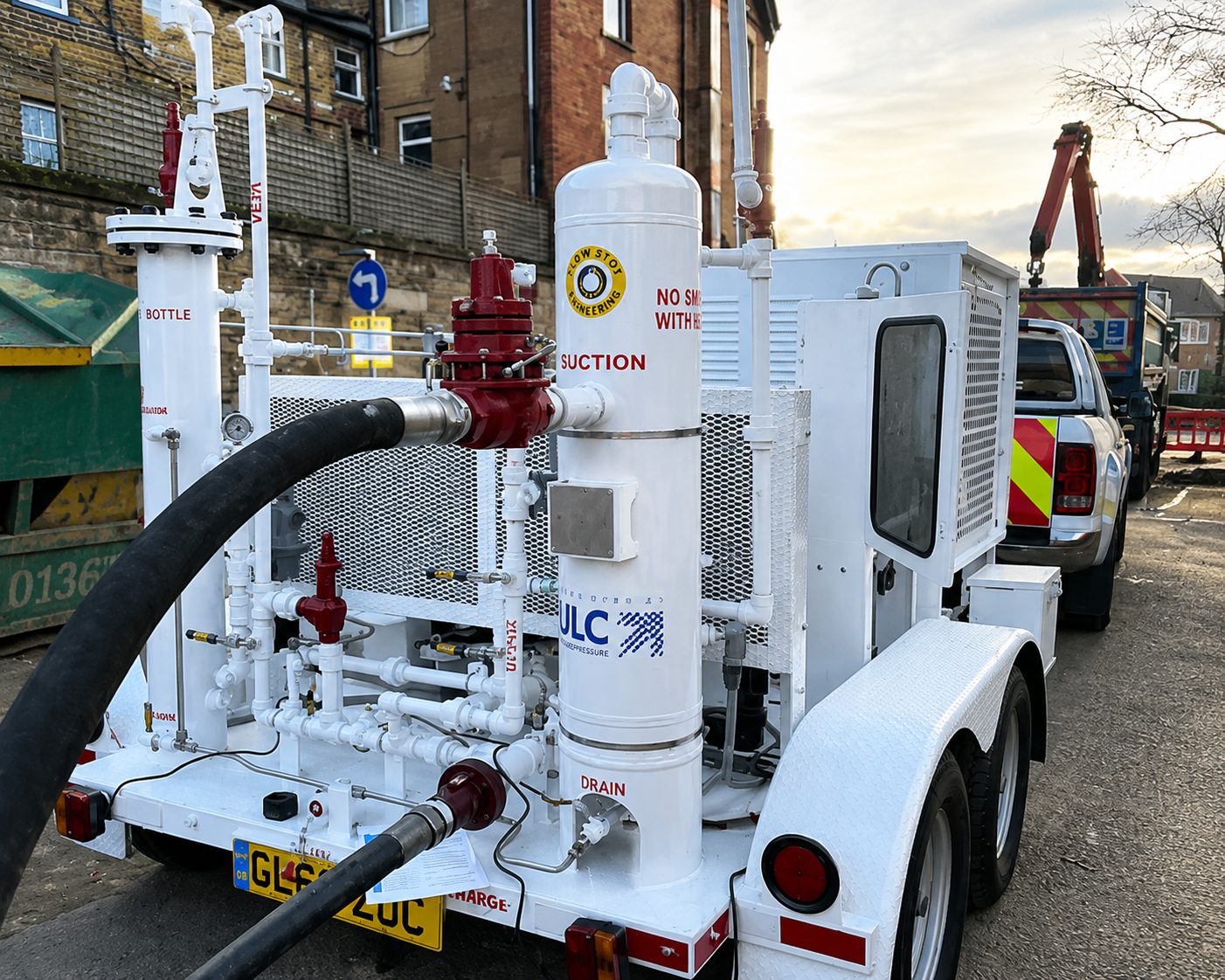
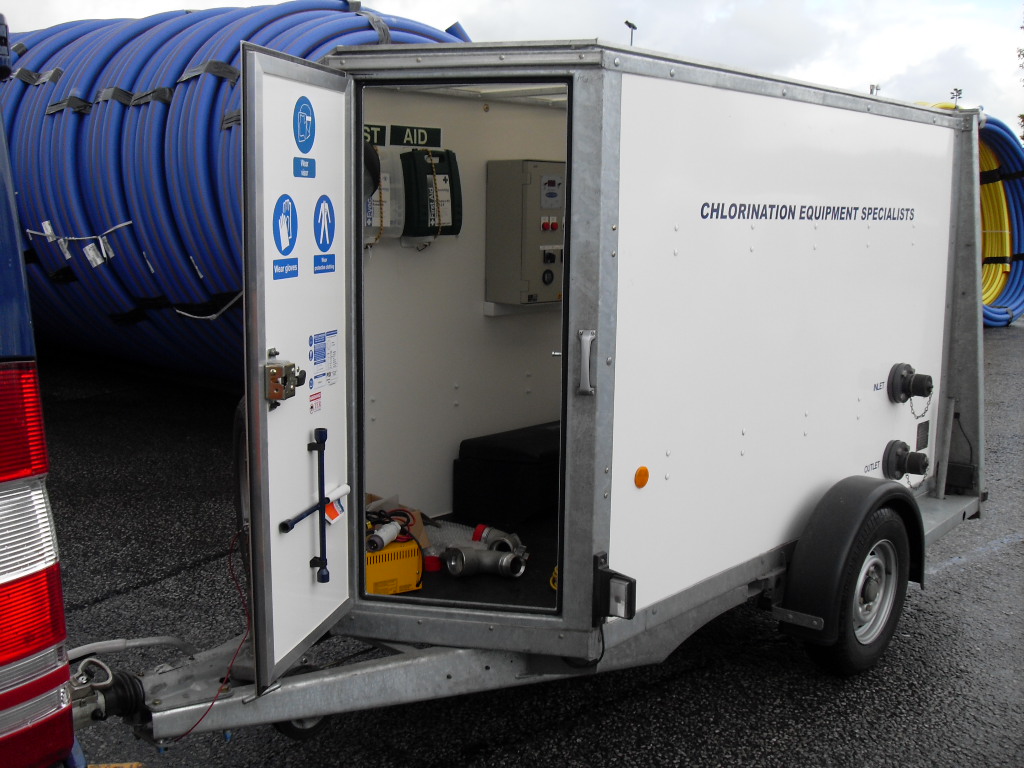
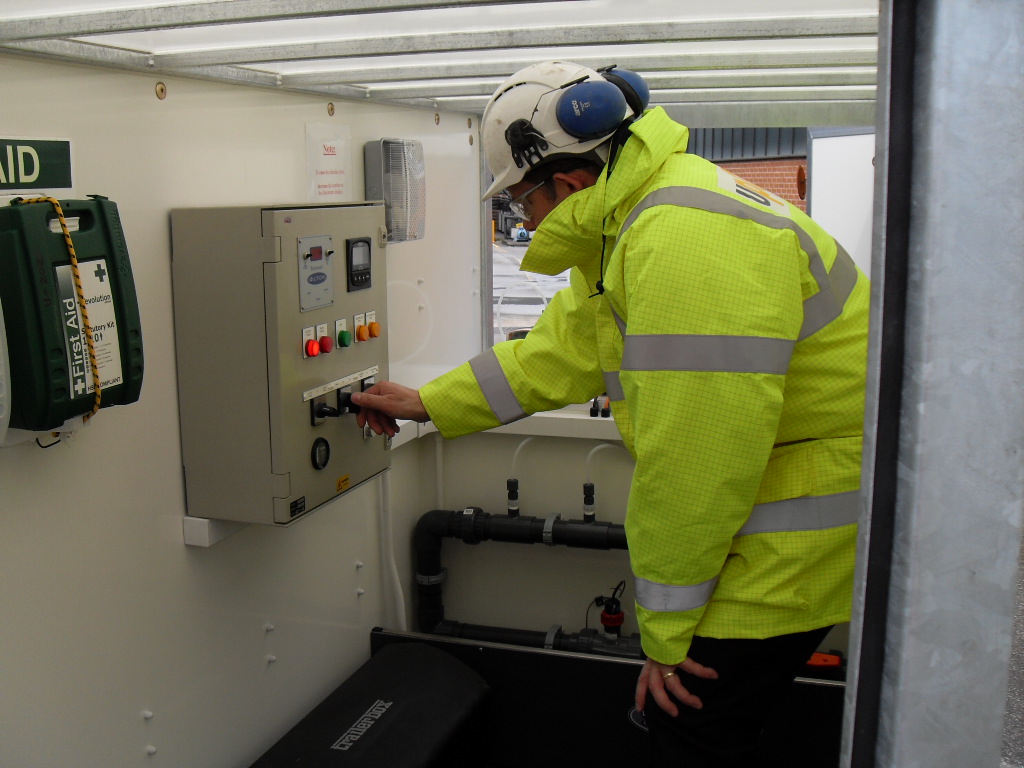
Chlorination and dechlorination are a critical part of pipeline installation, modification and commissioning activities, ensuring new or disturbed assets are returned to service safely and in full compliance with network and regulatory requirements. These activities are routinely delivered alongside new pipe installations, repairs, diversions, rehabilitation works and planned commissioning programmes.
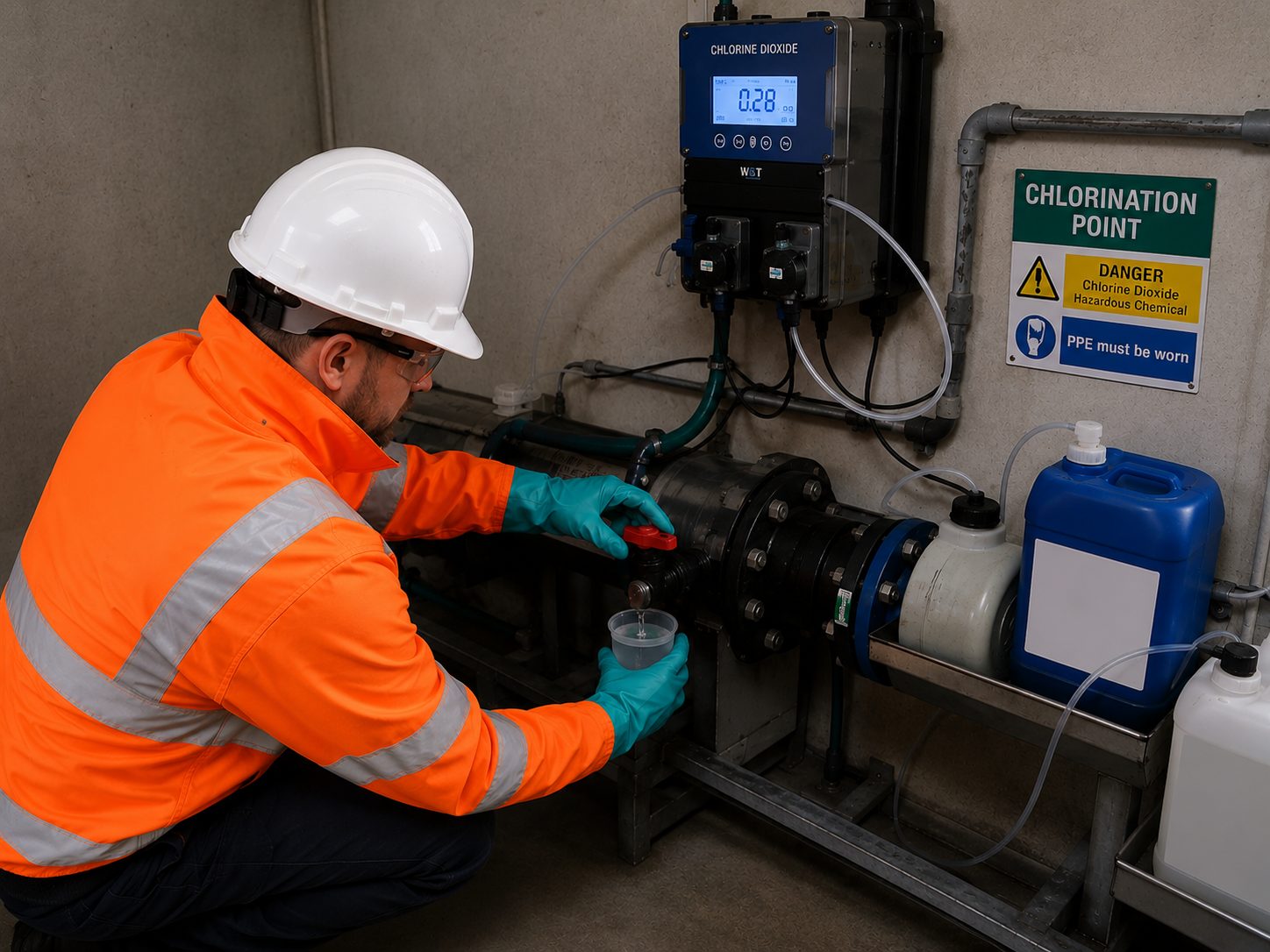
Chlorination is undertaken to disinfect pipelines following construction or maintenance works, removing microbiological contamination before the asset is brought into operational use. Chlorine dosing levels and contact times are carefully controlled in line with approved procedures and client specifications, with full consideration given to pipeline length, diameter, materials and operating conditions. Sampling and verification are completed as required to confirm successful disinfection before progressing to commissioning.
Once disinfection has been completed, dechlorination is carried out to safely neutralise residual chlorine prior to discharge. This step is essential to protect downstream assets, receiving waters and the environment, and is managed in accordance with environmental controls and consent requirements. Dechlorination methods are selected to suit site constraints, volumes and discharge routes, ensuring compliant and controlled removal of disinfectant.
All chlorination and dechlorination activities are fully planned, risk assessed and integrated into the wider construction sequence. Monitoring, sampling, contact time verification and compliant disposal are documented as part of overall completion records, providing clients with assurance that pipelines have been disinfected, neutralised and commissioned in line with industry standards and best practice.
Riser systems and metering pipework
Riser systems form the vertical pipeline that delivers gas from a buried main into multi-occupancy buildings or elevated distribution points. In UK gas networks, risers are most often constructed in steel due to regulatory, structural and safety considerations, particularly where the pipeline is exposed above ground or integrated with building infrastructure. Steel risers are required to meet fire safety standards, building regulations and long-term network asset requirements.
Radius Subterra delivers the installation, alteration and extension of riser and metering pipework in accordance with network standards and engineering controls. This includes designing vertical pipework, supporting frames and associated fittings, as well as installing metering inlet and outlet pipework, regulators and isolation valves for connection to the distribution network. Works are undertaken in line with network approval requirements, industry codes and asset owner specifications.
Metering pipework, including gas meter inlet and outlet connections, riser interfaces and service regulator installations, is installed using appropriate materials, jointing methods and support systems. Pipework layouts are designed to ensure long-term integrity, safe access and ease of maintenance. Horizontal and near-horizontal runs between the riser and meter position are configured to suit site conditions while complying with applicable standards and network requirements.
All riser and metering installations are planned, executed and documented with testing, purging and commissioning integrated into the delivery programme to confirm compliance and readiness for service. Full completion reporting is issued to support asset records, statutory compliance and future maintenance planning.

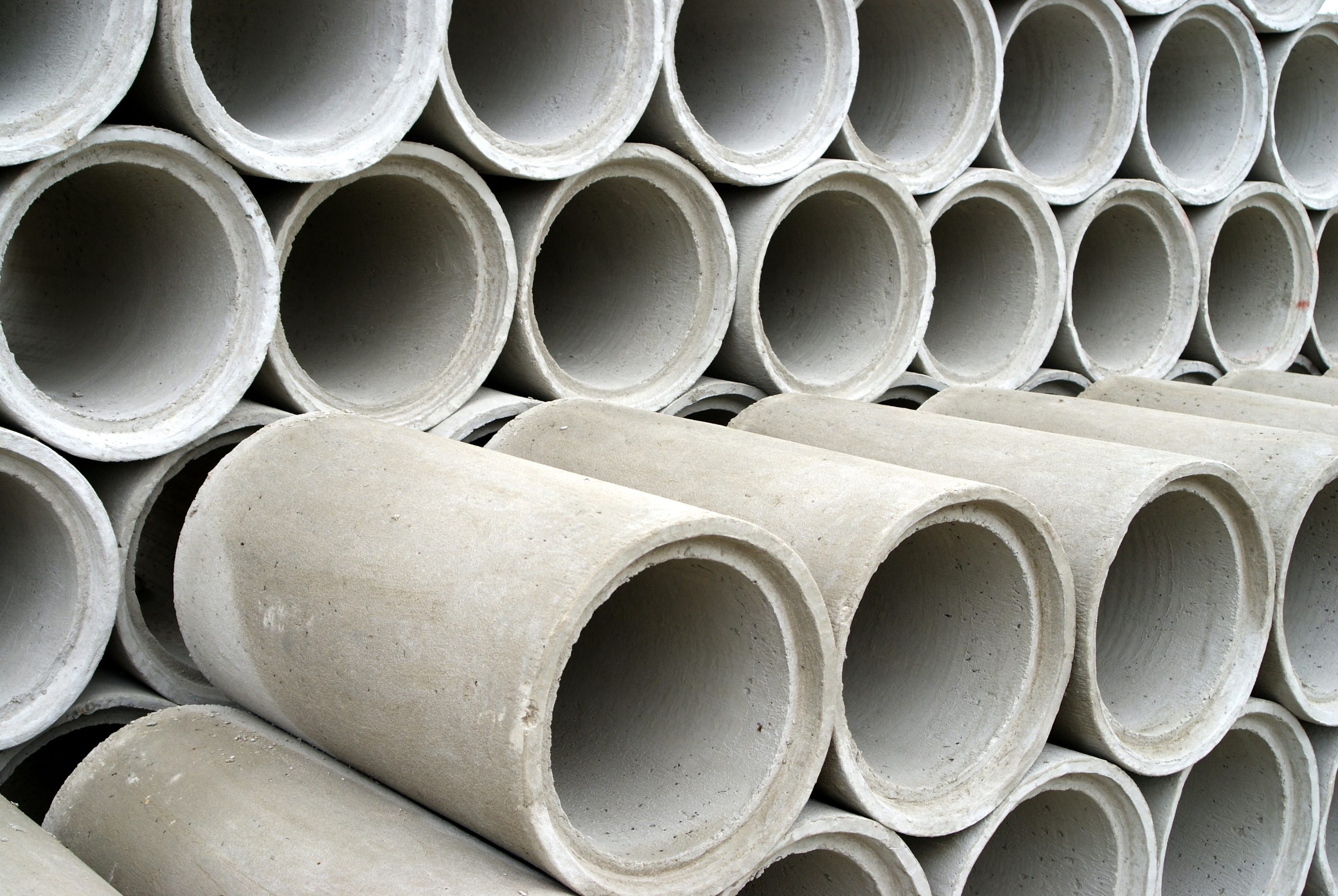
Gas plant, aboveground installation (AGI) & supply pipework
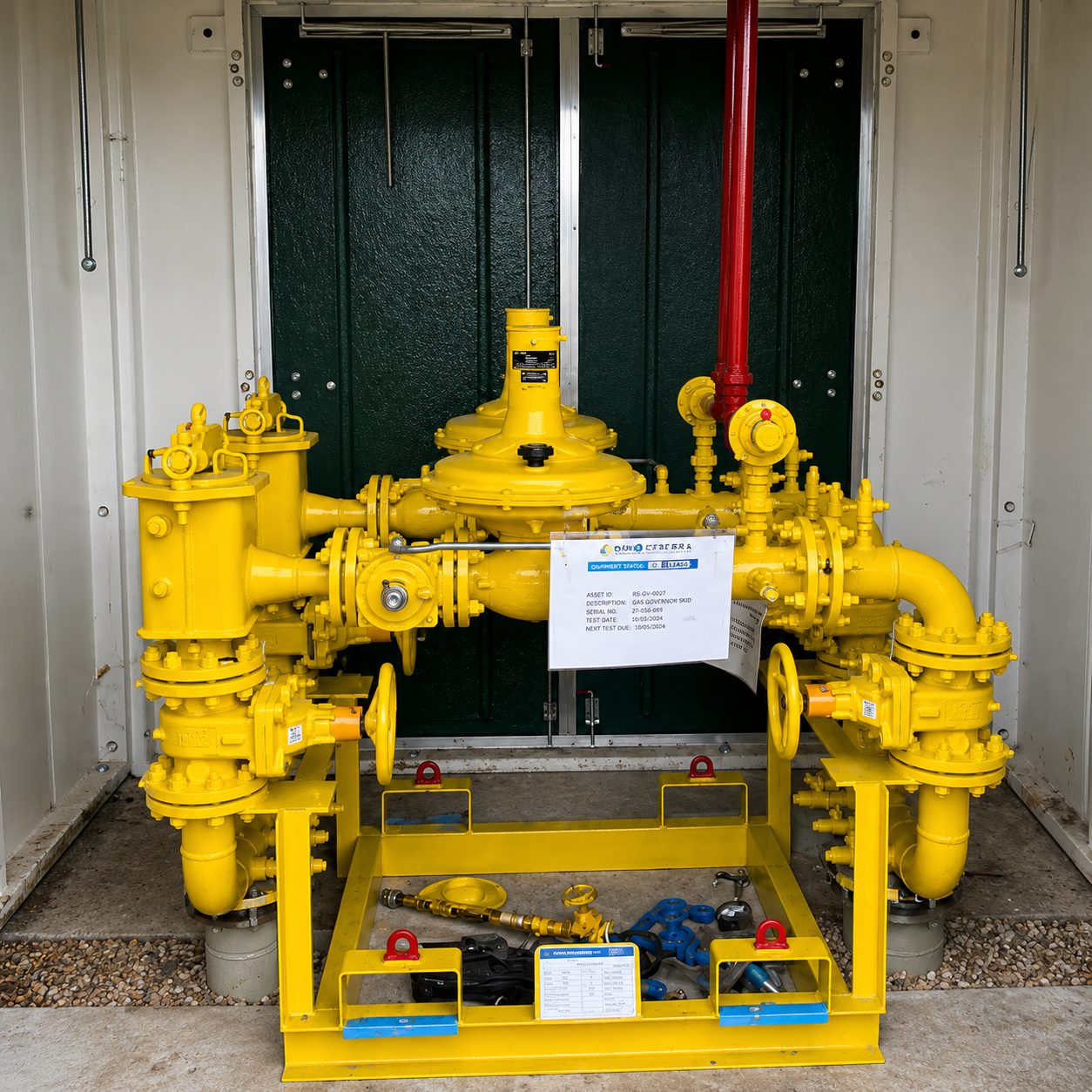
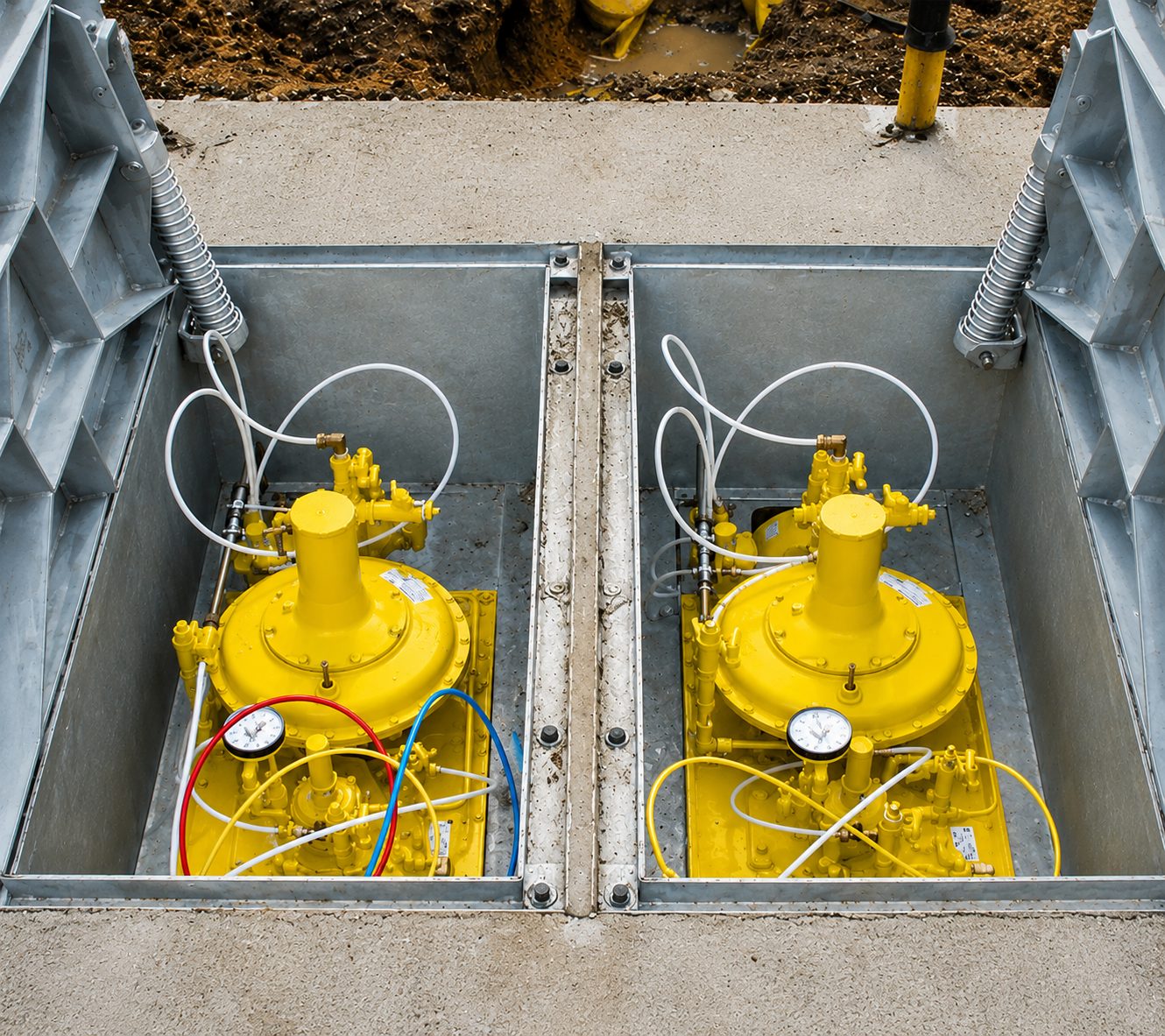
Radius Subterra delivers the installation of gas supply pipework connecting distribution networks to plant facilities, energy centres and above-ground installations (AGIs). This includes buried and above-ground pipework associated with metering, regulating, plant feed and network interface arrangements. Works are undertaken using appropriate materials and jointing techniques in line with network standards, with careful consideration given to transitions between below-ground and above-ground assets.
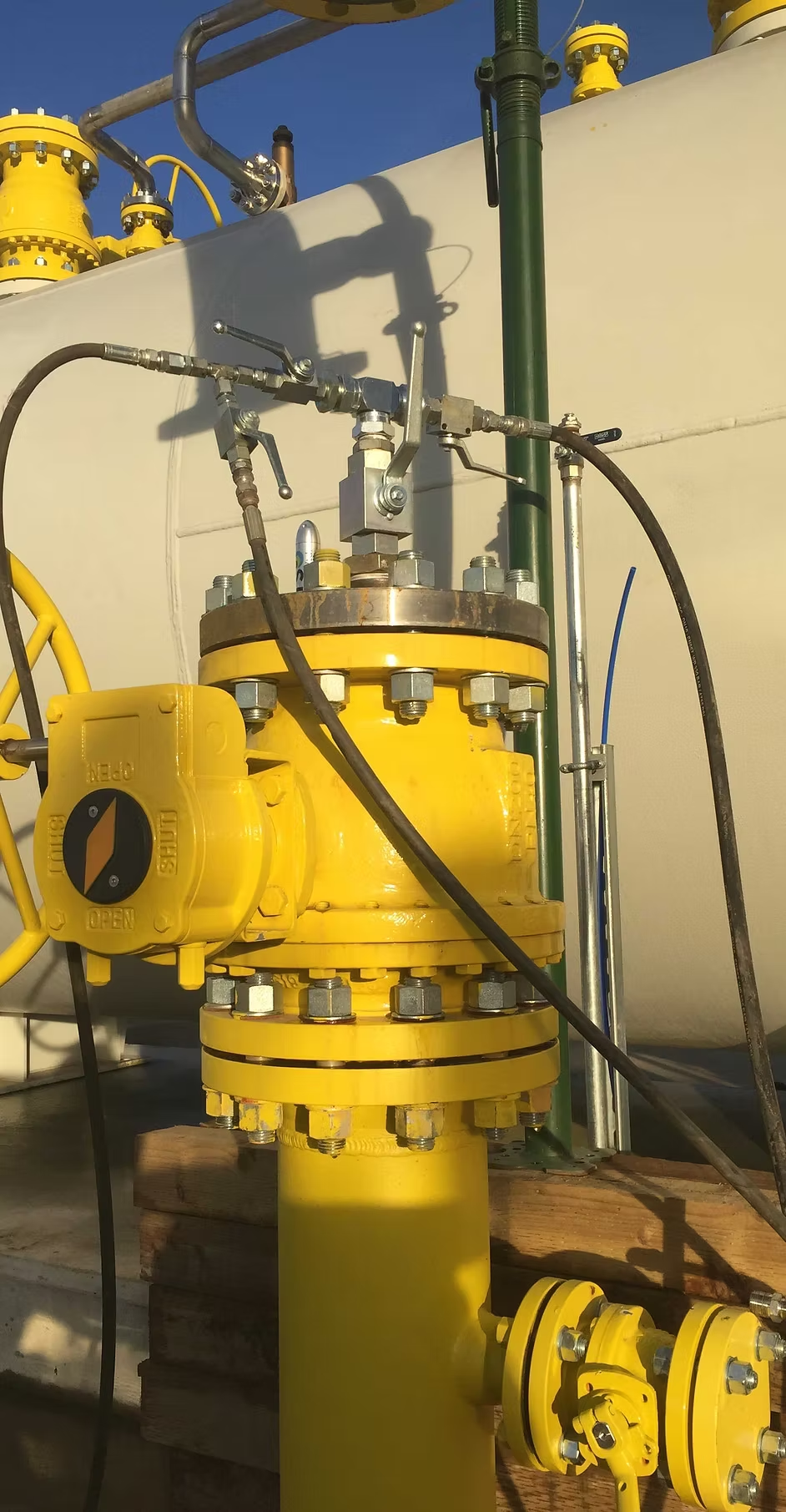
Installations commonly include steel and polyethylene (PE) pipework, isolation valves, structural supports and interface connections to plant or AGI equipment. Gas supply pipework is frequently delivered alongside wider pipeline construction, diversions or network modifications and is coordinated with live connection and flowstopping activities where required. This enables safe and controlled tie-ins to operational networks while maintaining system integrity.
Typical applications include supply connections to gas-fired energy centres, industrial plant, regulating installations, boiler houses, CHP units and AGI associated infrastructure. Pipework layouts are engineered to ensure safe access, long-term integrity and compliance with applicable pressure and materials regulations. Design and installation approaches are selected to suit site conditions, operational pressures and equipment interfaces.
All works are planned and executed by trained and competent teams, with installation sequencing, quality control and safety management integrated into delivery. Completion records are issued to support commissioning, handover and ongoing asset management, ensuring confidence for network owners and operators.
Our other solutions
Convallis litora sem lacinia duis consectetur sociis vestibulum diam a venenatis ad himenaeos.
Under Pressure Connections
Pre-Insulated Pipework
Pressure Testing
Pipe Cutting
Manufacture & Fabrication
Engineering and Project Management
Pipe Lining
Pipeline Repair & Maintenance
Flowstopping
Case Studies
Discover the prowess of Radius Subterra through our latest case studies.
Witness how we excel in tackling intricate pipeline challenges with innovative solutions and state-of-the-art technology. Stay tuned for more videos showcasing our commitment to engineering excellence.

Faced with severe leaks in a critical 1500mm trunk main, Radius Subterra provided an innovative pipeline rehabilitation solution using their close-fit PE liner system. This approach restored the pipeline’s integrity

Discover how Radius Subterra’s precision engineering revitalises a historic London waterway with cutting-edge pipeline solutions, installing a bespoke branch saddle onto a live water main in Finsbury Park. This job

Radius Subterra partnered with Anglian Water to solve leak issues in a hard-to-reach 10” water pipeline in East Anglia. Using their innovative Rolldown & Slipline method, Subterra maximised pipe bore
In February an accidental incident occurred that resulted in a 10” gas main being damaged, and a hole being drilled into the main. The incident was near to the main
Case Studies
Discover how Radius Subterra delivers safe, innovative and technically assured solutions across the UK’s most challenging pipeline environments.
Faced with severe leaks in a critical 1500mm trunk main, Radius Subterra provided an innovative pipeline rehabilitation solution using their close-fit PE liner system. This approach restored the pipeline’s integrity
Discover how Radius Subterra’s precision engineering revitalises a historic London waterway with cutting-edge pipeline solutions, installing a bespoke branch saddle onto a live water main in Finsbury Park. This job
Radius Subterra partnered with Anglian Water to solve leak issues in a hard-to-reach 10” water pipeline in East Anglia. Using their innovative Rolldown & Slipline method, Subterra maximised pipe bore


What our client’s say about us

Why choose Radius Subterra?
Trusted expertise, engineered solutions and a service approach shaped around your challenges.
For decades we’ve supported utility networks in the UK and beyond with safe, reliable and efficient pipeline services. Our teams combine technical knowledge, industry-leading equipment and a problem-solving mindset to deliver high-quality outcomes with minimal disruption. Whether planned works or complex operational challenges, we provide proven capability and dependable support.
Decades of expertise
With deep roots across the wider Radius Group and extensive experience in live gas, water, biogas and pipeline rehabilitation operations, our teams bring exceptional hands-on knowledge to every project. We understand the pressures faced by network operators and contractors and deliver work that is safe, compliant and technically robust from start to finish.
Committed to quality and safety
Safety underpins every service we deliver. Our work follows industry standards, rigorous internal procedures and environmental best practice. From accredited techniques to specialist equipment, we ensure consistent quality while reducing risk, waste and unnecessary disruption across gas, water and biogas networks.
Minimising disruption
Our specialist techniques, including under-pressure connections, flowstopping and trenchless rehabilitation, allow essential works to continue while maintaining customer service, protecting highways and minimising community impact. Reduced excavation and streamlined operations, support faster reinstatement and lower overall disruption.
Innovation and customisation
From bespoke branch saddles to tailored fittings for non-standard assets, innovation is central to our approach. We engineer solutions to suit each site, material and operating condition, enabling safer, faster and more cost-effective outcomes across complex project environments.
Safety and sustainability
We champion safe working and long-term sustainability. Our methods reduce carbon, excavation material, traffic disruption and reinstatement, while modern equipment and ongoing training create a safer environment for teams and the public. Every project is designed and delivered with environmental responsibility and operational resilience in mind.
Contact us
Ready to progress your next pipeline project?
Radius Subterra’s specialist engineering teams are here to support you with safe, efficient and technically assured solutions across every stage of the asset lifecycle.
Get in touch by phone or email to discuss your requirements and speak directly with our experts.
Alternatively, complete the form below with the relevant information.