
Flowstopping
Radius Subterra delivers specialist flowstopping services to isolate live pipelines for repair, modification, and replacement works without full network shutdowns.
Our engineered isolation techniques support safe, planned interventions across water, gas and energy networks, covering multiple pipe materials, diameters, and operating conditions.
Flowstopping is a vital capability for maintaining and upgrading operational pipeline networks while preserving supply continuity. Radius Subterra provides a comprehensive range of engineered flowstopping techniques — including squeeze-offs, slow-release squeeze-offs, stoppling, bagging-off, Iris Stop, Bond & Bolt, Minimuss Line Stop/Kleiss system and pipe freezing — enabling reliable, controlled isolation across water, gas, energy and industrial pipeline systems. Our solutions support both planned interventions and emergency works, reducing downtime and operational risk.
Our experienced teams operate across metallic and polyethylene (PE) pipelines of varying diameters, wall thicknesses, and operating pressures. We select the most appropriate isolation based on pipe material, condition, access constraints and operational requirements. Each intervention is engineered to maintain pipeline integrity while creating safe working conditions for downstream activities.
Flowstopping enables essential activities such as pipeline repair, replacement, rerouting, connections, pipe cutting and rehabilitation works. Every operation is engineered in advance, supported by detailed risk assessments, site surveys, engineering calculations, and construction sequencing to ensure safe and efficient delivery.
We routinely deliver single and double isolation arrangements to create safe and secure working windows, allowing complex interventions to proceed with minimal disruption to customers and stakeholders. Our approach supports both short-duration tasks and extended works where isolation integrity must be maintained with full integrity assurance.
All flowstopping operations are delivered by trained and certified teams using proven equipment and controlled procedures. Every activity is planned, monitored and recorded to ensure safe execution, regulatory compliance, and full traceability. Flowstopping integrates seamlessly with our wider specialist pipeline engineering service offering, including pipe cutting, under-pressure connections, repair and reinstatement-ready handover, providing a complete end-to-end solution for live pipeline networks.
Key Benefits
Controlled live isolation without shutdowns
Flowstopping safely isolates live pipelines without draining or depressurising networks, maintaining continuity of supply and reducing customer disruption. This specialist pipeline engineering capability enables critical works while keeping essential services operational.
Enables complex pipeline works
By creating secure temporary isolation zones, flowstopping enables repairs, replacements, diversions, under-pressure connections and rehabilitation works safely on live assets. This approach supports complex pipeline engineering activities without full system shutdowns.
Proven engineered and controlled solutions
Each flowstopping operation is engineered to suit the specific pipeline and site conditions using proven techniques, trained personnel and controlled procedures. This ensures safe, compliant and repeatable outcomes across water, gas and energy networks.
Flowstopping technologies
A comprehensive range of proven flow control technologies that enable safe, controlled isolation of live pipelines across all materials, diameters and operating pressures.
Squeeze-offs
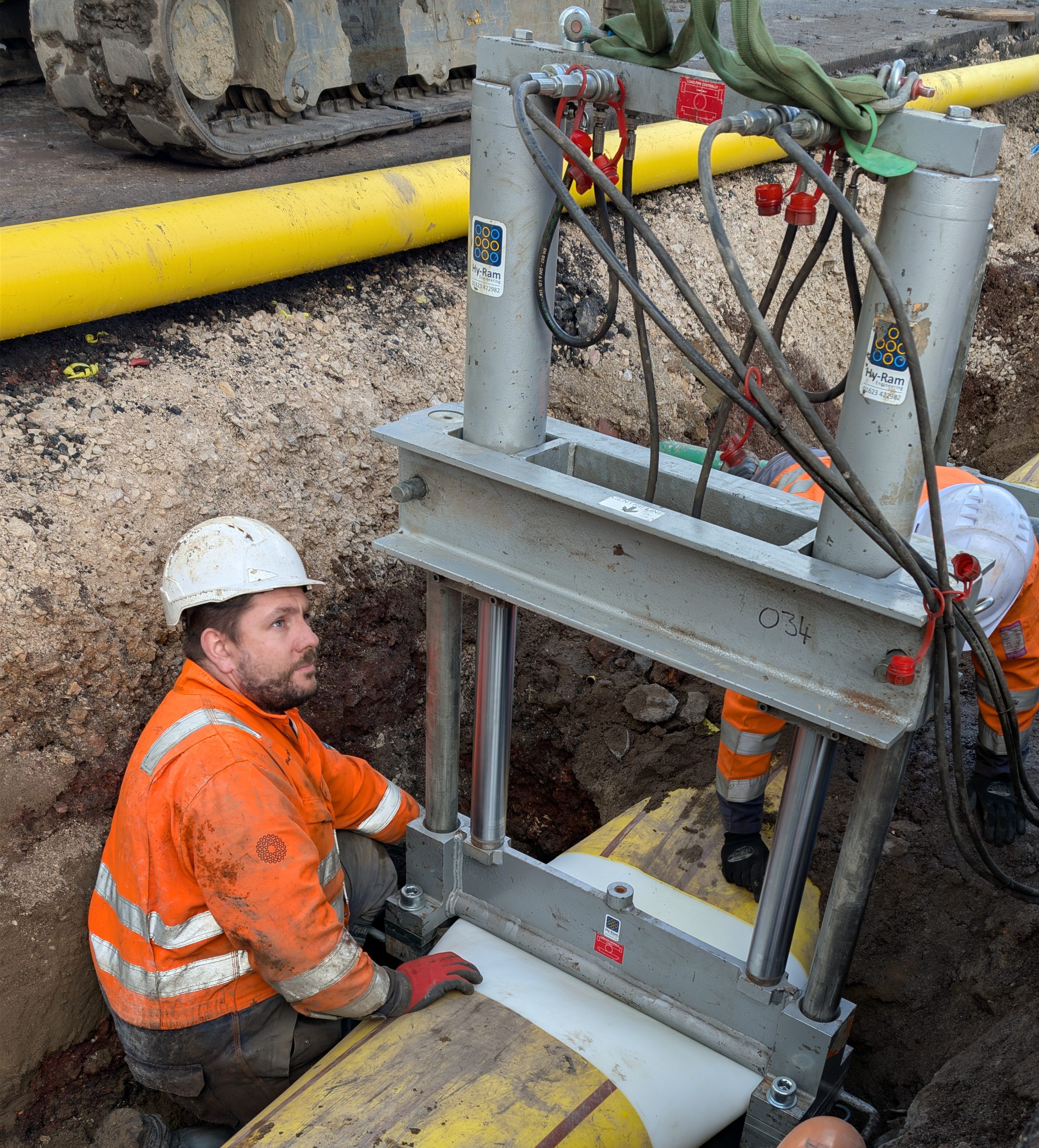
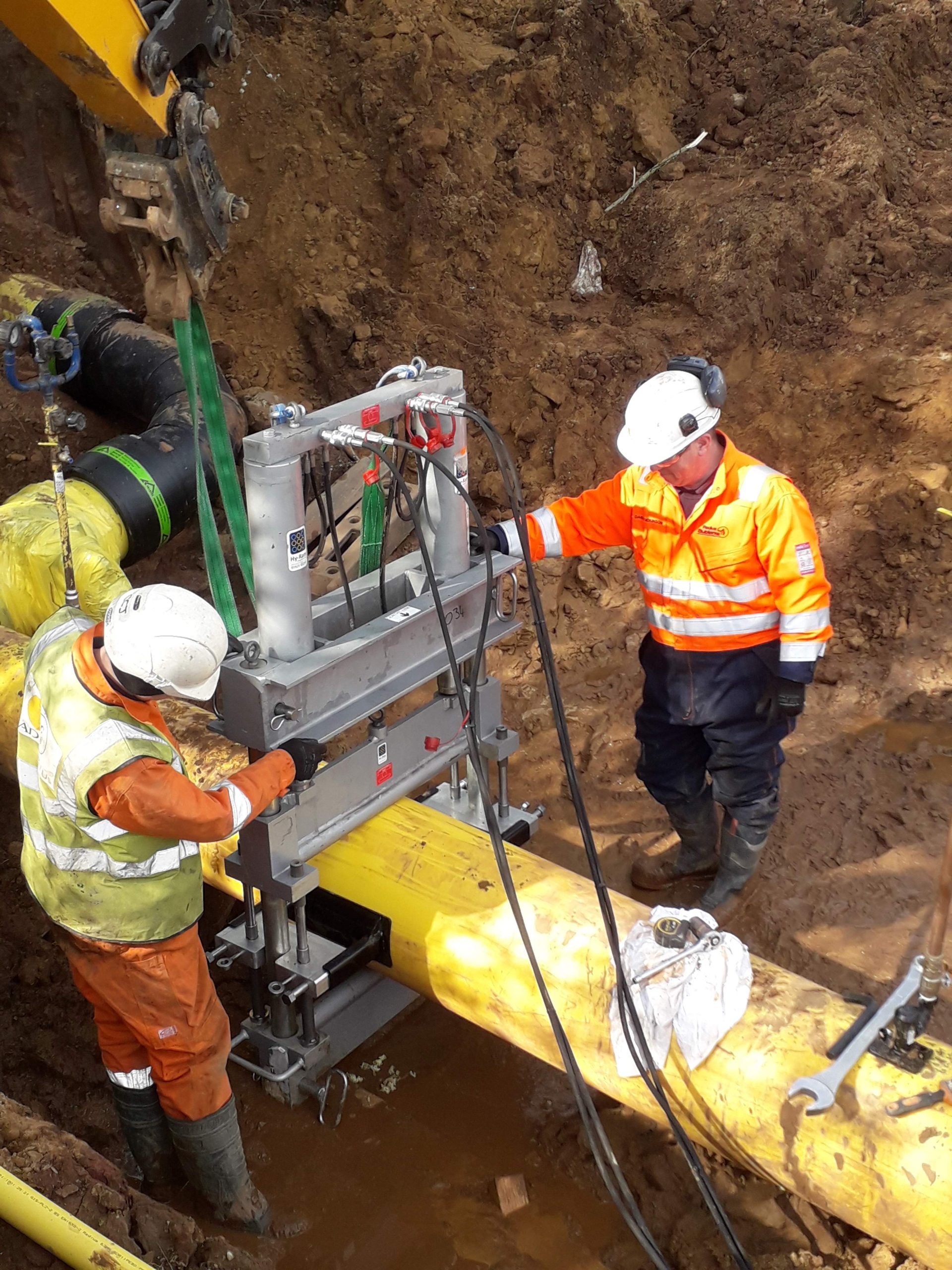
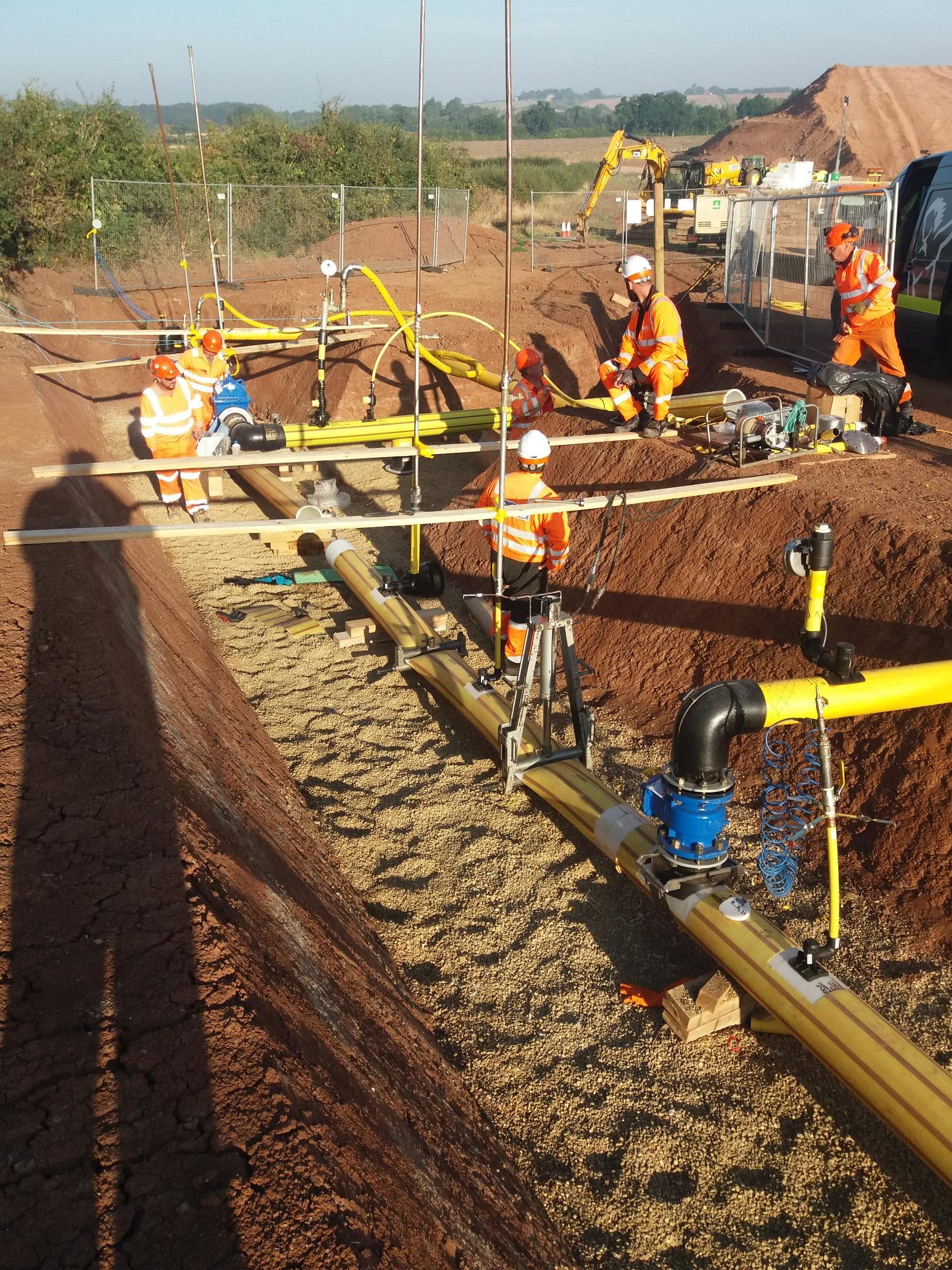
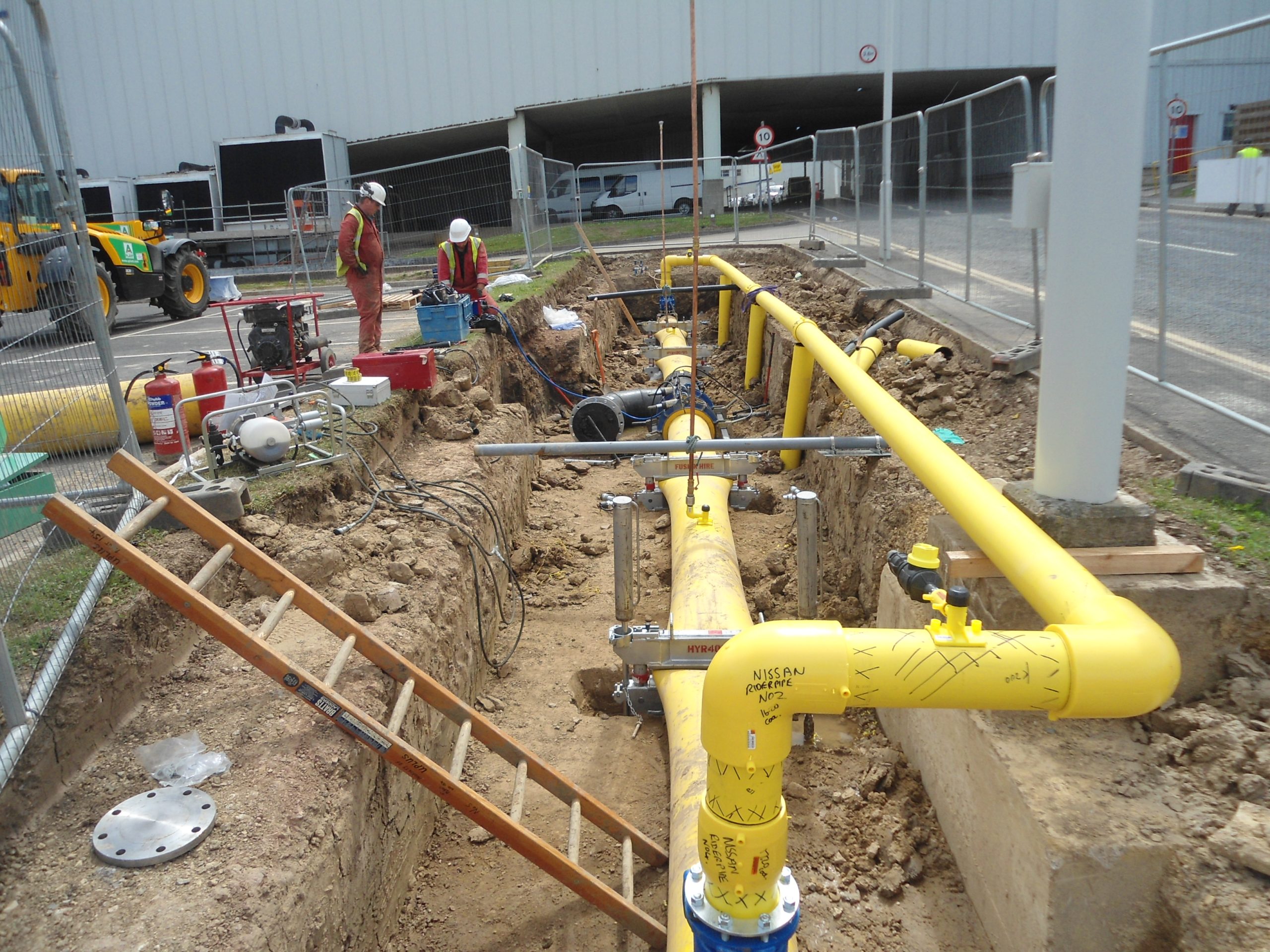
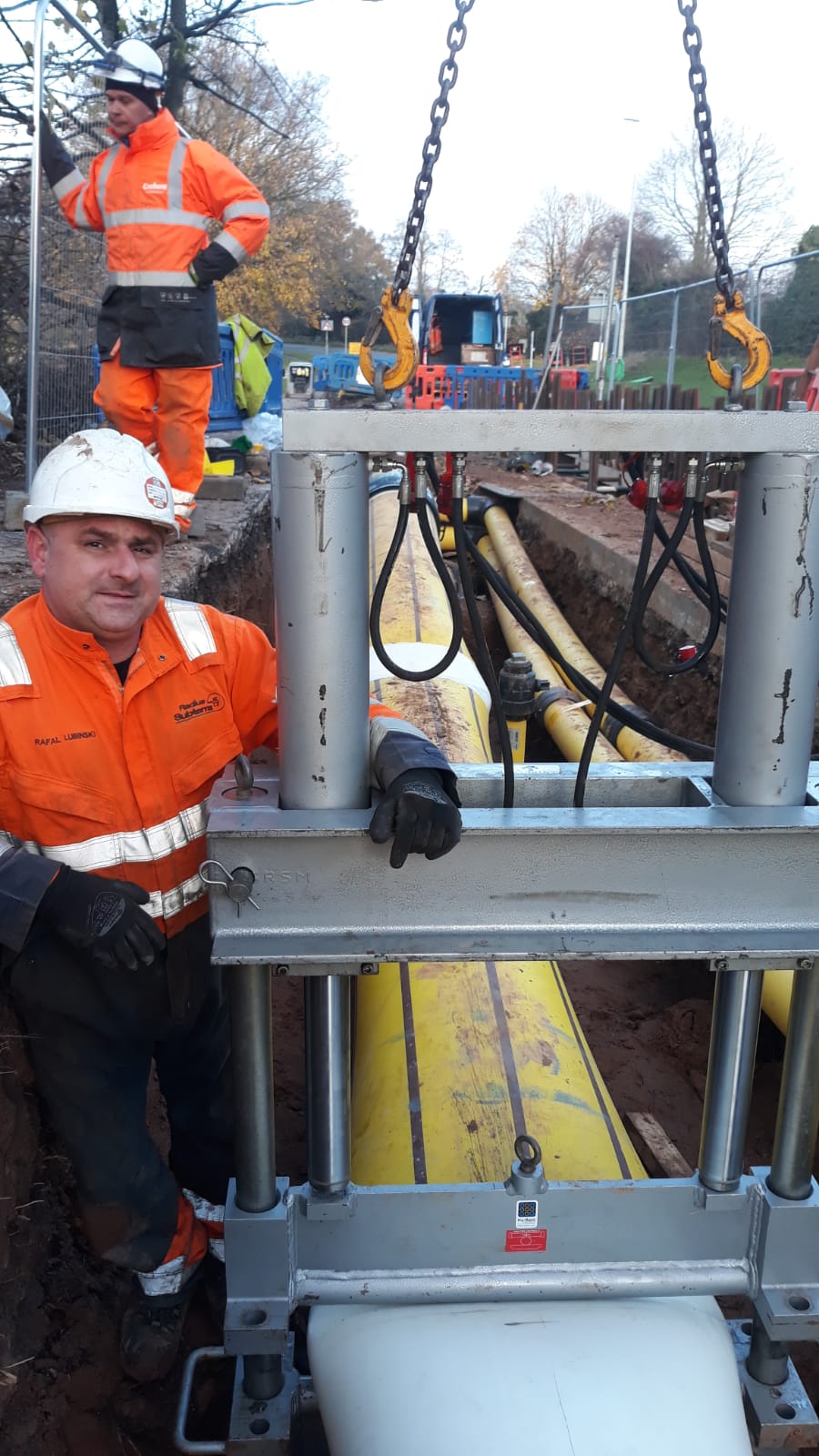
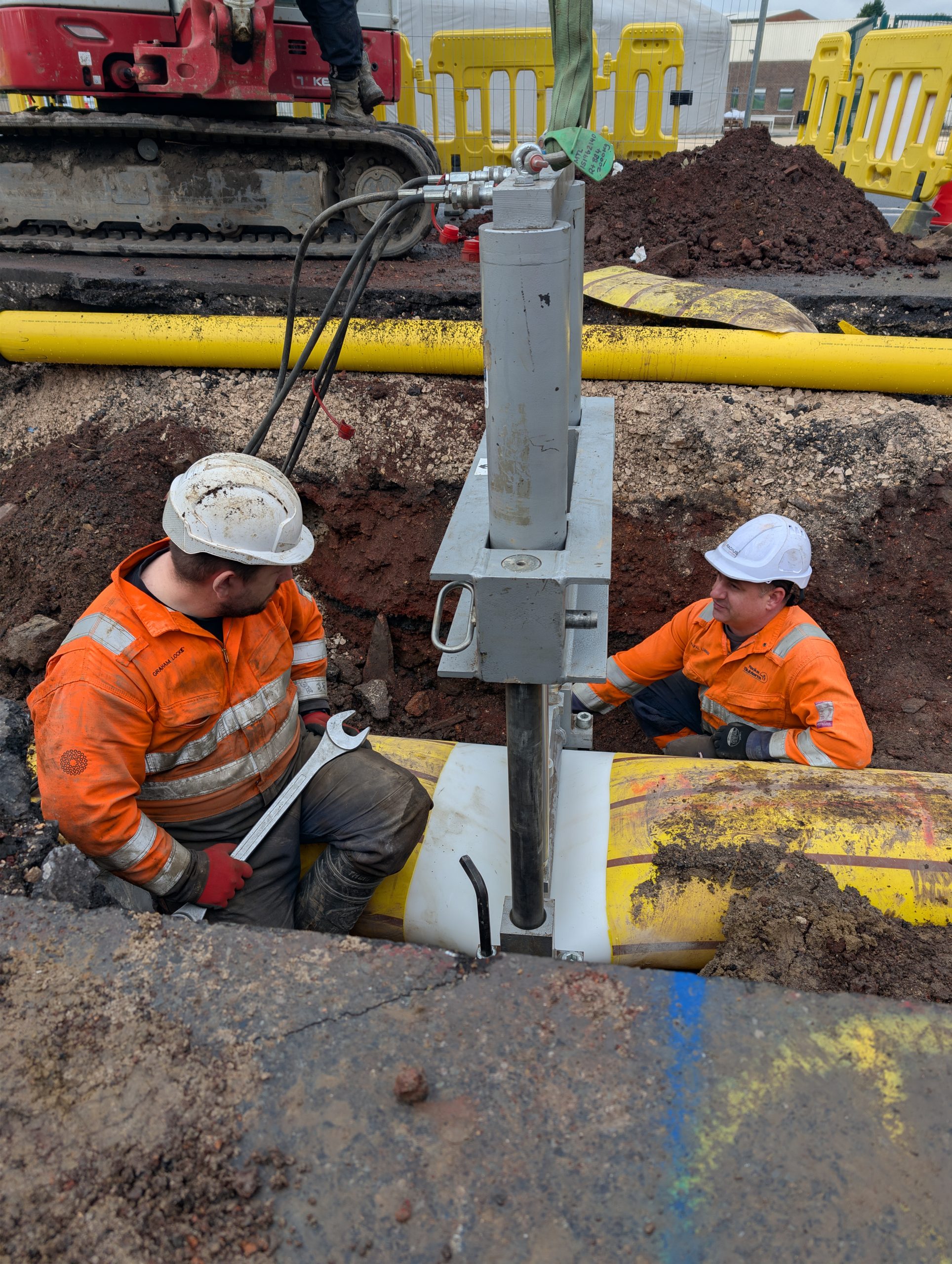
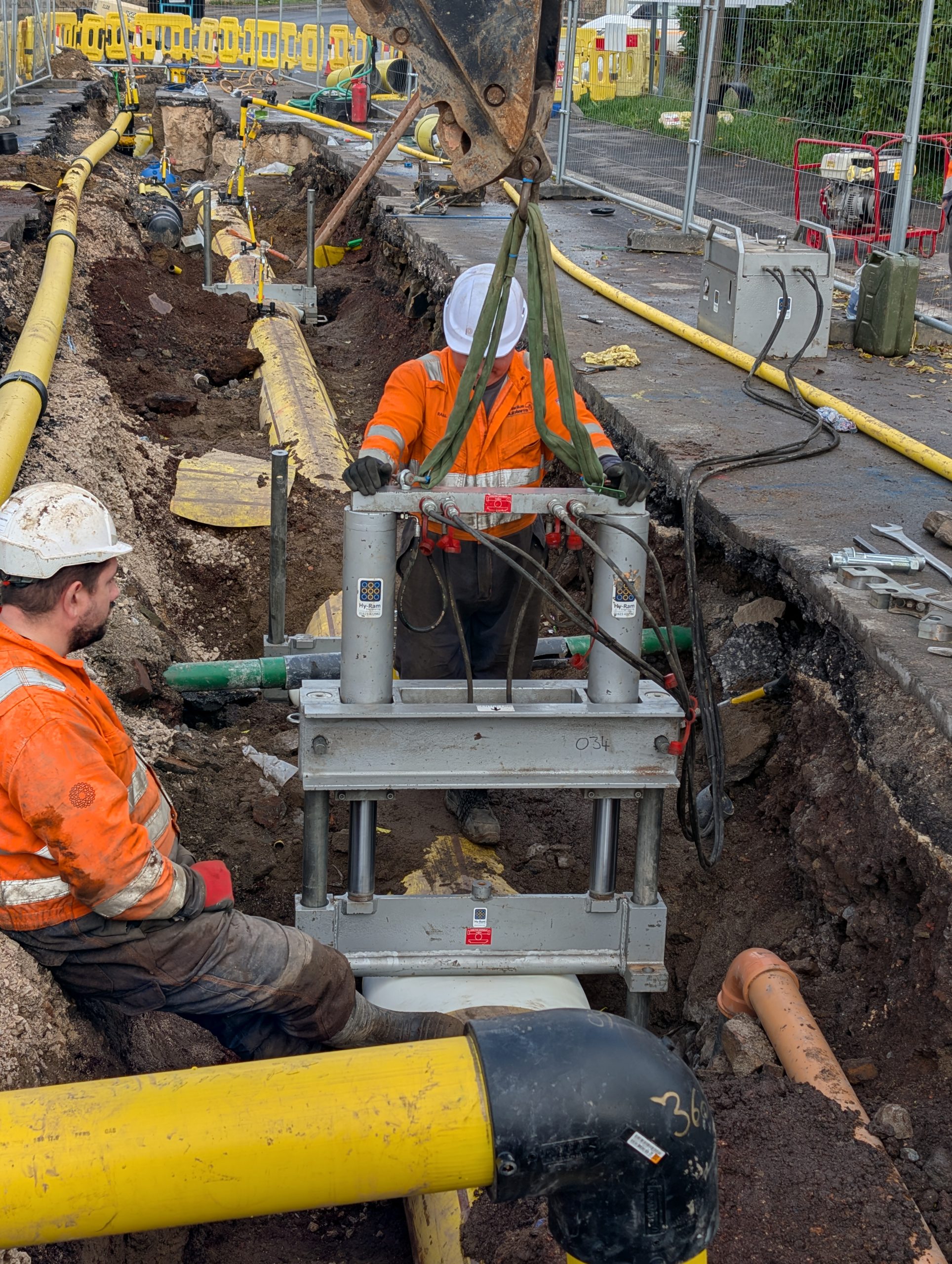
Squeeze-off is a flowstopping technique for polyethylene (PE) pipelines, enabling temporary isolation without draining the main. Radius Subterra delivers controlled squeeze-off operations on PE pipelines up to 500mm diameter and up to 2 bar, using approved tooling and established procedures.
Our technicians confirm pipe suitability on site, checking pipe condition, ovality, SDR, temperature, and installation environment. Where squeeze-off is not suitable, we select alternative flowstopping methods to protect pipeline integrity.
Squeeze-off supports repairs, connections, diversions and maintenance works, offering fast and efficient isolation with minimal disruption. Operations follow manufacturer guidance and industry standards, with controlled squeeze, hold, and release cycles to reduce stress on the pipe.
Each squeeze-off is planned as part of the wider works, supported by appropriate risk assessments, monitoring and completion reporting. This ensures consistent outcomes across gas, water and other pipeline systems where PE isolation is required.
Slow-release squeeze-offs
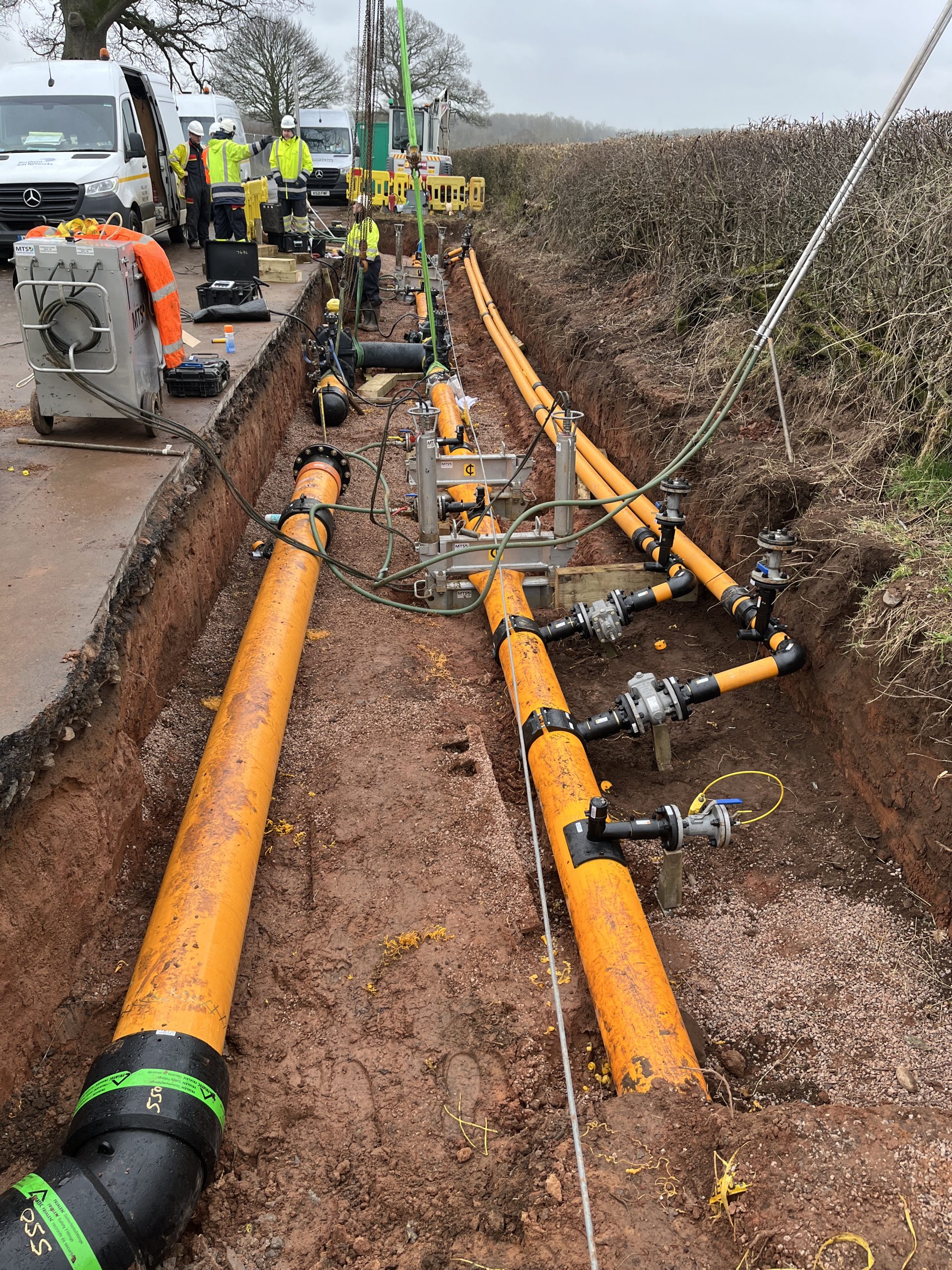
Slow-release squeeze-off technology is a controlled re-pressurisation technique for polyethylene (PE) pipelines following isolation. Unlike standard squeeze-off methods, slow-release systems allow gradual pipe recovery, reducing stress on the pipe wall and minimising reinstatement risk.
Radius Subterra delivers slow-release squeeze-offs on PE pipelines up to 315mm diameter and pressures up to 7 bar, subject to site conditions and suitability checks. The technique is particularly valuable for higher-pressure networks.
Our technicians assess pipelines on site prior to installation to confirm suitability and the safe application of tooling and procedures. Slow-release squeeze-offs support live repairs, connections, diversions, and maintenance activities while maintaining network integrity and continuity of supply.
Stoppling
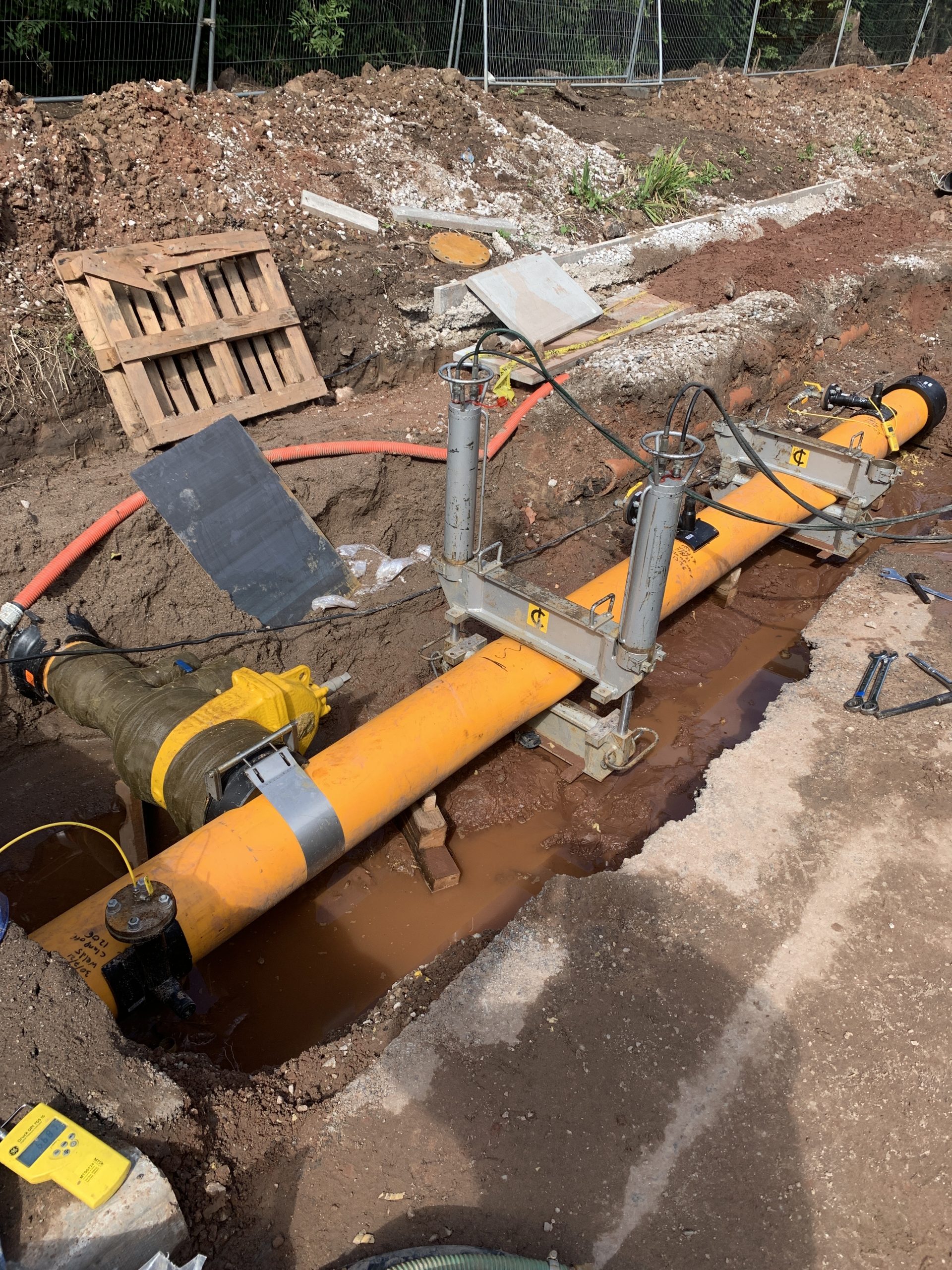
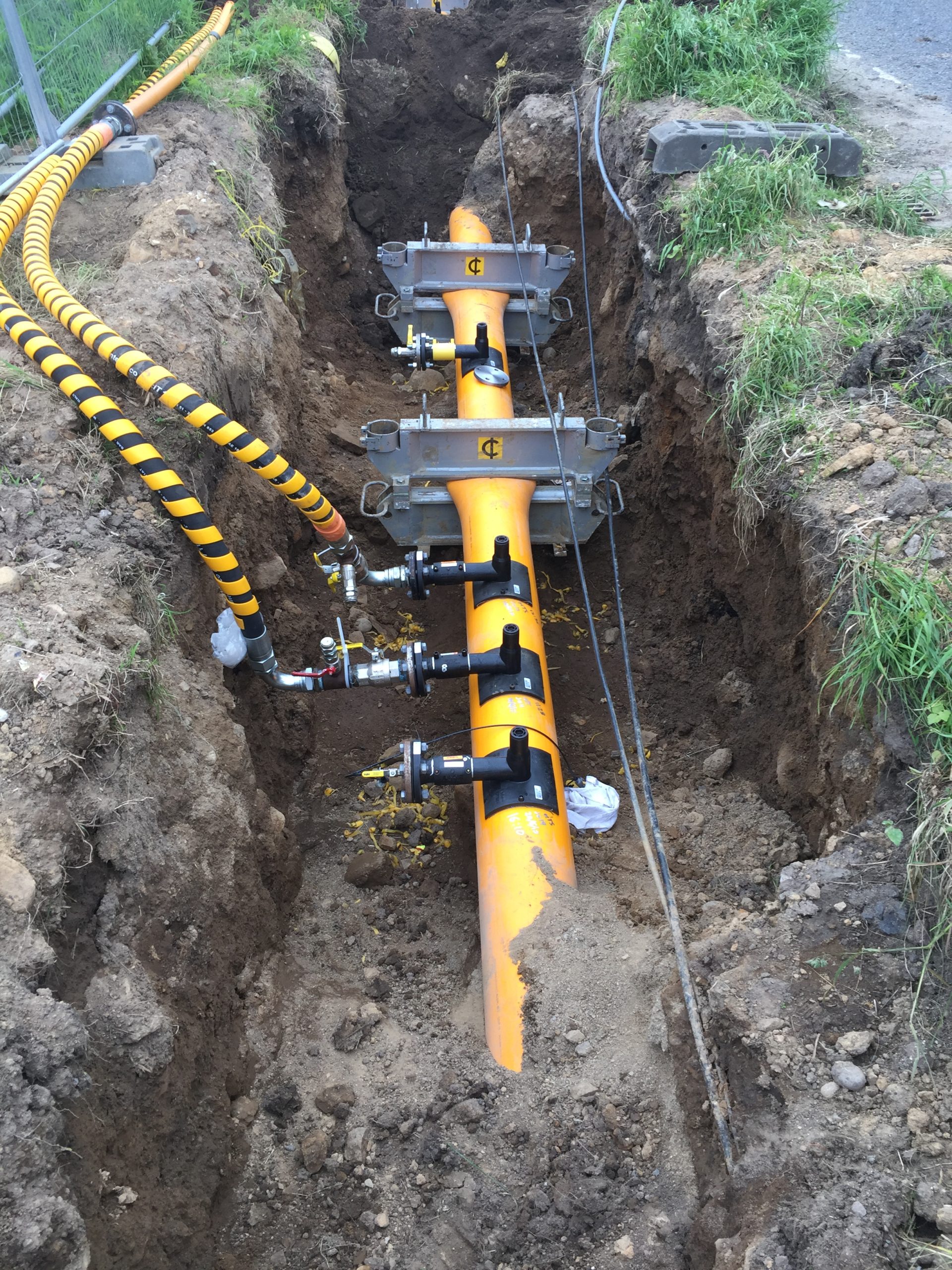
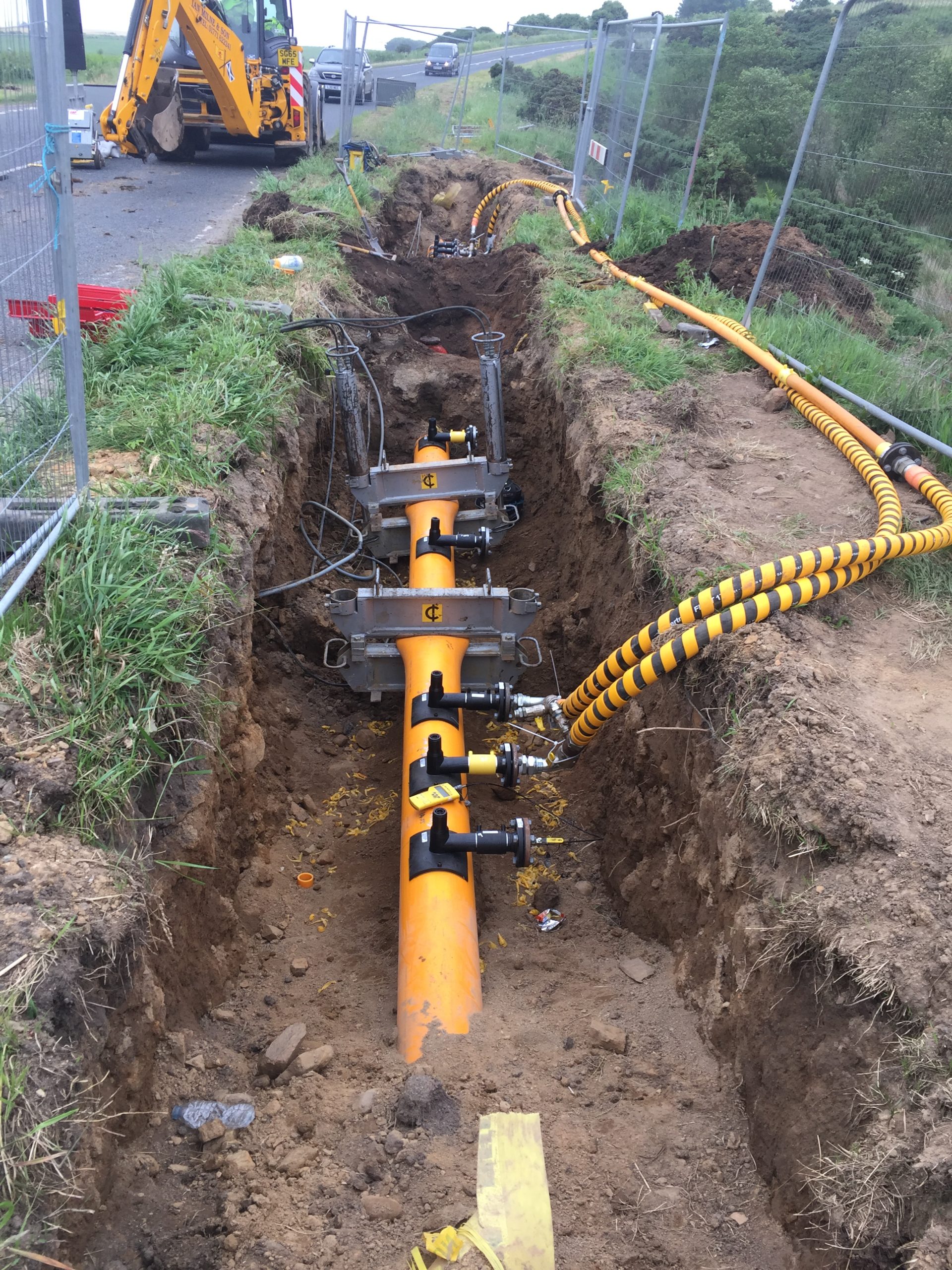
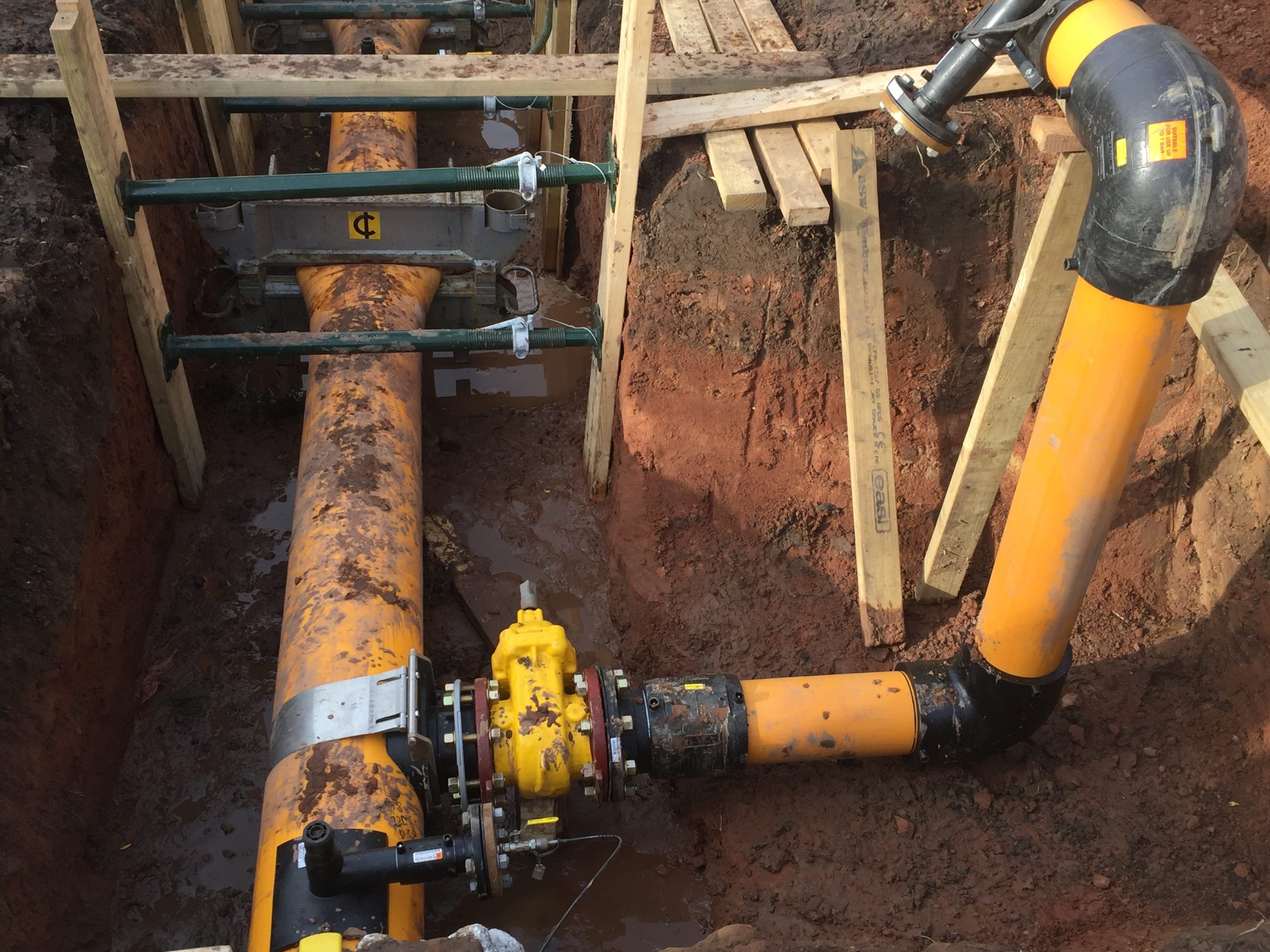
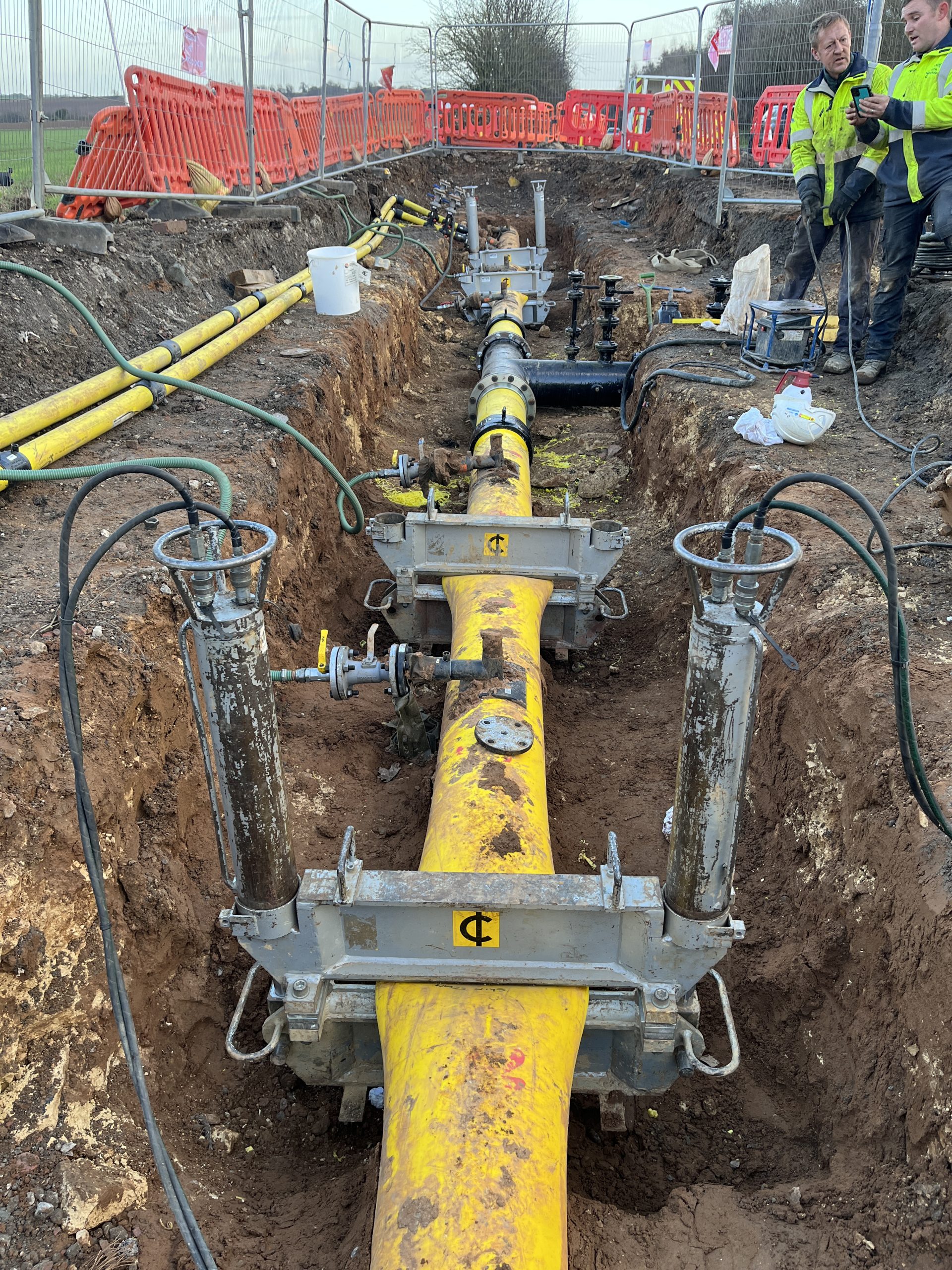
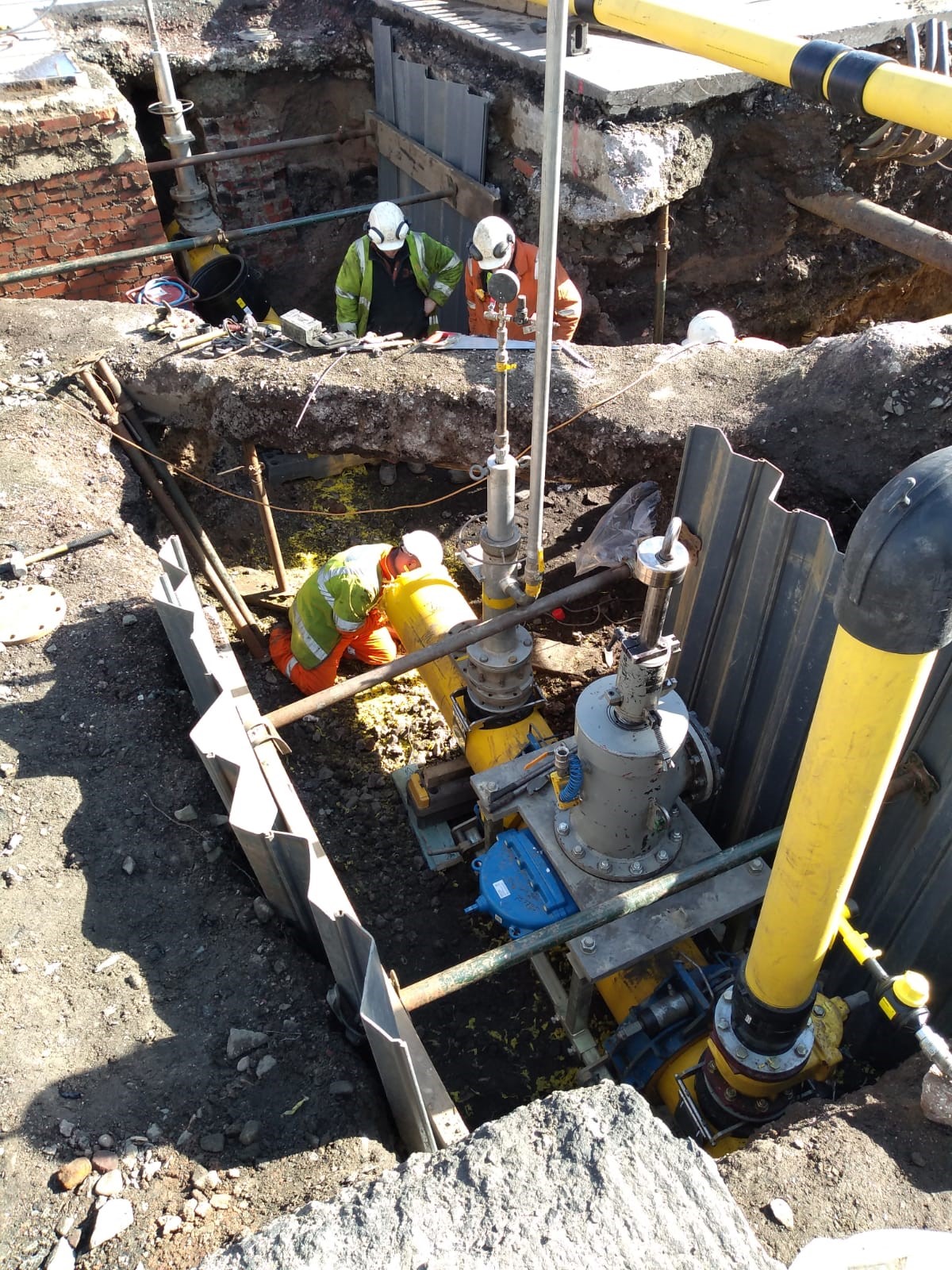
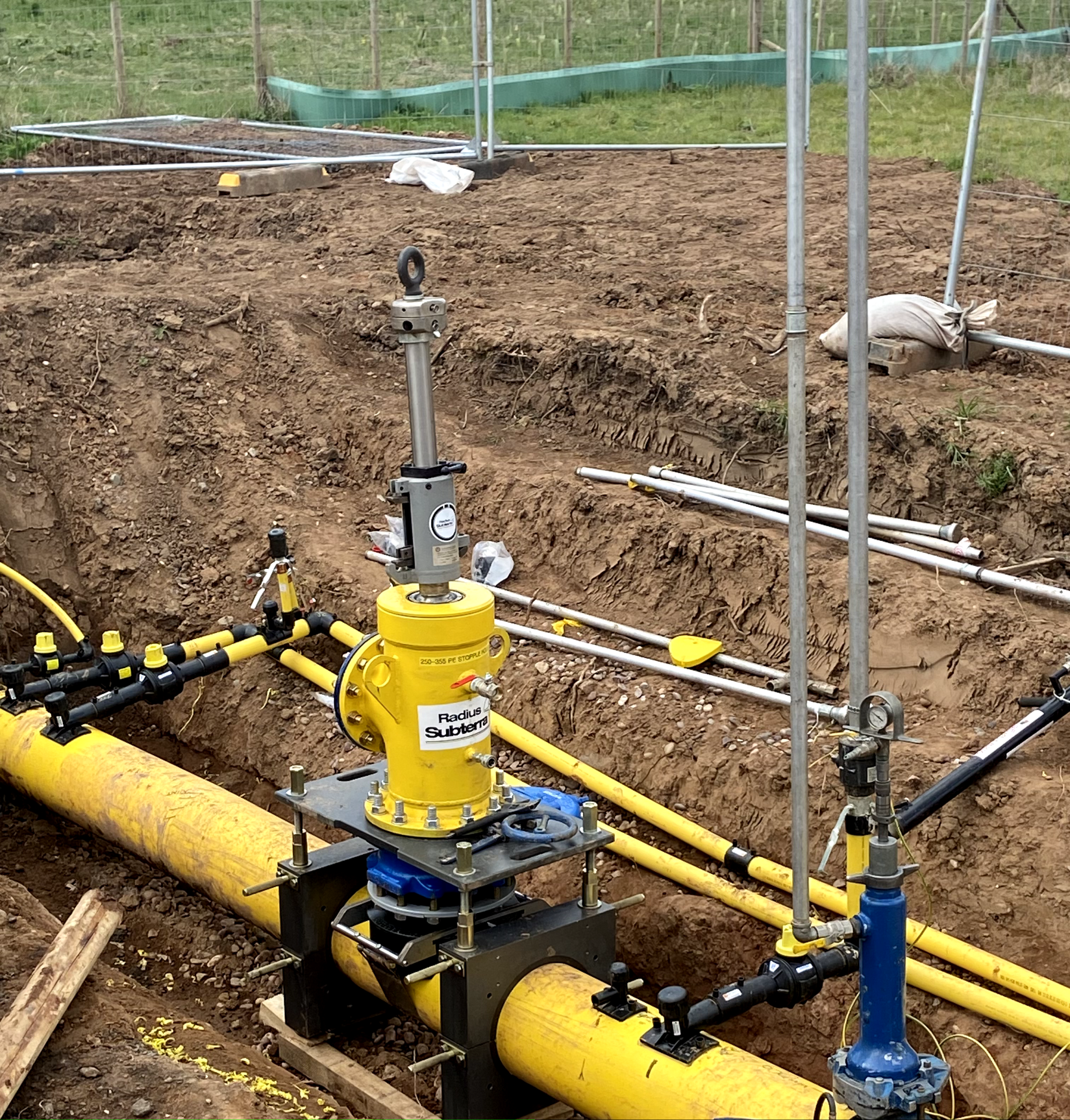
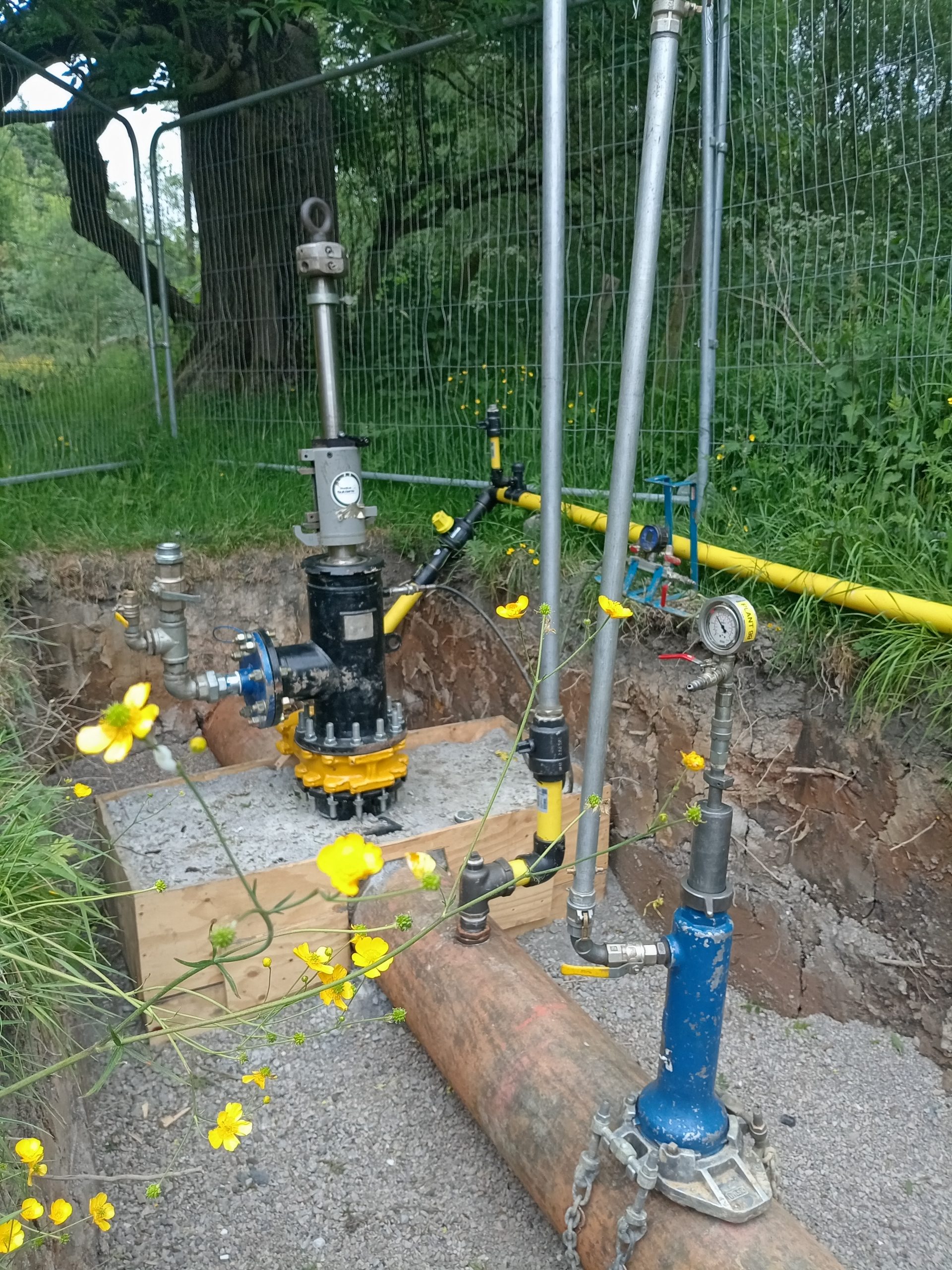
Stoppling is a mechanical flow stopping technique that creates a temporary positive isolation within live pipelines, enabling repair, modification, replacement or connection works without depressurising or shutting down the wider network. It is widely regarded as a controlled and less aggressive method of isolation, particularly for polyethylene (PE) pipelines where mechanical compression is not appropriate.
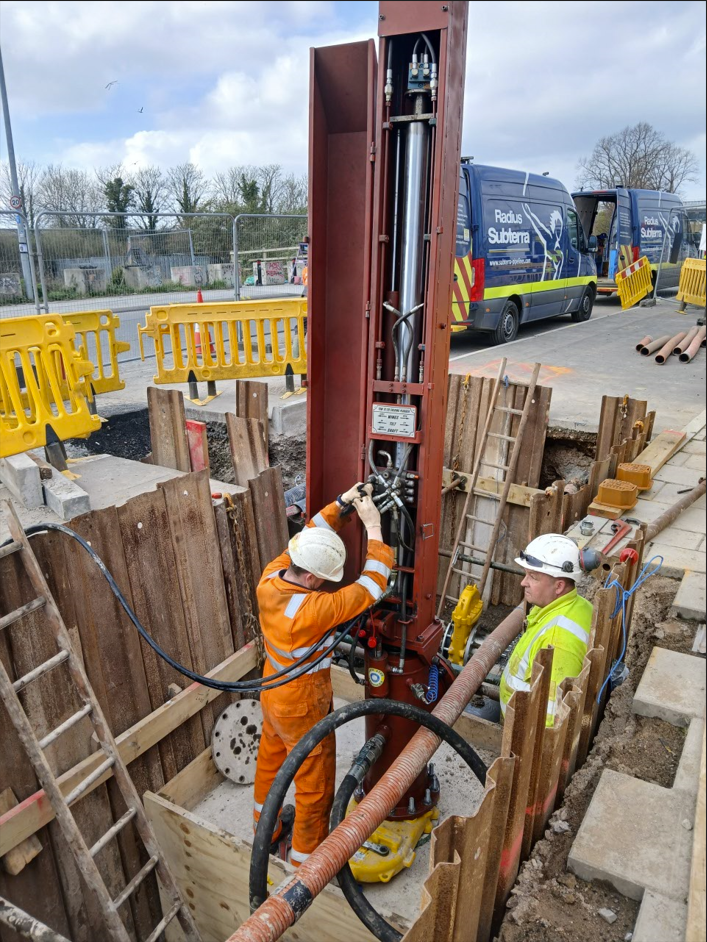
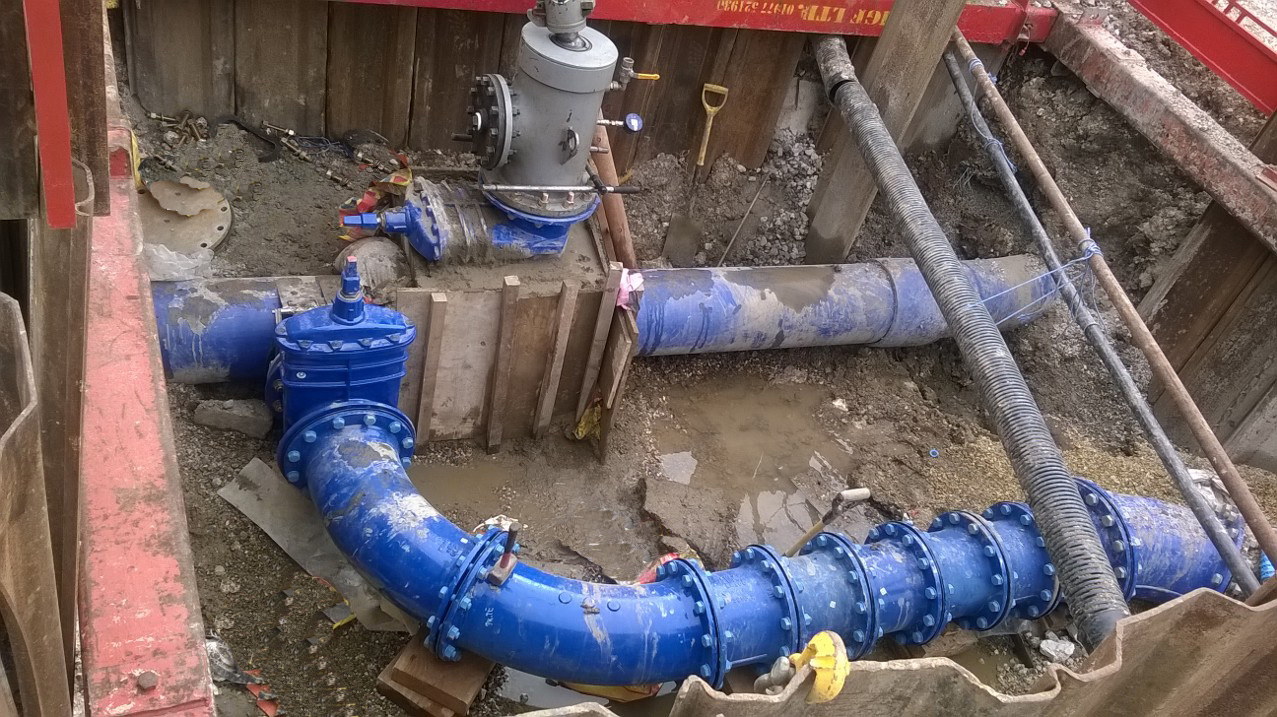
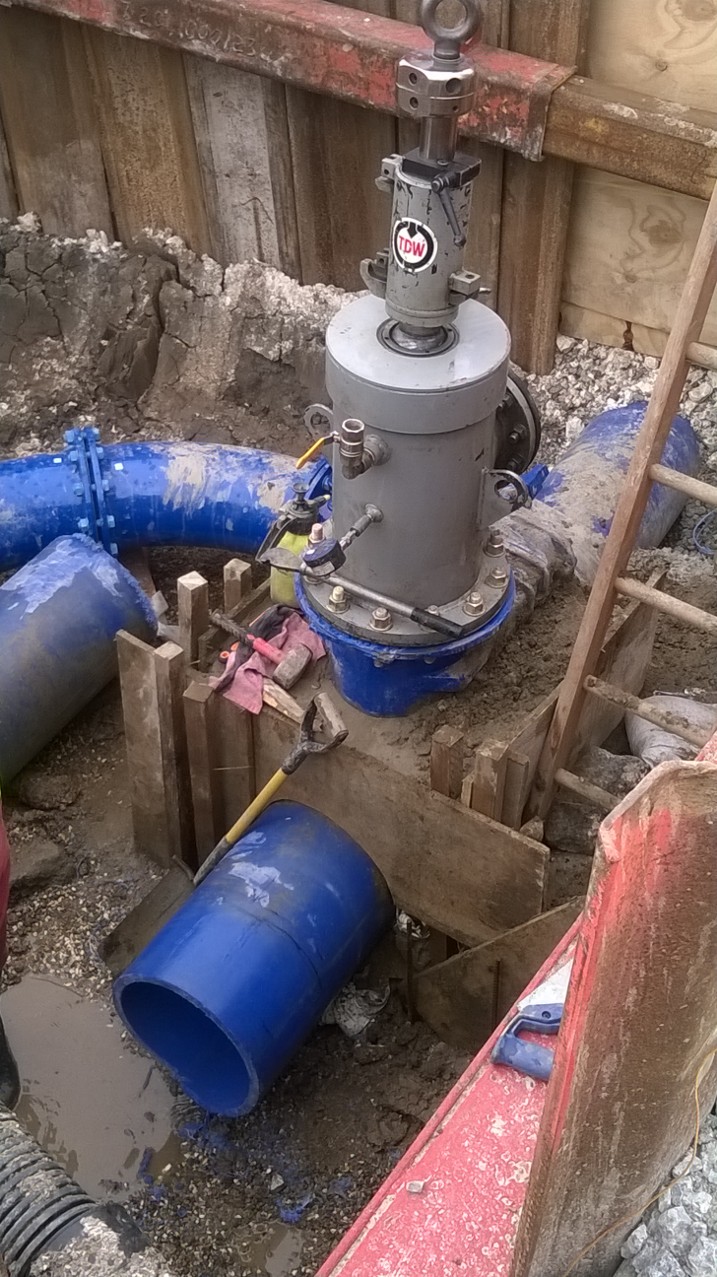
Radius Subterra delivers stoppling on a wide range of pipe materials and diameters, using proven mechanical stopple systems. Proven mechanical stopple systems are used on metallic pipelines up to 48 inches in diameter and polyethylene (PE) pipelines up to 469 mm (currently under development to increase to 630 mm by 2027). Engineered entry fittings, such as electrofusion branch saddles, under-pressure tees and bolted or welded fittings, allow controlled insertion of the stopple head into live mains under full operational control.
Once deployed, the stopple provides a solid, mechanical internal seal within the pipeline, offering a high level of reliability and control during live operations. Single or double stopple arrangements create defined isolation zones for pipeline repairs, cut-outs, diversions, new connections, rehabilitation and decommissioning works.
All stoppling operations are engineered and planned in advance, with site assessments, risk analysis, pressure management and contingency planning. Trained experienced teams use specialist equipment with full monitoring and completion reporting to ensure safe, compliant and repeatable outcomes.
Bagging off
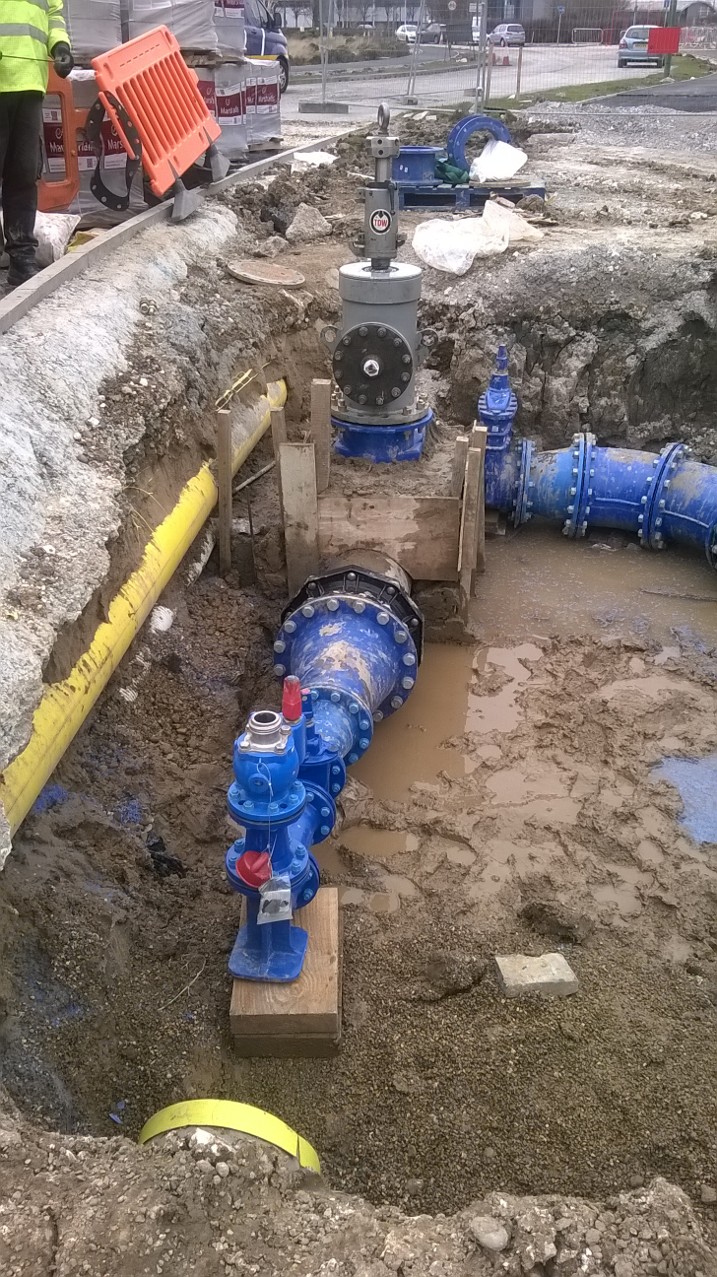
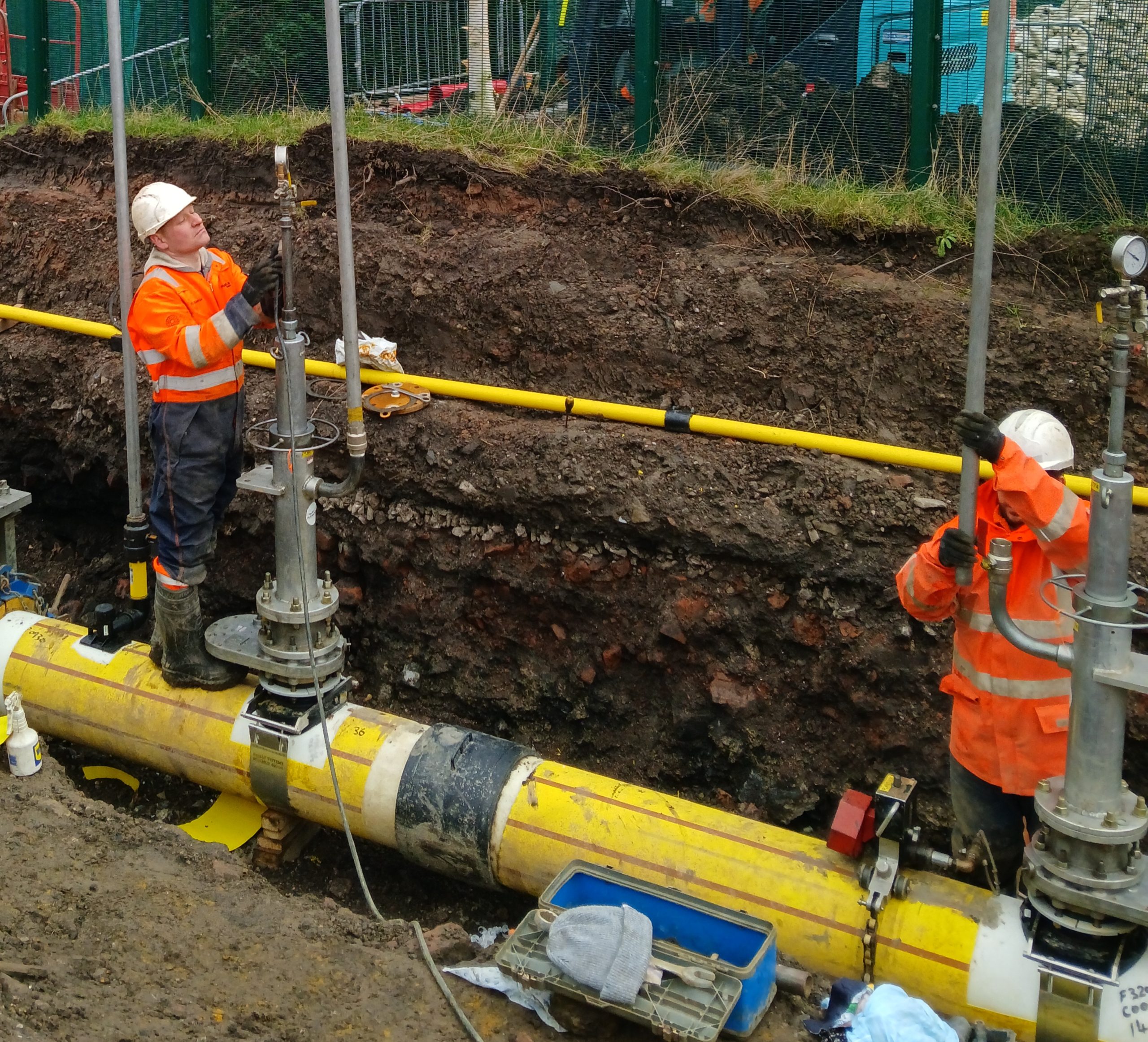
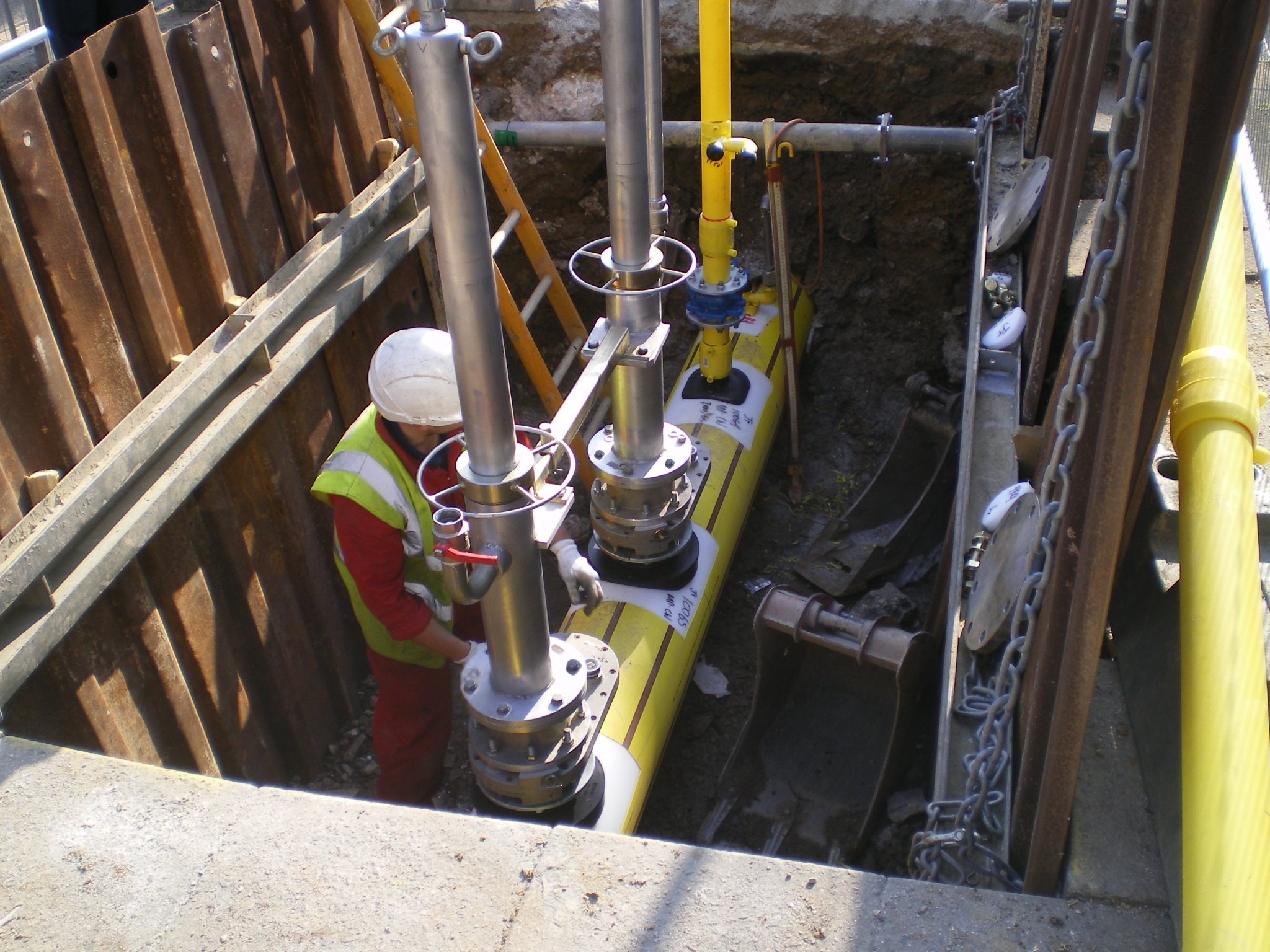
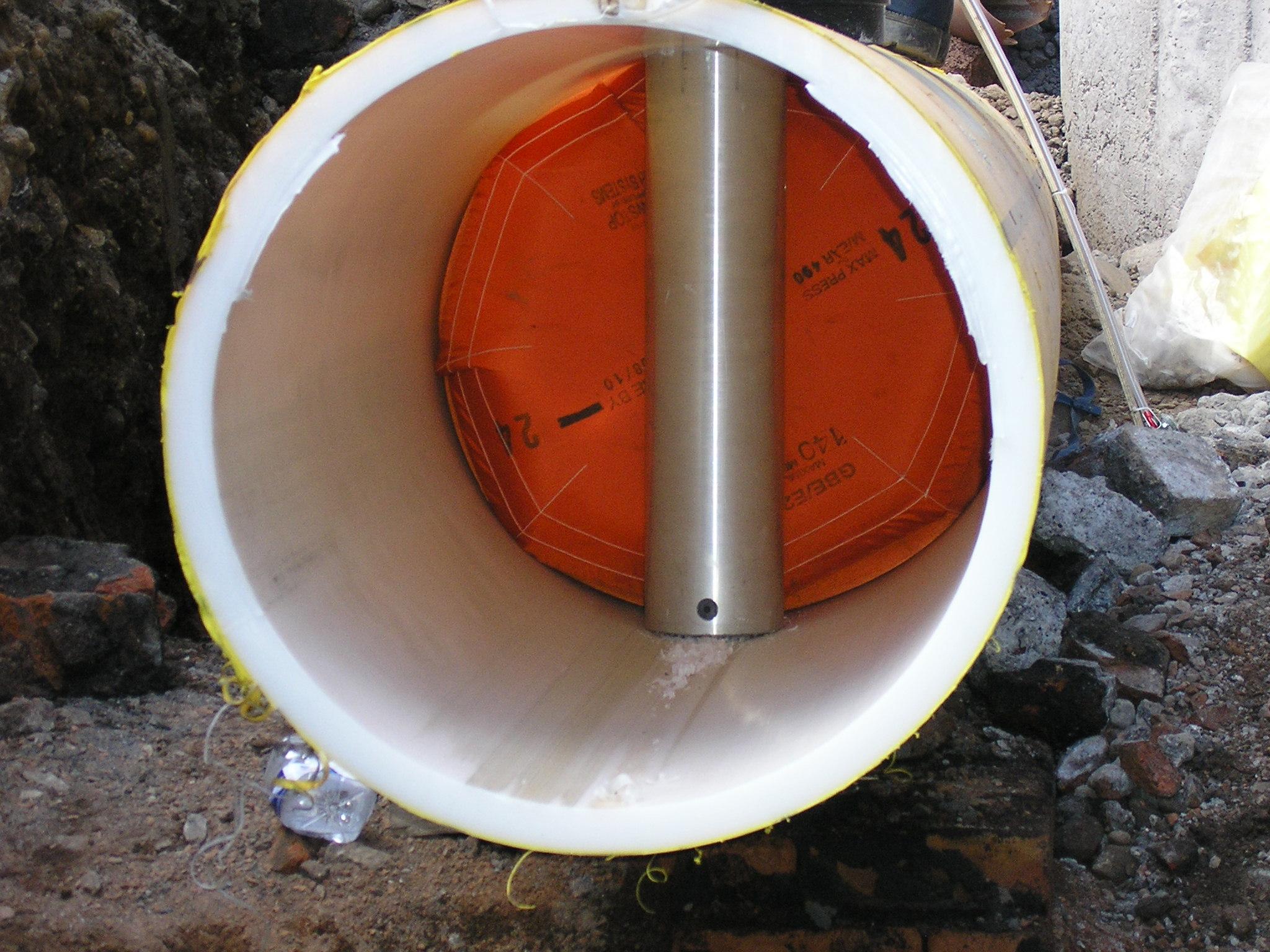
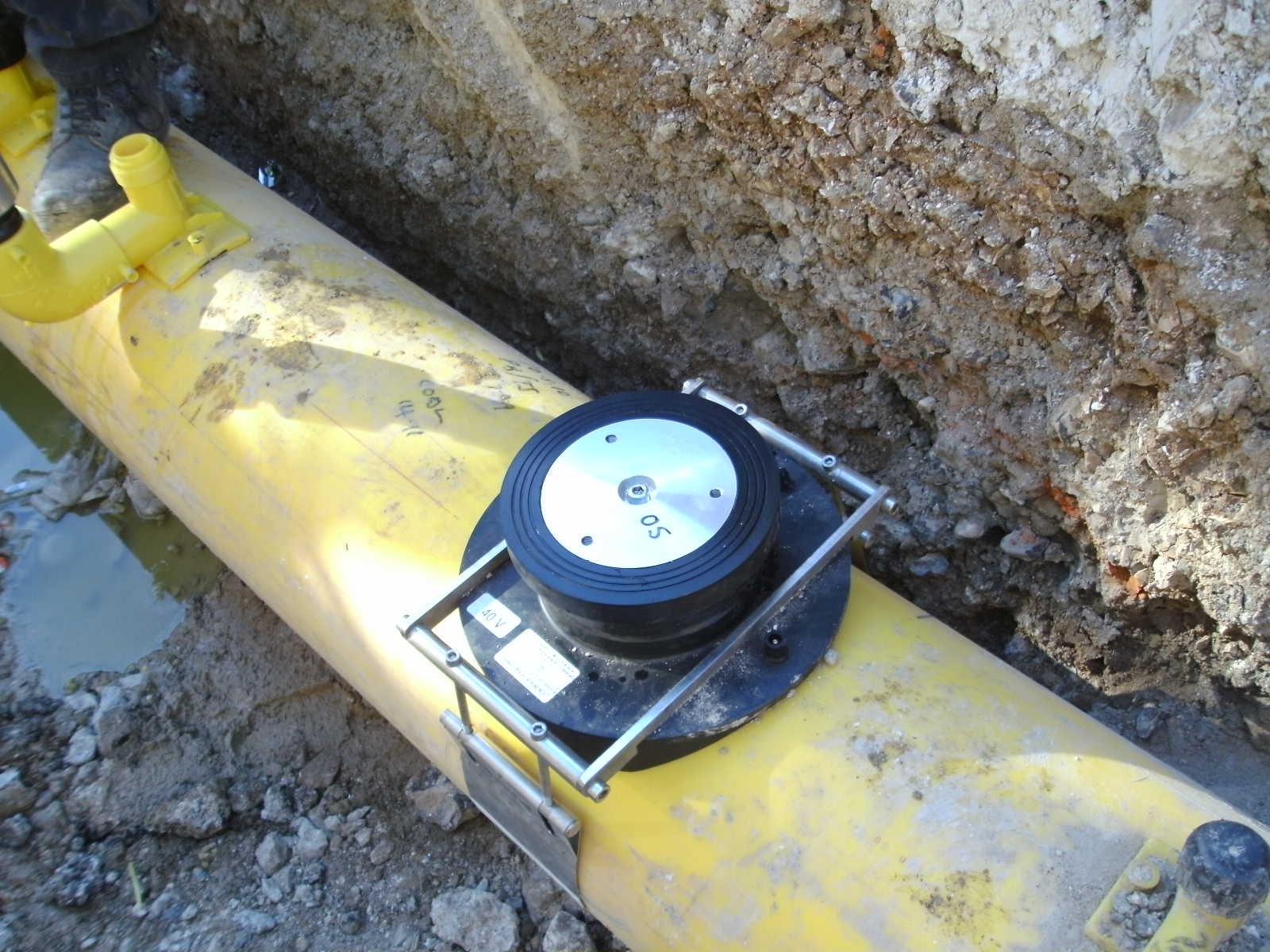
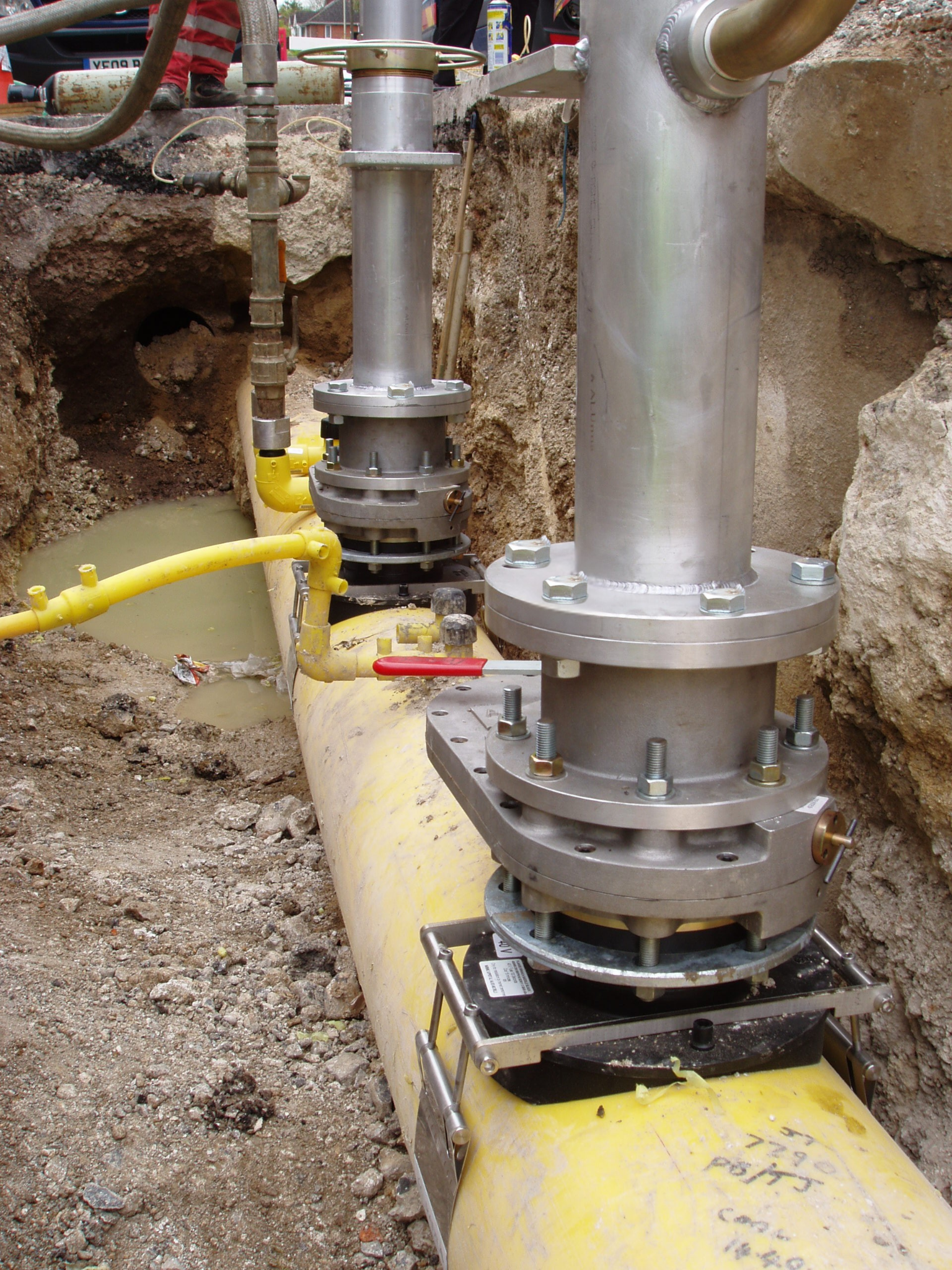
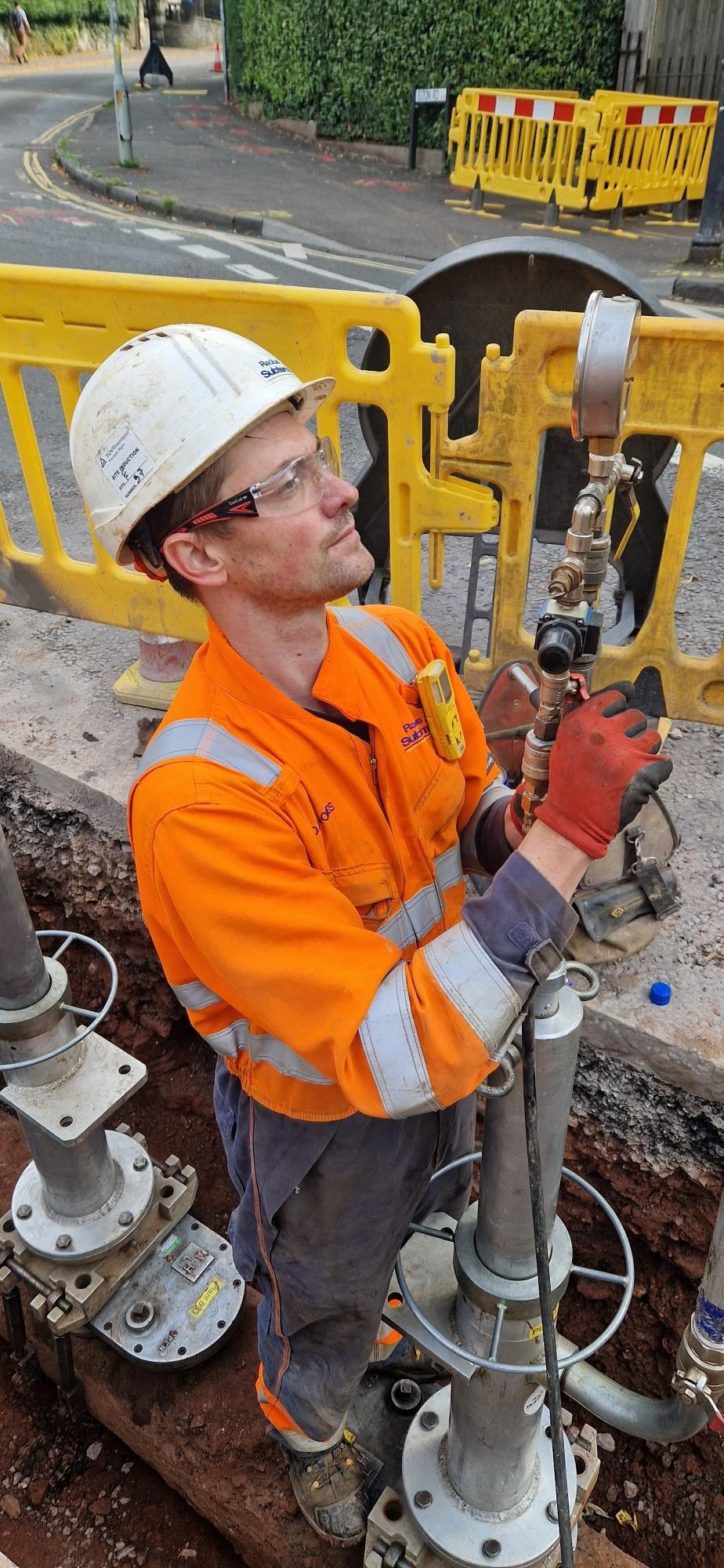
Bagging off is a flowstopping technique used to achieve temporary isolation of live polyethylene (PE) and metallic low-pressure pipelines. The method involves installing an approved access fitting, such as a branch saddle or under-pressure tee, through which inflatable bag units are inserted and accurately positioned within the pipeline. Once deployed, the bags are pressurised to form a secure internal seal, enabling downstream works within the isolated section of main.
Radius Subterra undertakes bagging off operations on PE pipelines up to 630mm and metallic pipelines up to 48 inches. All operations use an industry-standard double block and bleed configuration, providing two independent isolation points with a monitored vent to confirm and maintain isolation.
Bagging off supports connections, repairs, diversions, maintenance, decommissioning, and network modifications where full shutdowns are not feasible. Isolation locations are selected to suit site constraints, sequencing and operational requirements, while maintaining supply elsewhere on the network.
A key advantage of bagging off is that it leaves minimal permanent fittings on the pipeline once works are complete. Non-tap plugging systems can be used to return the pipeline to service without introducing additional long-term assets.
All bagging off operations is fully planned and risk assessed, with procedures developed in accordance with applicable standards and network approvals and delivered by trained and competent technicians using approved equipment.
Iris Stop
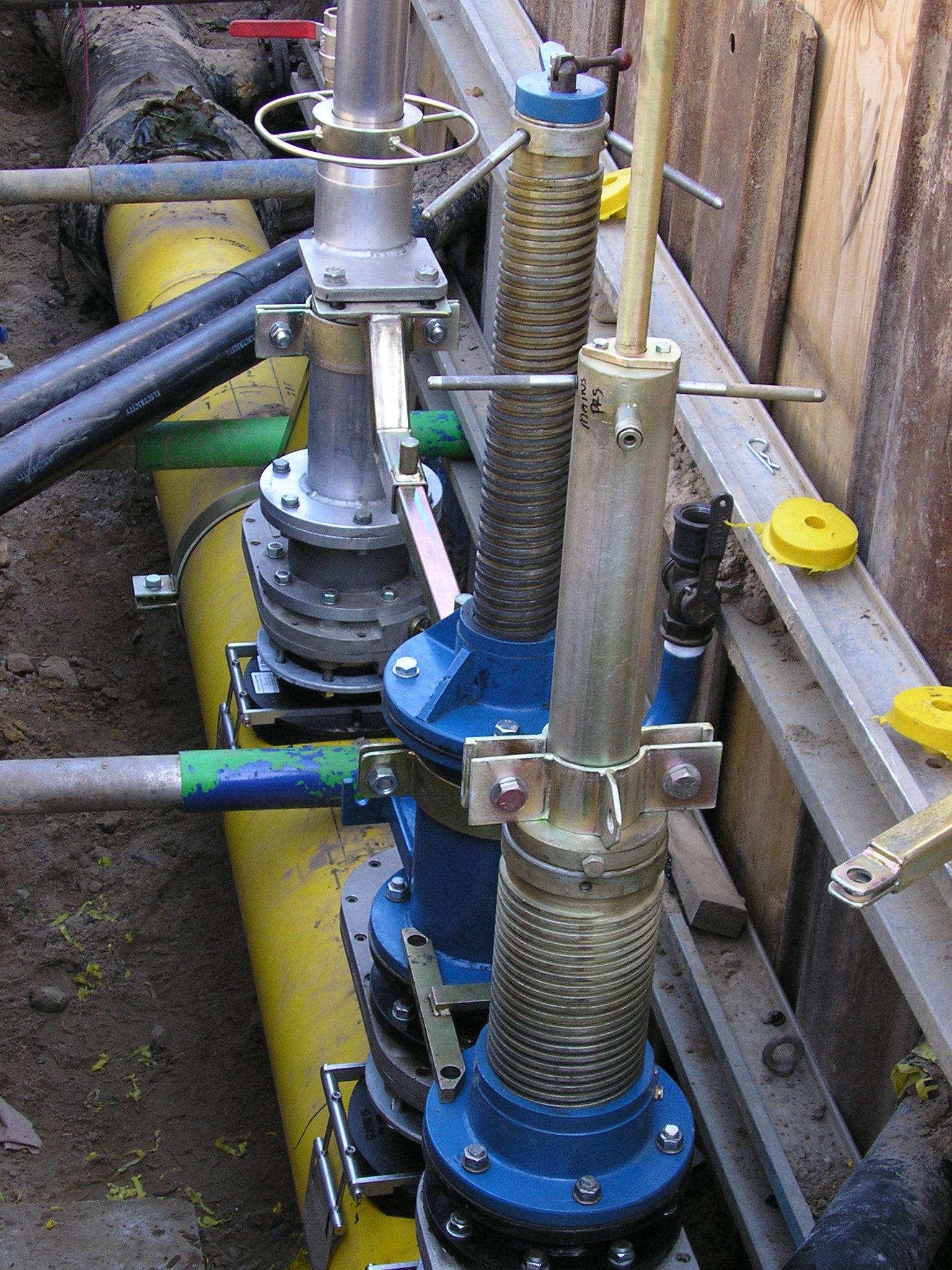
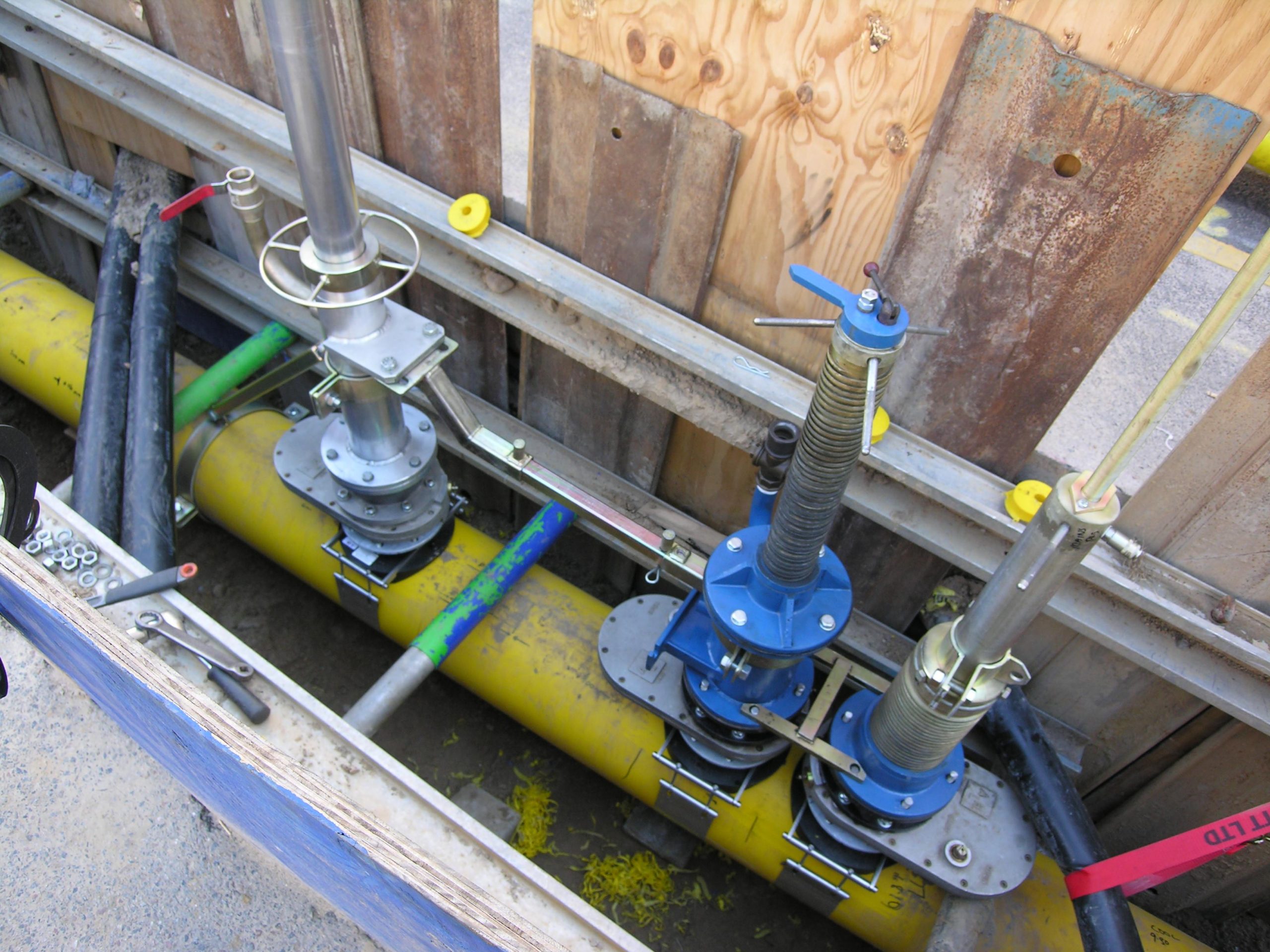
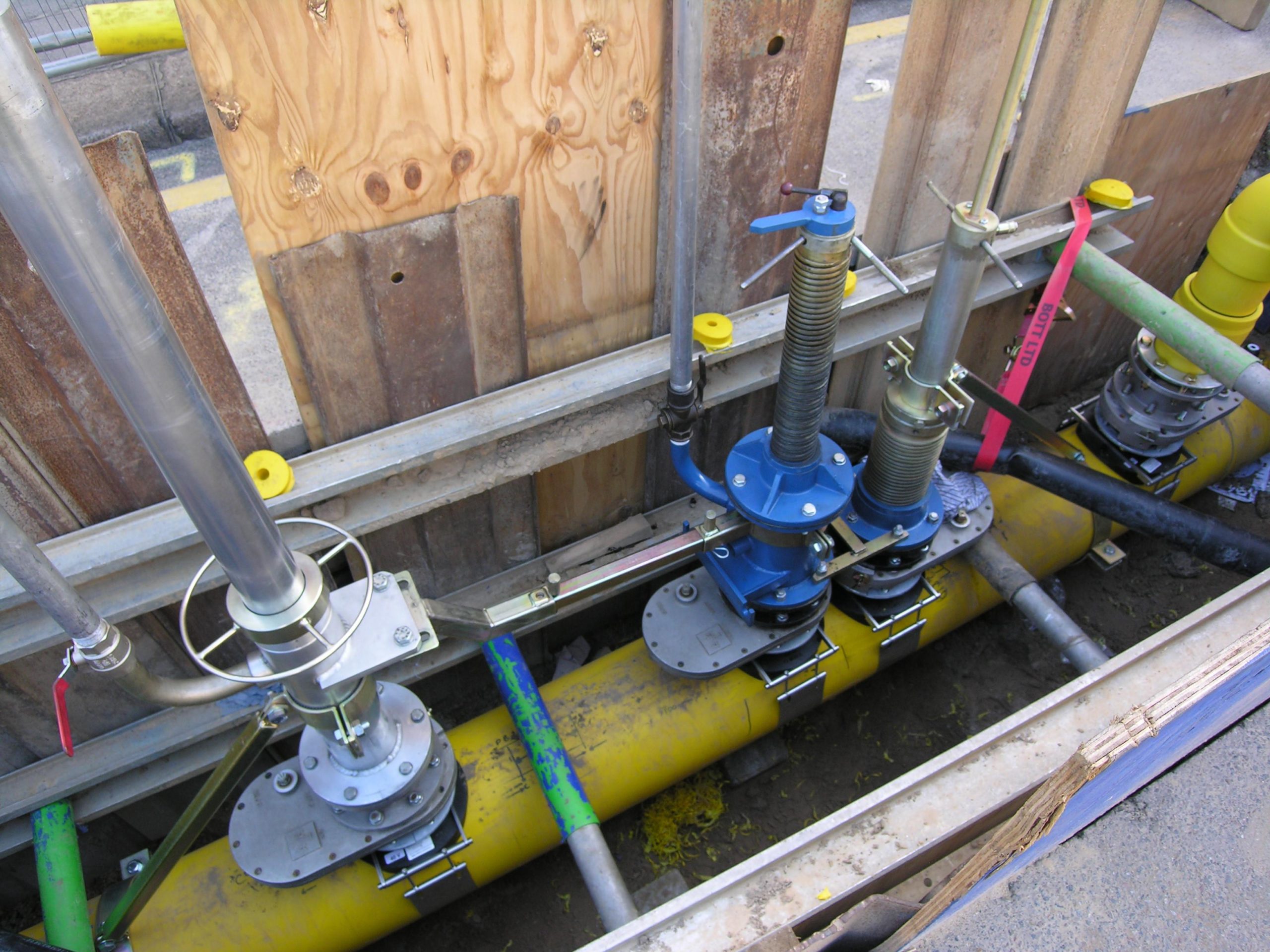
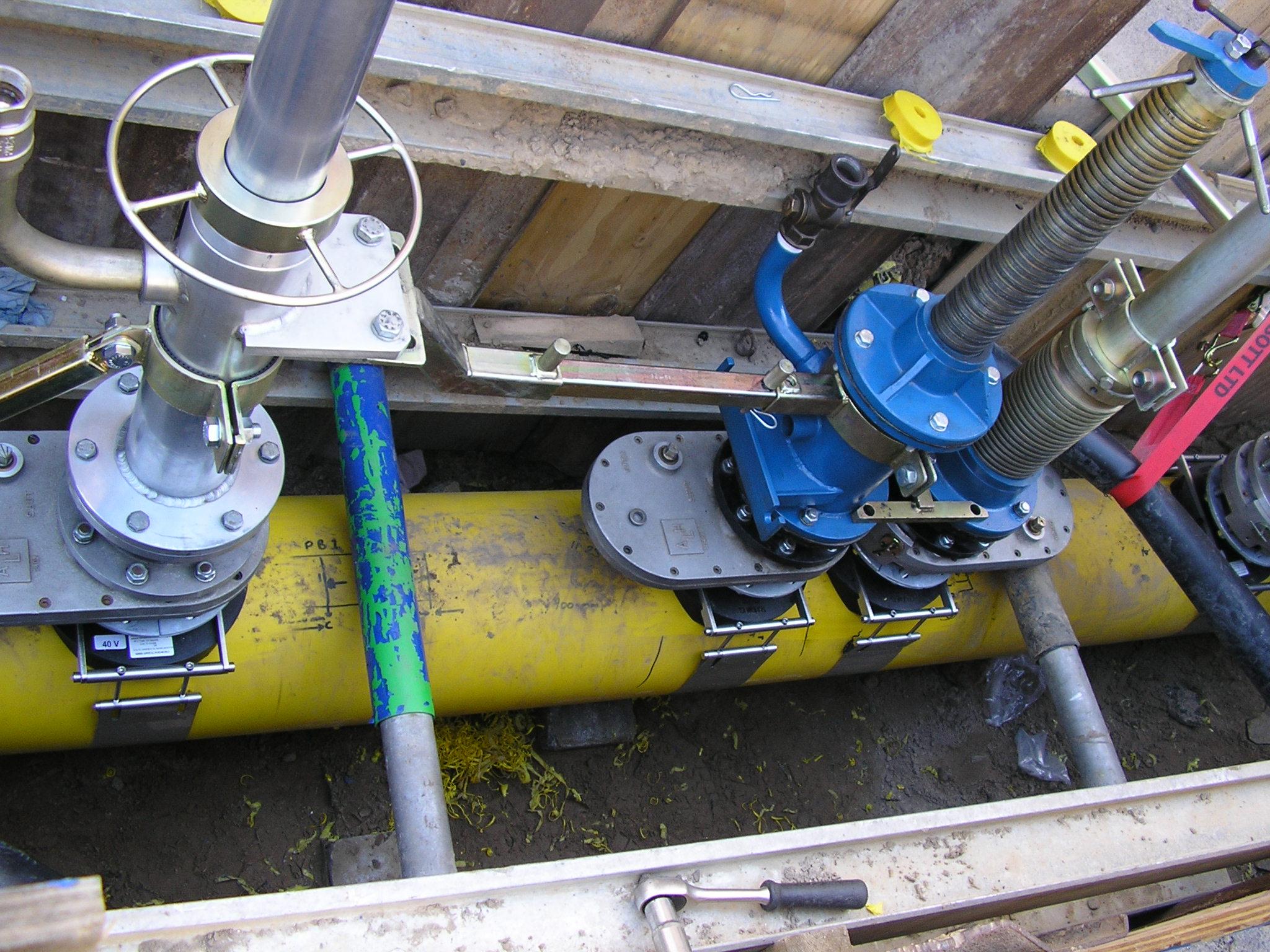
Iris Stop is a proven flow stopping technique for live gas pipelines, primarily used on metallic mains across the UK to provide temporary isolation on low- to medium-pressure systems. The method is suitable for large-diameter mains, including pipelines up to 48 inches, where the internal pipe condition, diameter and operating pressure make supported isolation preferable.
An inflatable isolation bag is deployed via an approved access fitting and stabilised using a mechanical iris (fan-type) support assembly positioned upstream of the bag. This support structure restrains the bag during inflation and operation, reducing movement and deformation within the pipe bore to allow the system to tolerate higher operating pressures than semi-supported and unsupported bag systems.
Iris Stop enables controlled isolation of a defined pipeline section for connections, pipeline repairs, diversions, maintenance and decommissioning activities without full network shutdowns. Isolation integrity is continuously monitored throughout the works, and the system is safely removed on completion, leaving minimal permanent fittings on the pipeline.
All Iris Stop operations follow approved network procedures and manufacturer guidance. Iris Stop remains a recognised and trusted flowstopping method across UK gas networks, providing a controlled and well-understood isolation solution where supported bag systems are required.
Bond & Bolt
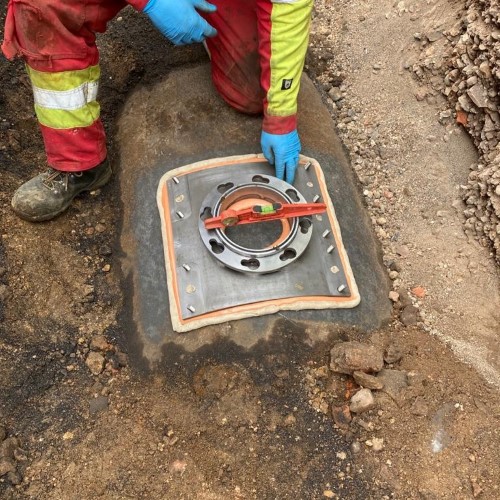
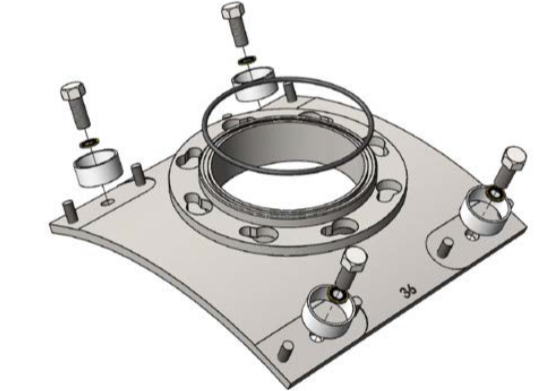
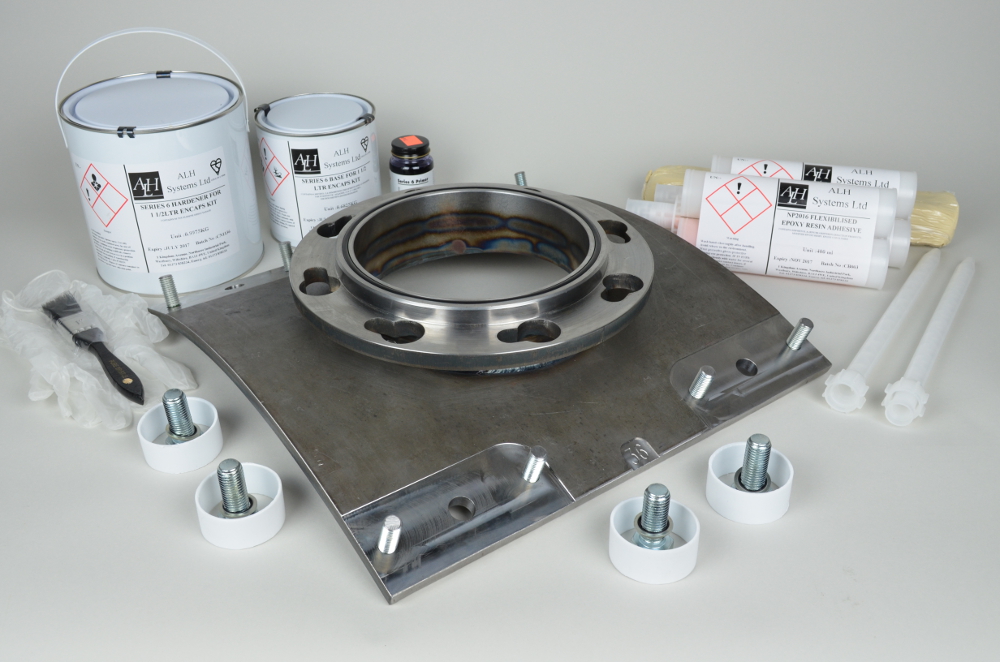
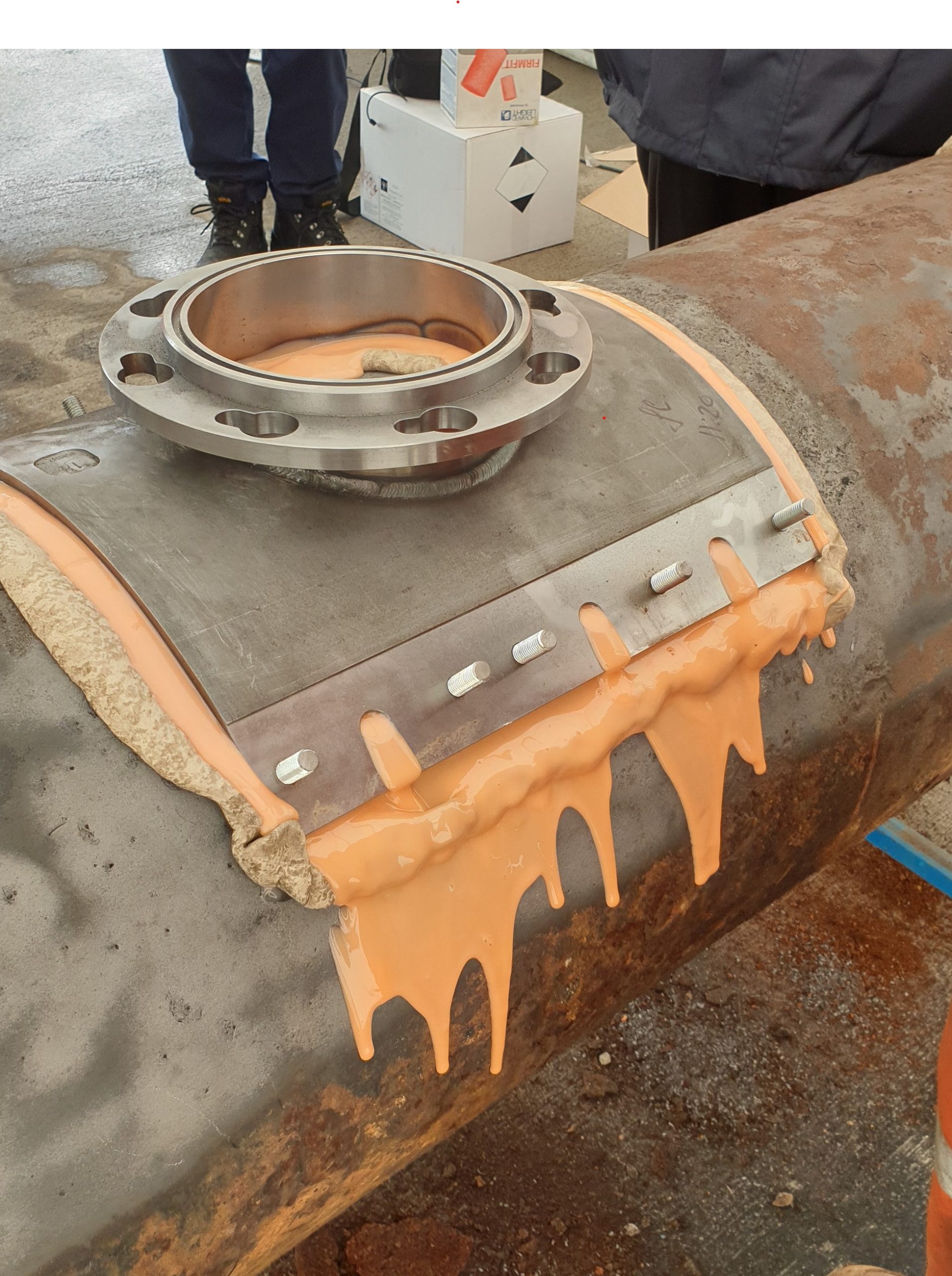
Bond & Bolt is a specialist metallic main entry system that provides secure access for flowstopping techniques such as bagging off and Iris Stop. The key advantage of the system is that only the crown of the pipeline needs exposure, significantly reducing excavation requirements compared to traditional entry methods.
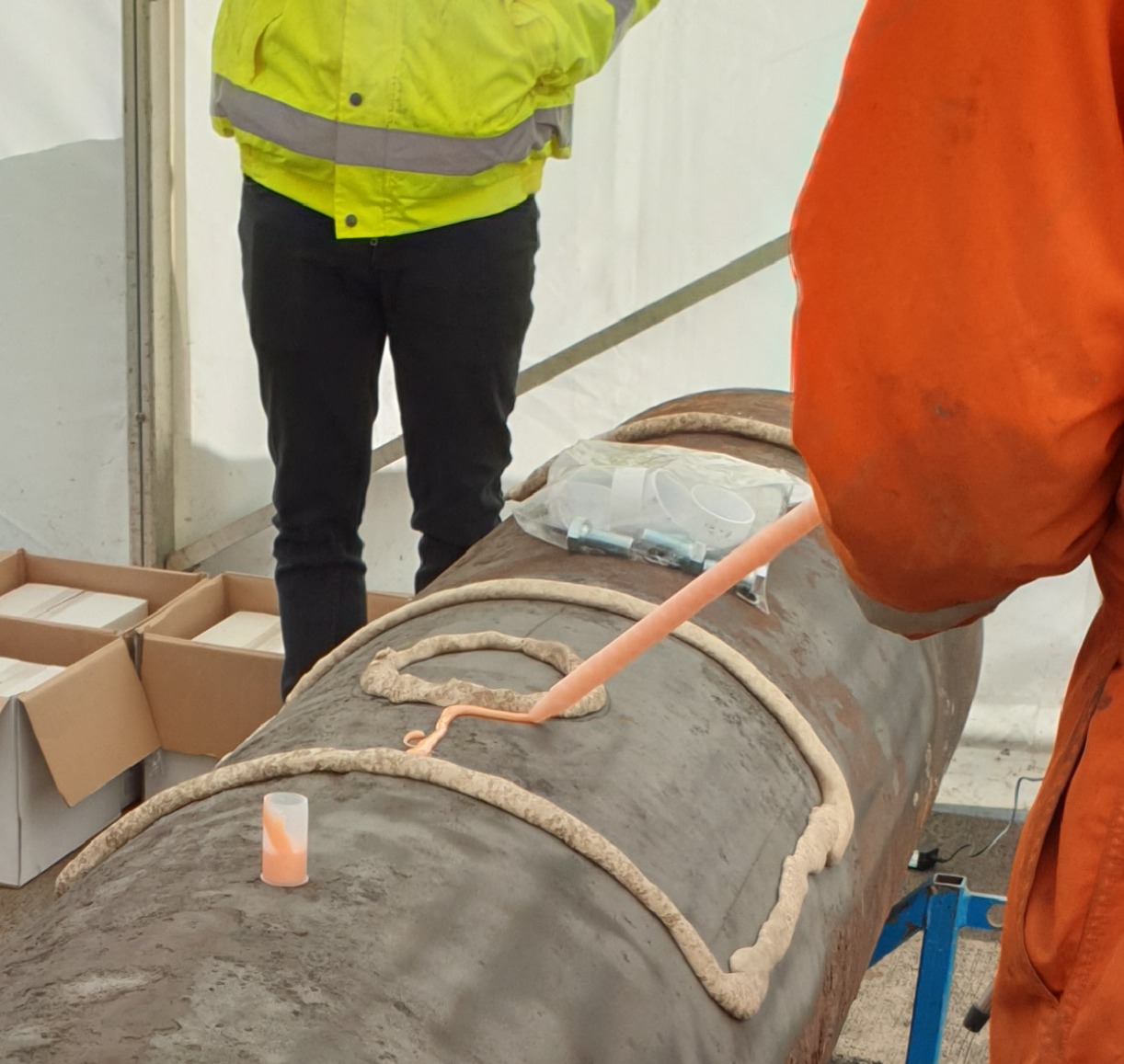
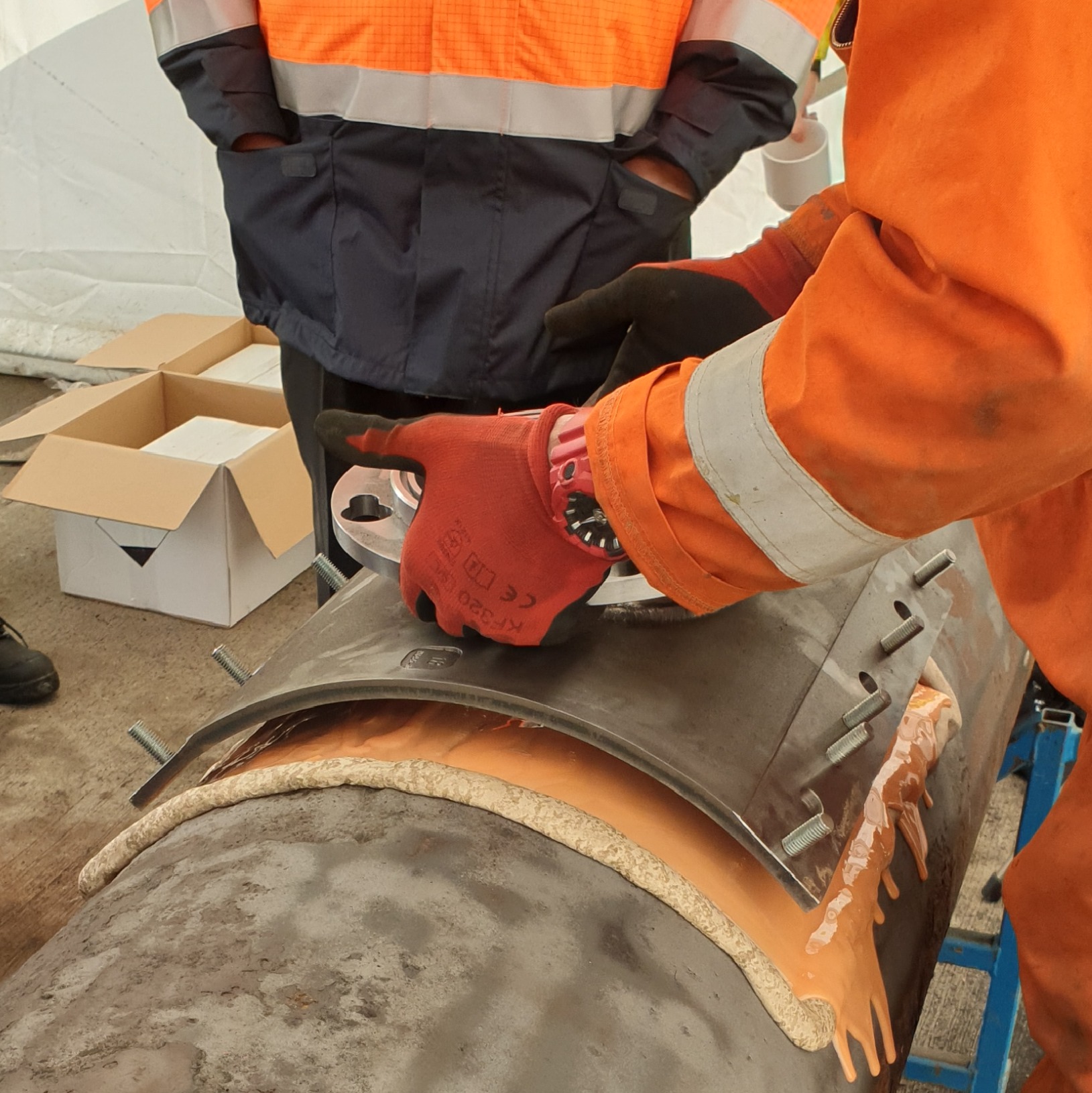
The system utilises an externally mounted saddle bonded and mechanically secured to the pipe. Adhesive is applied to a prepared pipe surface before the saddle is positioned and bolted in place, creating a sealed and stable entry point. Once installed, the saddle provides flanged access for flowstopping equipment.
Bond & Bolt is particularly suited to congested or restricted environments where excavation depth, space constraints or surrounding infrastructure limit conventional access methods. By reducing excavation and reinstatement requirements, the technique minimises disruption, programme duration and project risk.
Following completion of the flowstopping operation, the entry point can be managed using a non-tap plugging solution to minimise permanent assets on the pipeline. Bond & Bolt is a well-established and accepted access method within UK gas networks, providing a controlled and efficient means of facilitating flow stopping activities on metallic mains.
Minimuss Line Stop / Kleiss System
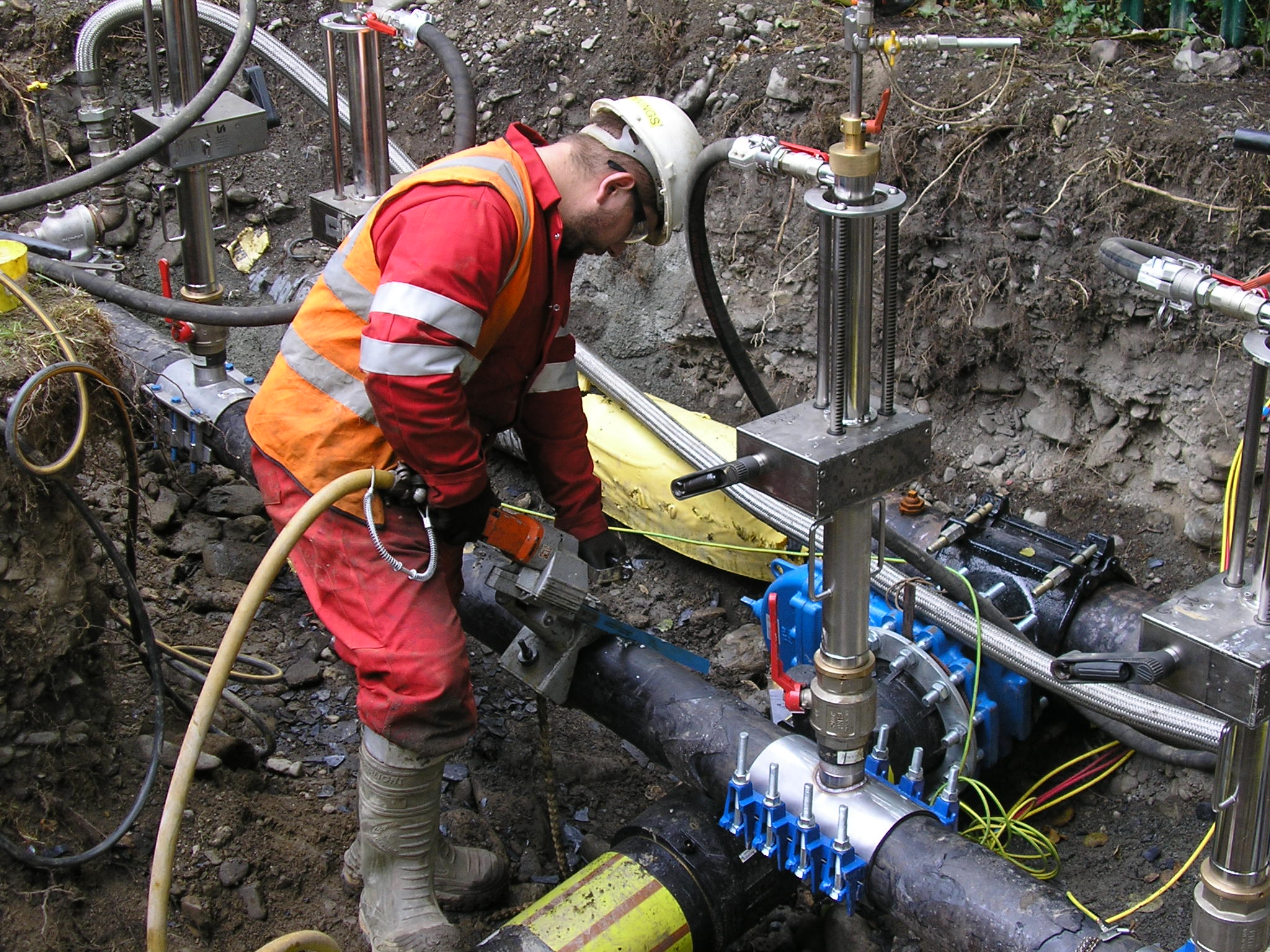
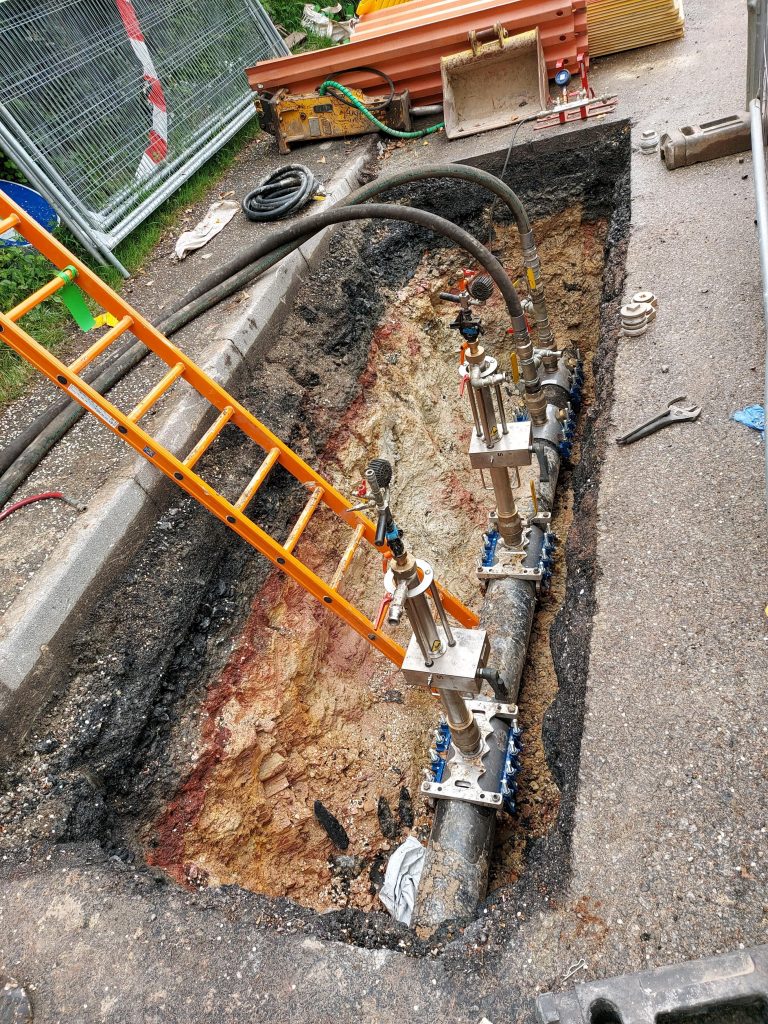
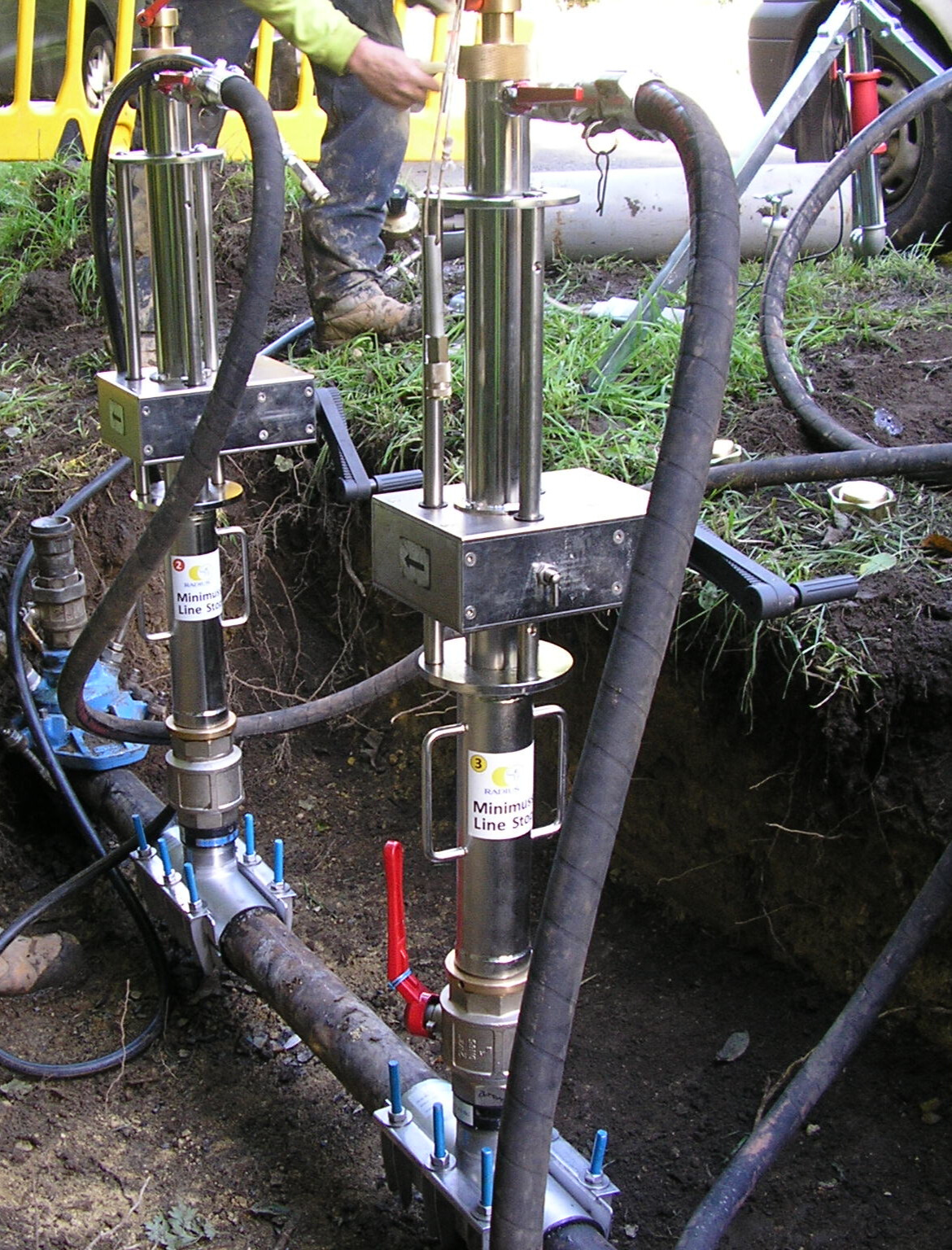
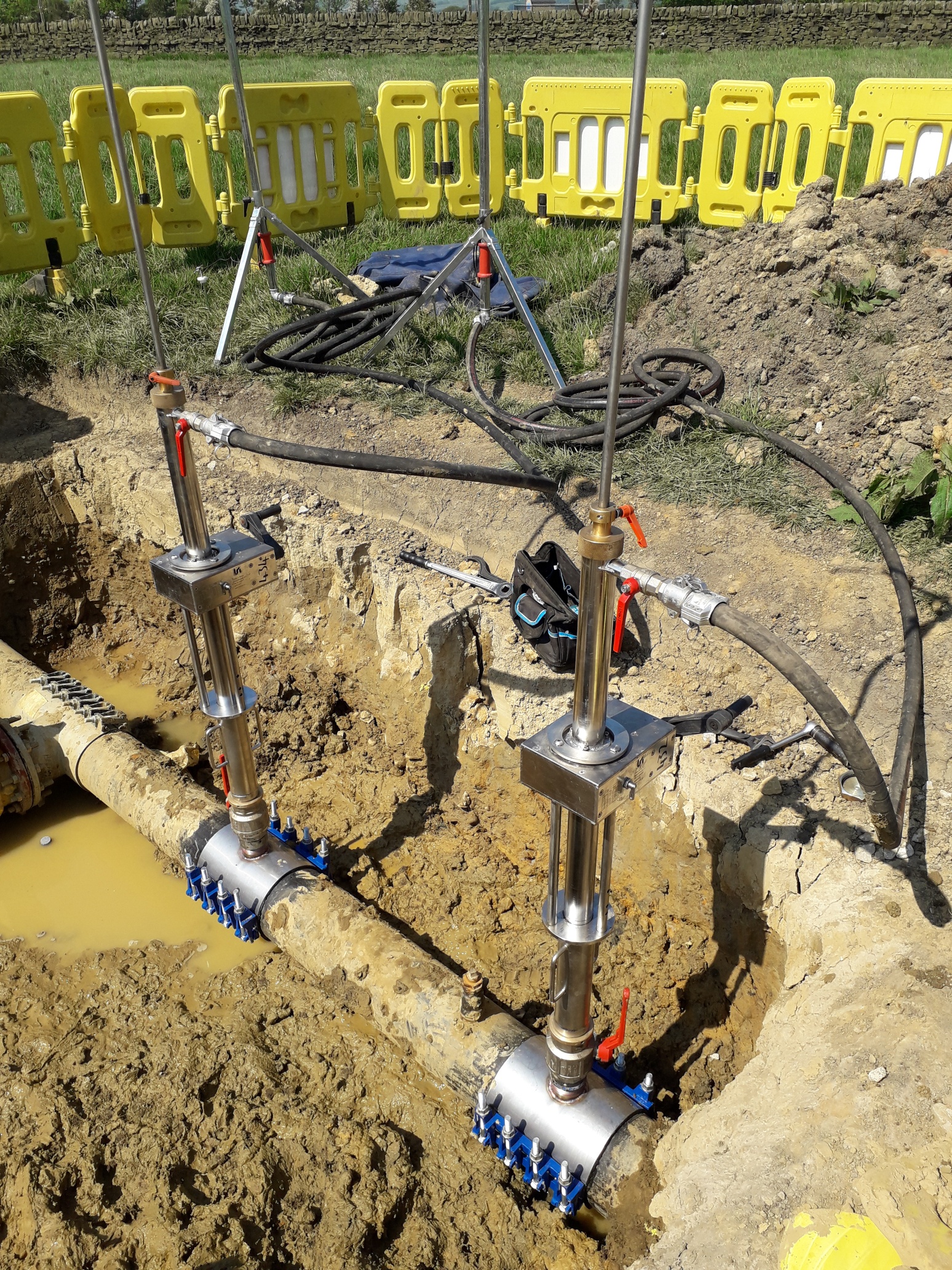
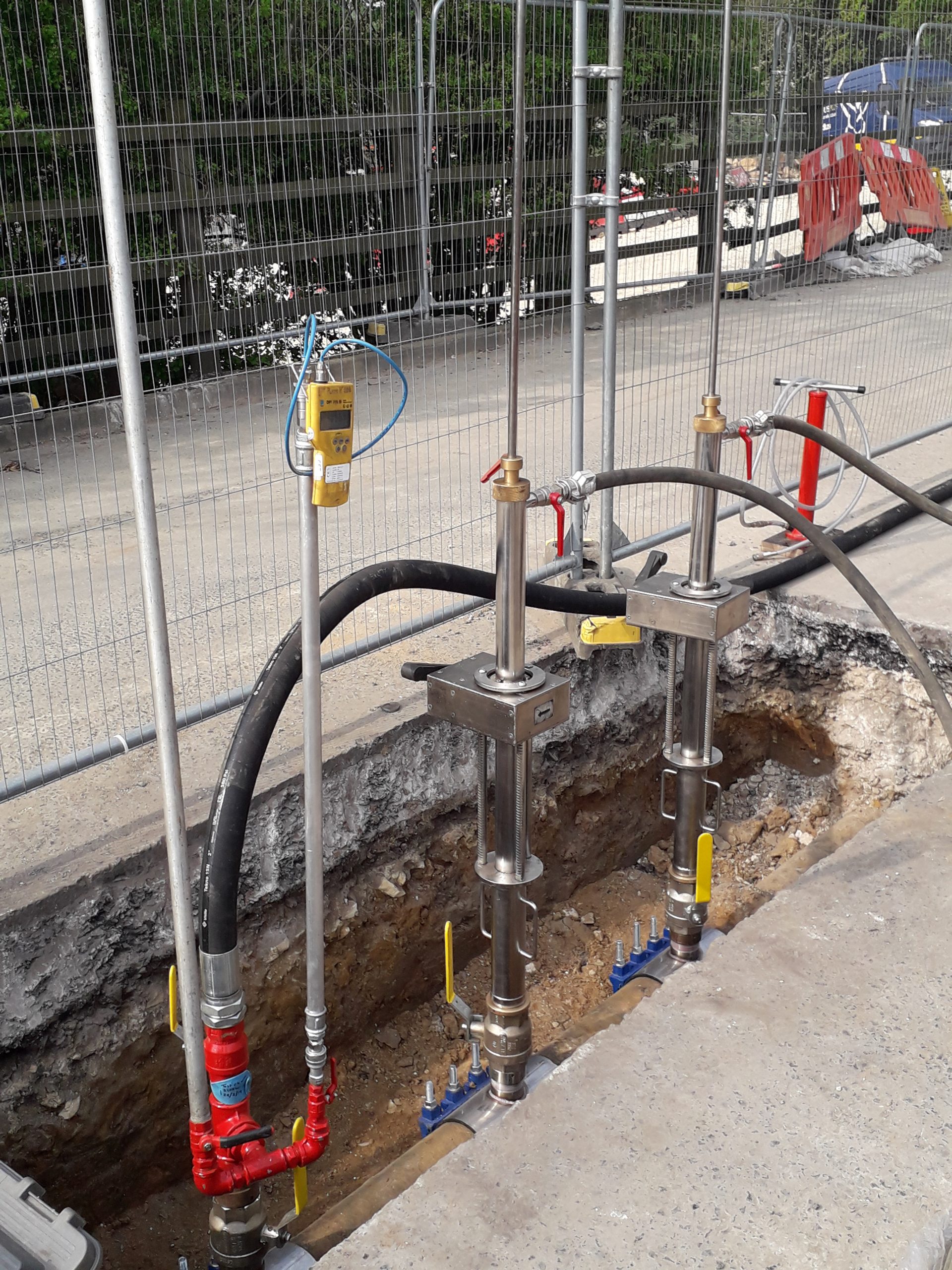
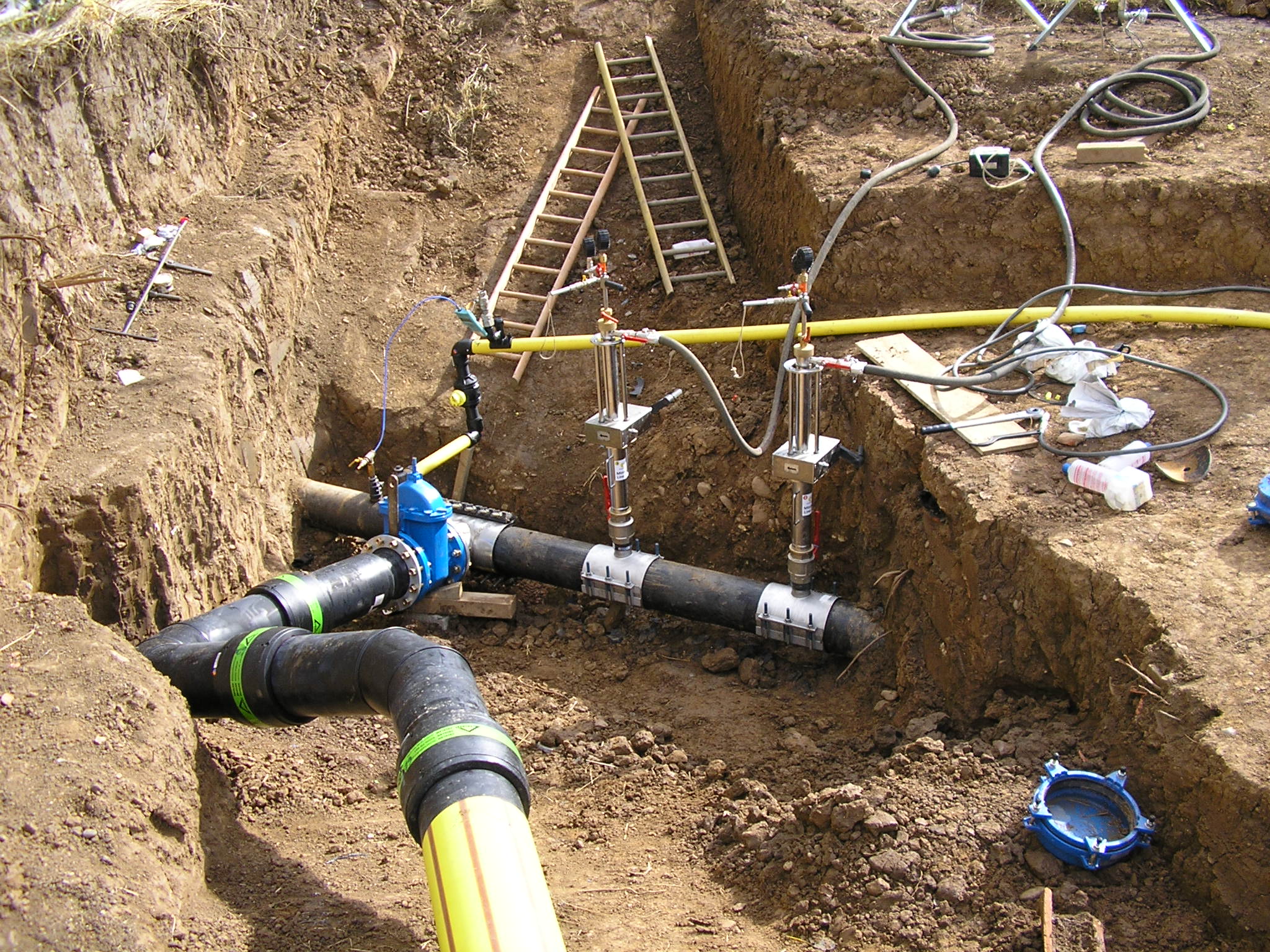
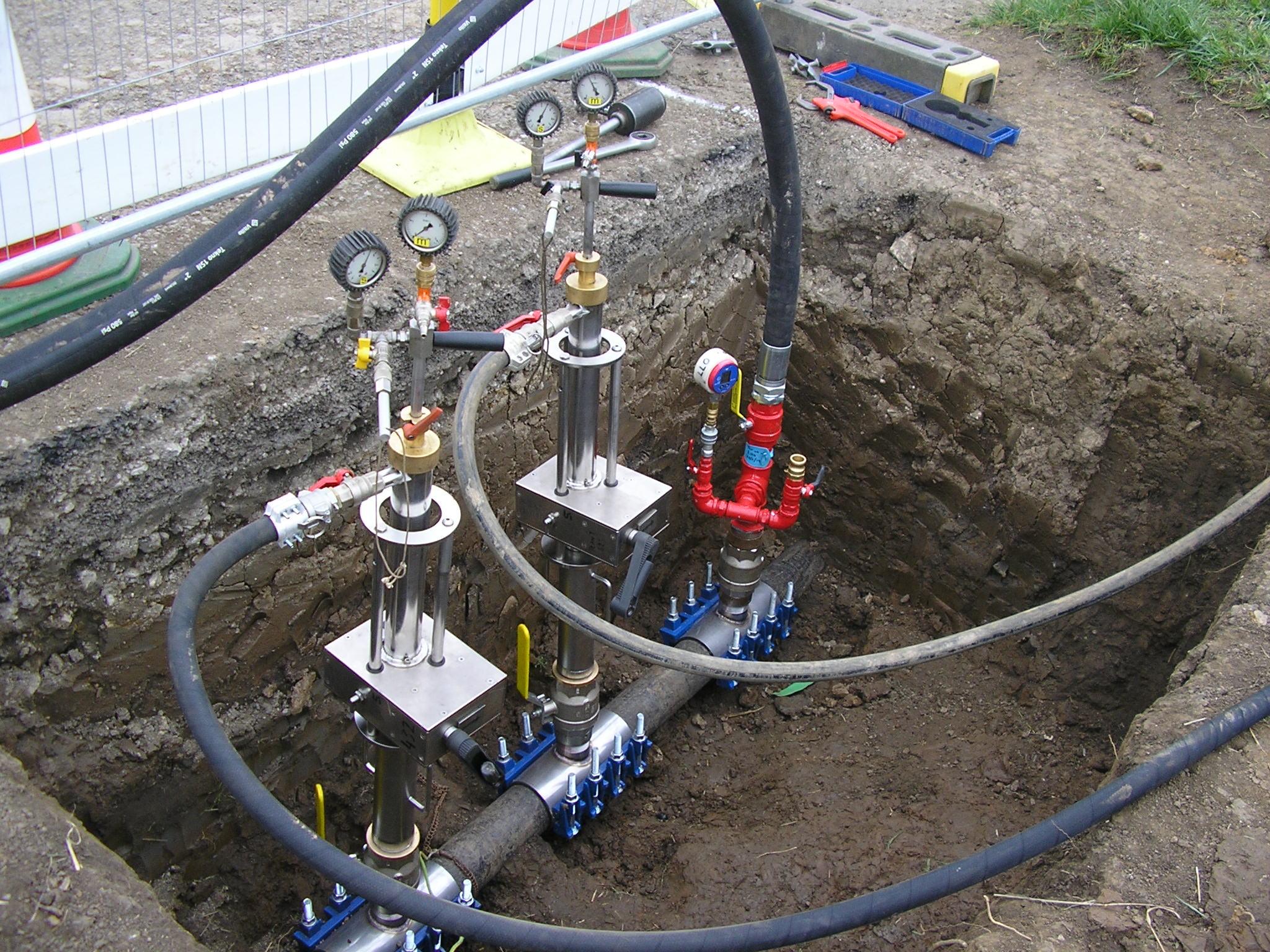
Minimuss Line Stop (MLS/Kleiss system) is a controlled flowstopping technique for medium-pressure metallic and polyethylene (PE) pipelines, up to 8 inches and 180 mm respectively, and pressures up to 2 bar. Entry fittings are manufactured by Radius Subterra to meet applicable GIS requirements and include internal completion plugs to allow secure sealing on work completion.
The MLS/Kleiss system uses self-supporting inflatable stoppers that seal directly against the internal pipe bore, eliminating the need for concrete anchorage of the under-pressure tee. This significantly reduces site preparation time and enables faster deployment compared to traditional anchored stopple systems.
Access to the live main is achieved via the branch saddle or under-pressure tee, allowing the inflatable stoppers to be installed under pressure. MLS/Kleiss system is deployed as an industry-standard double block and bleed arrangement, providing two independent isolation points with a monitored vent to confirm integrity.
The technique supports connections, repairs, diversions, maintenance and network modifications without full shutdowns, with the entry fitting sealed on completion to leave minimal permanent assets.
Pipe freezing
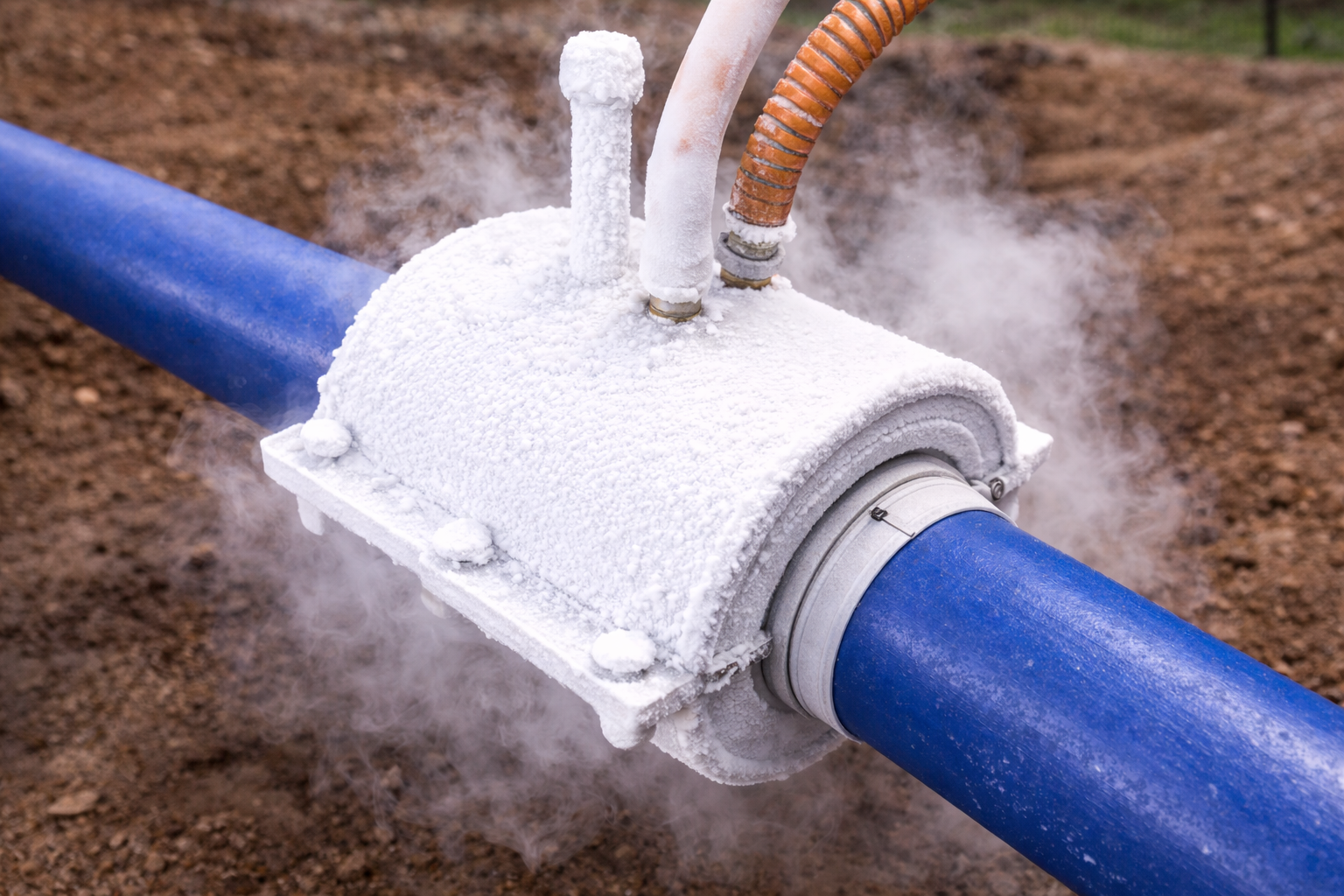
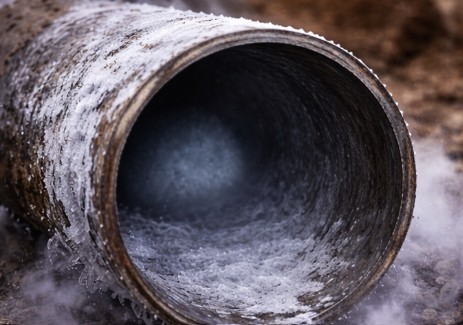
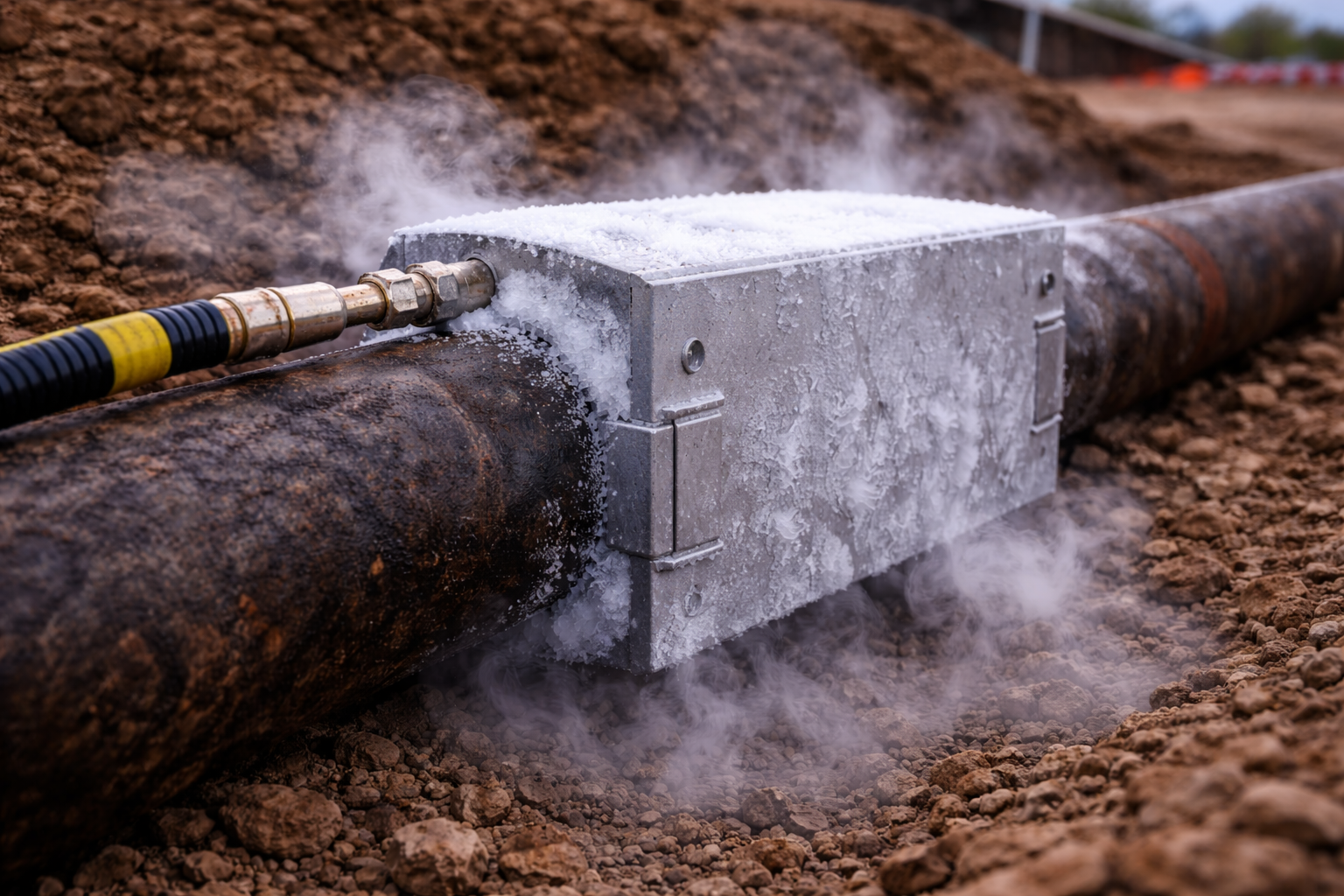
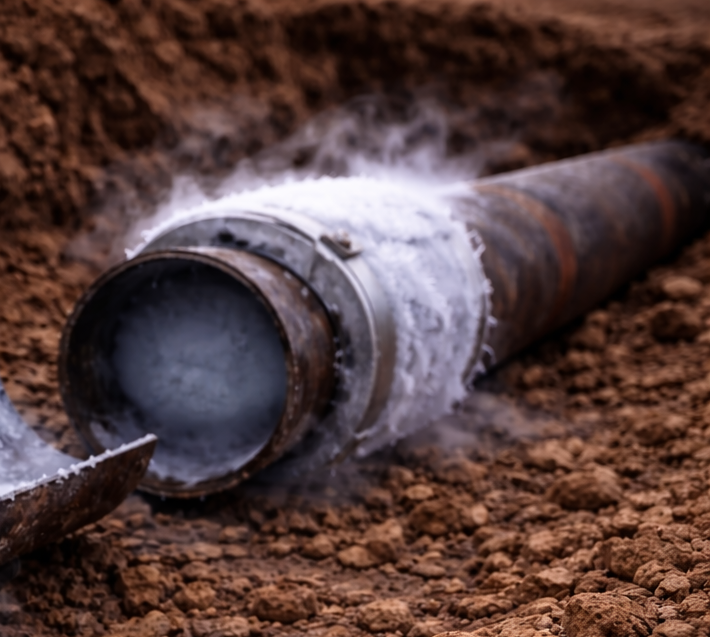
Pipe freezing is a non-intrusive flowstopping technique that creates a temporary internal ice plug to isolate pipelines without draining or shutdown. Cryogenic cooling, typically using liquid nitrogen, forms a solid blockage inside the pipe to stop flow.
Following a site assessment of pipe material, diameter, fluid type and operating conditions, freezing jackets are installed and monitored until a stable ice plug forms. This allows maintenance, repair, valve replacement, tie-ins and other activities while the rest of the network remains operational.
Pipe freezing is suitable for a range of materials including steel, cast iron, ductile iron and polyethylene (PE) and is particularly valuable where draining or shutdowns would cause significant disruption or cost. After works are completed, refrigeration is stopped and the ice plug thaws in a controlled manner to restore normal flow.
Our other solutions
Explore other Radius Subterra solutions designed to enhance safety, efficiency and long‑term performance.
Under Pressure Connections
Pre-Insulated Pipework
Pressure Testing
Pipework Installation & Mainlaying
Pipe Cutting
Manufacture & Fabrication
Engineering and Project Management
Pipe Lining
Pipeline Repair & Maintenance
Case Studies
Discover how Radius Subterra delivers safe, innovative and technically assured solutions across the UK’s most challenging pipeline environments.

Faced with severe leaks in a critical 1500mm trunk main, Radius Subterra provided an innovative pipeline rehabilitation solution using their close-fit PE liner system. This approach restored the pipeline’s integrity

Discover how Radius Subterra’s precision engineering revitalises a historic London waterway with cutting-edge pipeline solutions, installing a bespoke branch saddle onto a live water main in Finsbury Park. This job

Radius Subterra partnered with Anglian Water to solve leak issues in a hard-to-reach 10” water pipeline in East Anglia. Using their innovative Rolldown & Slipline method, Subterra maximised pipe bore
Case Studies
Discover the prowess of Radius Subterra through our latest case studies.
Witness how we excel in tackling intricate pipeline challenges with innovative solutions and state-of-the-art technology. Stay tuned for more videos showcasing our commitment to engineering excellence.
Faced with severe leaks in a critical 1500mm trunk main, Radius Subterra provided an innovative pipeline rehabilitation solution using their close-fit PE liner system. This approach restored the pipeline’s integrity
Discover how Radius Subterra’s precision engineering revitalises a historic London waterway with cutting-edge pipeline solutions, installing a bespoke branch saddle onto a live water main in Finsbury Park. This job
Radius Subterra partnered with Anglian Water to solve leak issues in a hard-to-reach 10” water pipeline in East Anglia. Using their innovative Rolldown & Slipline method, Subterra maximised pipe bore
In February an accidental incident occurred that resulted in a 10” gas main being damaged, and a hole being drilled into the main. The incident was near to the main


What our client’s say about us

Why choose Radius Subterra?
Trusted expertise, engineered solutions and a service approach shaped around your challenges.
For decades we’ve supported utility networks in the UK and beyond with safe, reliable and efficient pipeline services. Our teams combine technical knowledge, industry-leading equipment and a problem-solving mindset to deliver high-quality outcomes with minimal disruption. Whether planned works or complex operational challenges, we provide proven capability and dependable support.
Decades of expertise
With deep roots across the wider Radius Group and extensive experience in live gas, water, biogas and pipeline rehabilitation operations, our teams bring exceptional hands-on knowledge to every project. We understand the pressures faced by network operators and contractors and deliver work that is safe, compliant and technically robust from start to finish.
Committed to quality and safety
Safety underpins every service we deliver. Our work follows industry standards, rigorous internal procedures and environmental best practice. From accredited techniques to specialist equipment, we ensure consistent quality while reducing risk, waste and unnecessary disruption across gas, water and biogas networks.
Minimising disruption
Our specialist techniques, including under-pressure connections, flowstopping and trenchless rehabilitation, allow essential works to continue while maintaining customer service, protecting highways and minimising community impact. Reduced excavation and streamlined operations, support faster reinstatement and lower overall disruption.
Innovation and customisation
From bespoke branch saddles to tailored fittings for non-standard assets, innovation is central to our approach. We engineer solutions to suit each site, material and operating condition, enabling safer, faster and more cost-effective outcomes across complex project environments.
Safety and sustainability
We champion safe working and long-term sustainability. Our methods reduce carbon, excavation material, traffic disruption and reinstatement, while modern equipment and ongoing training create a safer environment for teams and the public. Every project is designed and delivered with environmental responsibility and operational resilience in mind.
Contact us
Ready to progress your next pipeline project?
Radius Subterra’s specialist engineering teams are here to support you with safe, efficient and technically assured solutions across every stage of the asset lifecycle.
Get in touch by phone or email to discuss your requirements and speak directly with our experts.
Alternatively, complete the form below with the relevant information.